
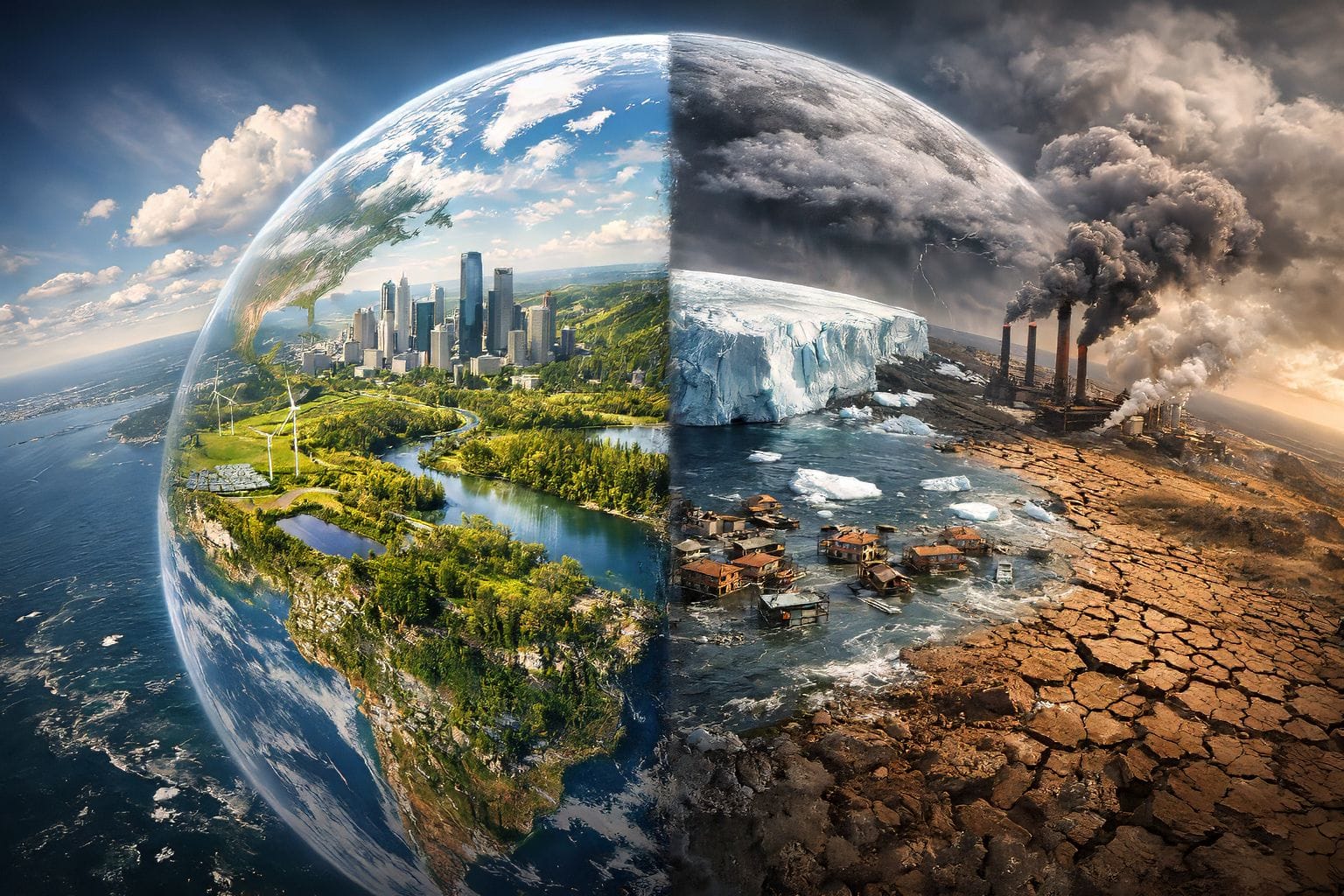
What Is Climate Change? A Simple Explanation
Have you ever asked yourself, What is climate change? At its core, it refers to long-term shifts in Earth’s typical weather patterns and average temperatures. These changes unfold gradually over decades, yet their impact reaches nearly every aspect of life. They affect the food we grow, the water we depend on, the coastlines where we live, and the habitats that countless plants and animals call home. In short, climate change is quietly reshaping our planet.
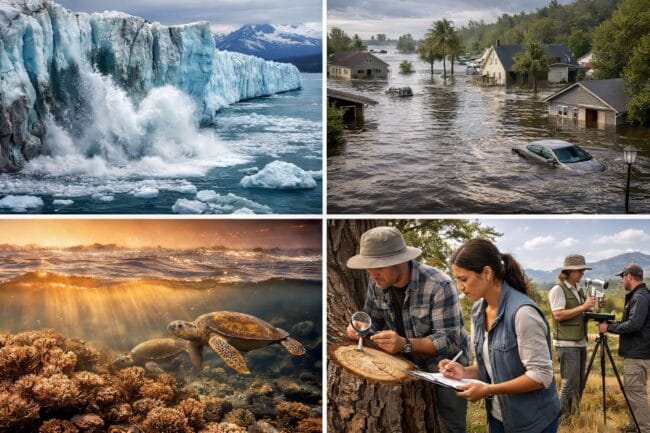
Scientists study these changes using many kinds of evidence. Weather stations record temperature and rainfall, and satellites observe Earth from space. Nature itself keeps a record as well: glaciers preserve layers of ice from centuries past, and tree rings reveal how climate has varied over time. By combining all these sources, researchers build a clear picture of how Earth’s climate is changing and why it matters for people everywhere.
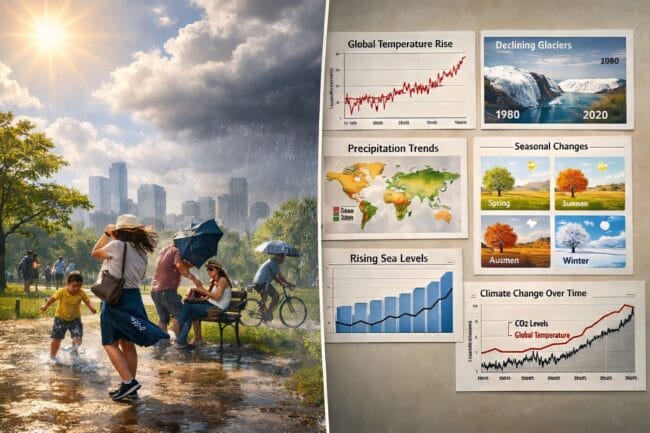
Weather versus Climate
Understanding What Is Climate Change? A Simple Explanation begins with knowing the difference between weather and climate.
Weather – The Day-to-Day Experience
Weather is what we feel in the atmosphere every day. A sudden downpour can soak your morning commute, sunshine can brighten your mood, and a gust of wind can change how you spend your day. Temperature, humidity, and air pressure all influence these short-term conditions. Weather is immediate, dynamic, and constantly shifting.
Climate – Long-Term Patterns
Climate reflects the long-term patterns of a region. It is not about what happens today or this week but averages over decades. Regions with consistently snowy winters, hot summers, or mild springs demonstrate their broader climate rhythm. These long-term trends set expectations for each season and give a place its lasting character.
Why the Difference Matters
Weather and climate are connected but serve different purposes. A single storm or heatwave cannot confirm or disprove climate change. Instead, climate change is recognized when long-term patterns shift. Winters may gradually become milder, rainfall may vary, and seasonal extremes may become more frequent.
The Impact of Climate Change
These long-term changes affect the identity of a region. Agriculture depends on predictable seasonal cycles, water resources rely on consistent precipitation, and ecosystems adapt to long-term conditions rather than daily weather. Recognizing the difference between weather and climate helps explain why climate change matters to communities and the planet.
Why Climate Change Matters
Understanding What Is Climate Change? goes beyond science. It is about seeing how long-term shifts affect nearly every part of life on Earth.
Impact on Food and Water
Climate changes can disrupt food production through droughts, heavy rainfall, or unexpected floods. Crops may fail, and water supplies can become unreliable. These changes create challenges for farmers and communities that depend on consistent weather patterns for growing food and raising livestock.
Effects on Health
Rising temperatures and extreme weather events increase health risks. Heatwaves can cause dehydration, heatstroke, and worsen chronic conditions. Changing climates also create conditions where pests and diseases spread more easily, affecting populations worldwide.
Changes in Ecosystems
Plants and animals rely on stable climates for survival. As weather patterns shift, habitats may shrink or relocate, forcing species to adapt, move, or decline. Forests, wetlands, and oceans all respond to these changes, sometimes causing ripple effects across entire ecosystems.
Implications for Communities and Economies
Climate change affects where people can live, how communities function, and the stability of economies. Rising sea levels threaten coastal cities, stronger storms damage infrastructure, and unpredictable rainfall disrupts industries that depend on natural resources. These impacts influence daily life and the opportunities available for future generations.
Taking Action
Understanding the consequences of climate change is the first step toward meaningful action. By recognizing how climate change shapes our world, individuals, communities, and governments can make informed decisions to reduce risks, protect resources, and build resilient systems for the future.
What Causes Climate Change
Understanding What Is Climate Change? requires looking at the forces that drive changes in Earth’s climate, from human activity to natural events.
Greenhouse Gases and the Earth’s Heat Balance
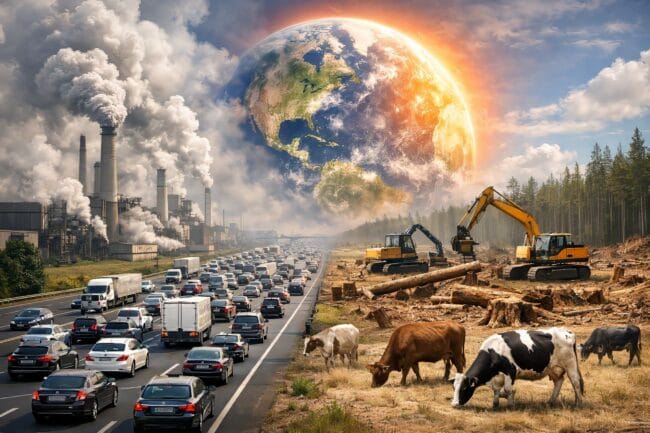
Earth stays warm because its atmosphere contains gases that trap heat. These greenhouse gases include carbon dioxide (CO₂), methane (CH₄), and nitrous oxide (N₂O). Human activities release extra amounts of these gases. Burning fossil fuels, clearing forests, and certain agricultural practices add more greenhouse gases to the atmosphere. When their concentrations rise, they trap additional heat, causing global temperatures to increase. This warming affects weather patterns, sea levels, and ecosystems worldwide.
Natural Factors Influencing Climate
While human activity is the primary driver of today’s rapid warming, natural factors can also influence climate. Volcanic eruptions release particles and gases that temporarily affect temperatures, and variations in the sun’s energy can cause small shifts over time. However, these natural events cannot explain the speed and scale of current climate change, which is largely the result of human actions.
The Combined Effect
The interaction between human-driven greenhouse gas emissions and natural factors shapes Earth’s climate system. Even though natural processes continue, the overwhelming influence of human activity dominates the current trend. Recognizing these causes is essential to understanding why immediate action is needed to address climate change and protect communities, ecosystems, and economies around the world.
Evidence of Climate Change
Understanding What Is Climate Change? means looking at the proof in the natural world that shows how the planet is evolving. Scientists gather data from multiple sources to confirm that Earth’s climate is not static.
Rising Global Temperatures
Measurements from weather stations and satellites reveal a persistent increase in average global temperatures. The recent decades have consistently been warmer than any previous period in recorded history. This trend affects ecosystems, agriculture, and human communities around the world.
Oceans Heating Up
The world’s oceans absorb the majority of extra heat from greenhouse gases, causing sea temperatures to rise. This warming alters ocean currents, disrupts marine life, and affects weather patterns globally. Coral reefs experience bleaching events, and fish populations shift, impacting communities dependent on fishing.
Melting Ice and Retreating Glaciers
Glaciers and ice sheets are shrinking rapidly, and Arctic ice is disappearing faster than ever before. This loss contributes to rising sea levels and changes habitats for numerous species. Ice melt also influences global ocean circulation, which in turn affects climate systems worldwide.
Rising Sea Levels and Coastal Risks
As ice melts and oceans expand, sea levels rise. Coastal areas experience more frequent flooding, erosion, and saltwater intrusion into freshwater sources. Infrastructure, homes, and livelihoods are increasingly threatened, highlighting the urgent need for adaptation strategies.
Insights from Nature’s Records
Scientists examine tree rings, ice cores, and sediment layers to understand historical climate trends. These natural archives show that today’s rapid warming is extraordinary compared to thousands of years of natural variation. The speed and extent of these changes point clearly to human influence as the main driver.
Impacts on People and Nature
Recognizing What Is Climate Change? helps us understand the broad consequences that shifts in climate have on both human life and natural ecosystems. These impacts touch food systems, water resources, health, infrastructure, and biodiversity.
Food and Agriculture
Changes in rainfall, temperature, and growing seasons directly influence crops and livestock. Unpredictable weather can reduce yields and threaten food security. Farmers and communities must adapt quickly to protect their livelihoods and maintain stable food supplies.
Water Resources and Health
Droughts and heatwaves create stress on water supplies and public health. Limited water availability can affect drinking, sanitation, and agriculture. Meanwhile, heat increases the risk of dehydration and heat-related illnesses and can expand the range of disease-carrying pests, affecting population health.
Infrastructure and Communities
Stronger storms, flooding, and rising seas damage homes, roads, and public services. These events disrupt daily life, create economic strain, and require communities to invest in resilient infrastructure and emergency planning.
Biodiversity and Ecosystems
Rapid climate shifts challenge plants and animals to adapt. Some species may migrate, others face population decline, and entire ecosystems can be altered. These changes affect food chains, habitats, and the overall balance of nature, demonstrating how human and environmental systems are deeply interconnected.
Scientific Consensus and Uncertainty
Understanding What Is Climate Change? starts with recognizing the scientific consensus. More than 97% of climate scientists agree that human activities, particularly the burning of fossil fuels and greenhouse gas emissions, are the main drivers of recent global warming. This agreement strengthens the credibility of climate research and shows that observed changes are not merely natural fluctuations.
However, some uncertainty remains, especially regarding regional and local climate projections. While global trends such as rising temperatures, shrinking ice sheets, and sea level rise are well established, predicting precise effects for specific areas is more complex. Highlighting both confirmed facts and areas of uncertainty helps communities, policymakers, and individuals make informed decisions.
Presenting the scientific consensus alongside these uncertainties reinforces trust in verified evidence. This ensures readers understand the scientific basis of climate change rather than relying solely on simplified explanations.
Policy and Governance
Understanding What Is Climate Change? requires recognizing that effective solutions extend beyond individual actions to systemic, policy-driven efforts. International agreements such as the Paris Agreement and ongoing COP conferences establish global targets for reducing greenhouse gas emissions and adapting to climate impacts. These frameworks guide countries in setting national policies, implementing renewable energy programs, and regulating emissions from industries and transportation.
At the same time, individual and community actions connect directly to these larger policies. Local initiatives, sustainable practices, and public engagement can reinforce national strategies and demonstrate public commitment to change. For professionals, including journalists and decision-makers, this section emphasizes the critical role of governance in coordinating efforts, ensuring accountability, and translating scientific knowledge into actionable solutions.
Case Studies and Success Stories
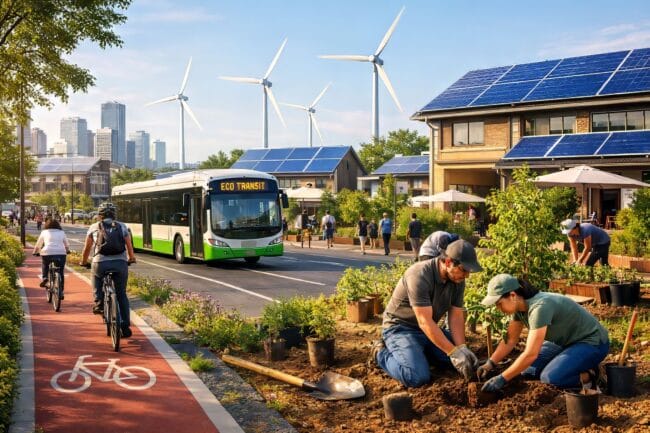
Understanding What Is Climate Change? is easier when we focus on actions that produce real results. Around the world, cities, countries, and organizations are implementing strategies that reduce emissions and help communities adapt.
Urban Strategies
Cities have invested in improving public transportation, creating bike lanes, and constructing energy-efficient buildings. These changes reduce emissions and enhance the daily life of residents.
National Achievements
Some countries have shifted to renewable energy, including solar, wind, and hydropower. Policies that support sustainable farming and forest conservation show that coordinated national efforts can lead to measurable reductions in greenhouse gases.
Community and Organizational Actions
Local groups and organizations have built flood protection systems, developed urban green spaces, and implemented early-warning systems for extreme weather. These initiatives protect vulnerable populations and complement larger climate strategies.
Key Takeaways
These examples demonstrate that solutions to climate change are achievable. Coordinated actions at individual, community, national, and global levels produce tangible results. Showcasing successful projects motivates others to act and proves that meaningful change is possible.
Common Myths and Facts
Grasping What Is Climate Change? means recognizing that some widely held beliefs are inaccurate. By understanding the evidence, it becomes clear why climate shifts matter and how humans are involved.
Myth 1 – Climate Change Is Just Unusual Weather
Some people assume climate change is simply a series of extreme weather events. Weather varies day to day, but climate is the long-term pattern of temperature, rainfall, and seasonal behavior. Persistent trends over decades, rather than single storms or heatwaves, reveal true climate change and its impact on life and nature.
Myth 2 – Scientists Are Uncertain About Human Causes
Another common misconception is that experts disagree on whether humans drive climate change. In reality, decades of research confirm that human activities such as burning fossil fuels, deforestation, and industrial emissions are the primary drivers of recent global warming. Temperature data, ice core samples, and ocean observations all show that human influence dominates current climate trends.
What People Can Do
Understanding What Is Climate Change? also means knowing how individuals, communities, and societies can take action. While the problem is global, small steps add up and make a difference.
Individual Actions
Everyday choices can reduce your personal impact on the climate. For example:
- Use energy wisely: Turn off lights when not needed, switch to energy-efficient bulbs, and unplug devices that are not in use.
- Choose sustainable travel: Walk, ride a bike, carpool, or rely on public transportation instead of driving alone.
- Adjust your diet: Reduce food waste and increase plant-based meals, which have a lower environmental footprint.
- Recycle and reuse: Separate recyclables, repurpose materials, and minimize single-use items whenever possible.
Community and School Projects
Working together amplifies impact. Communities and schools can:
- Plant trees and clean up neighborhoods to enhance local environments.
- Measure local climate patterns through simple experiments and citizen science projects.
- Educate others by creating posters, videos, or presentations that raise awareness about climate solutions.
Global Actions
Broader efforts can influence policies and systems to reduce climate risks. Ways to contribute include:
- Support climate-friendly policies that reduce greenhouse gas emissions.
- Promote renewable energy and encourage sustainable energy use at local and national levels.
- Raise awareness about climate change solutions through education, campaigns, and advocacy.
Classroom or Home Activity Idea
Learning What Is Climate Change? can be more engaging when students or families explore hands-on experiments. Simple activities help illustrate how climate systems work and how human choices influence the environment.
Experiment – How Surfaces Affect Heat Absorption
One practical experiment involves comparing how different surfaces absorb heat:
- Materials Needed: Identical containers filled with water, surfaces of different colors (for example, black, white, and gray cardboard or paper), a thermometer, and a timer.
- Procedure: Place a container on each surface and measure the water temperature at regular intervals over a set period. Record the changes and observe which surface causes the water to heat fastest.
- Discussion: Talk about why darker surfaces absorb more heat and how this relates to real-world phenomena, such as urban heat islands in cities. Discuss ways humans can reduce heat absorption in urban areas, like planting trees or using reflective materials on roofs.
- Connection to Climate Change: This simple experiment demonstrates how energy from the sun interacts with surfaces and contributes to warming, linking everyday observations to broader climate patterns.
Solutions and Responses to Climate Change
What Is Climate Change? It refers to long-term shifts in Earth’s weather and average temperatures. While these changes present challenges, there are effective ways to respond that protect ecosystems, communities, and human well-being.
Mitigation Measures
Limiting greenhouse gas emissions addresses the root causes of climate change. Transitioning from fossil fuels to renewable energy sources such as wind, solar, and hydropower reduces carbon dioxide (CO₂) in the atmosphere. Methane emissions from livestock, landfills, and agricultural practices can be lowered through improved waste management and sustainable farming. Conserving and restoring forests also helps absorb carbon and maintain Earth’s natural heat balance.
Adaptation Strategies
Some climate change impacts are unavoidable, so adaptation is essential. Farmers can use drought-resistant crops, while cities can upgrade drainage systems to prevent flooding from heavy rainfall. Preparing for heatwaves, storms, and rising sea levels protects vulnerable populations and infrastructure. Adaptation focuses on living safely with the environmental changes already underway.
Education and Awareness
Understanding what climate change is empowers people to take practical actions. Reducing energy use, minimizing food waste, and choosing sustainable transportation are ways individuals can contribute. Schools, communities, and public campaigns play a key role in translating scientific knowledge into everyday practices that collectively reduce climate risks.
Long-Term Benefits
By prioritizing solutions, societies can reduce future damage and build resilience. Mitigation slows global warming, while adaptation protects lives, livelihoods, and ecosystems. Together, these strategies transform the challenge of climate change into an opportunity for healthier, sustainable living.
Conclusion: Taking Climate Change Seriously
Climate change is a global issue that influences every part of life, from the food we eat and the water we rely on to the stability of ecosystems and the security of communities. Understanding what climate change is, its causes, and its consequences provides the foundation for meaningful action. Knowledge allows individuals, schools, and governments to make decisions that reduce risks and protect both the environment and human well-being.
Individual and Community Action
Even small actions at the personal level can have a ripple effect. Reducing energy use, minimizing waste, choosing sustainable transportation, and supporting local environmental initiatives all contribute to mitigating climate change. Communities and schools can take collective measures such as planting trees, running awareness campaigns, and conducting citizen science projects to observe local climate patterns.
Global and Policy-Level Solutions
On a larger scale, policy changes and international cooperation are essential. Promoting renewable energy, enforcing emissions reductions, and protecting forests help limit global warming. Understanding what climate change is ensures that these strategies are grounded in science and effectively implemented to safeguard ecosystems and human societies worldwide.
Call to Action
Learning, experimenting, and sharing knowledge are vital. Try a small project, observe local climate patterns, or educate others about climate change. Every contribution matters. By combining individual efforts with community initiatives and policy action, we can collectively shape a safer and more sustainable future for our planet.
Frequently Asked Questions: What Is Climate Change?
Q: What can I do personally to address climate change?
A: You can take steps in daily life to reduce your environmental impact. Save energy by using efficient appliances and lights, walk or cycle instead of driving, reduce food waste, and eat more plant-based foods. Joining community projects like tree planting or local cleanups helps strengthen ecosystems and supports collective action.
Q: How can communities act to reduce risks from climate change?
A: Communities can prepare for climate impacts by improving infrastructure and public awareness. Examples include creating green spaces to reduce heat, enhancing drainage systems to prevent flooding, and running educational programs in schools and local centers. These steps help people respond effectively to climate events and increase resilience.
Q: What is the role of governments in solving climate change?
A: Countries must work together to tackle climate change. Governments can promote renewable energy, enforce emission reduction policies, protect forests, and support sustainable agriculture. By sharing knowledge and technology, nations can help each other adapt to changes while limiting global warming.
Q: Why is it important to understand climate change?
A: Knowing what climate change is and how it affects the planet helps people make informed choices. Awareness of its causes and impacts guides personal decisions, community projects, and public policies, helping to protect both ecosystems and human well-being.
Q: How does focusing on solutions help?
A: Concentrating on solutions encourages action and hope. Mitigation measures slow warming, adaptation strategies protect lives and infrastructure, and community initiatives spread knowledge. Focusing on solutions transforms understanding into practical change.
Q: Is it too late to take action on climate change?
A: It is not too late. Immediate action, from personal lifestyle choices to policy measures, can reduce future harm. Combined efforts across individuals, communities, and governments create a safer, more sustainable future for people and nature.
Editorial Disclaimer
This article, “What Is Climate Change? A Simple Explanation,” is for informational purposes only. It simplifies current scientific knowledge to help readers understand climate change. It is not a substitute for professional advice. Readers should verify information independently and take appropriate actions in their daily lives and communities.
References
- Vital Signs of the Planet: Real-time data and scientific evidence regarding global temperature shifts, ice melt, and carbon dioxide levels from NASA Climate.
- IPCC Assessment Reports: The definitive global scientific consensus on climate change, its impacts, and mitigation strategies provided by the Intergovernmental Panel on Climate Change (IPCC).
- Climate Monitoring and Sea Level Trends: Detailed analysis of oceanic changes and global climate indicators from the National Oceanic and Atmospheric Administration (NOAA).
- International Climate Treaties and Reports: Official documentation of global climate action frameworks and intergovernmental agreements from UN Climate Change (UNFCCC).
- European Climate Monitoring: High-resolution global monitoring data and climate service insights provided by the Copernicus Climate Change Service.
- Climate Science Glossary and Standards: An authoritative technical glossary of terms and metrics used in global climate assessment via the Fifth National Climate Assessment.
- National Climate Research and Innovation: Strategic insights into climate impacts and environmental research provided by CSIRO.
