
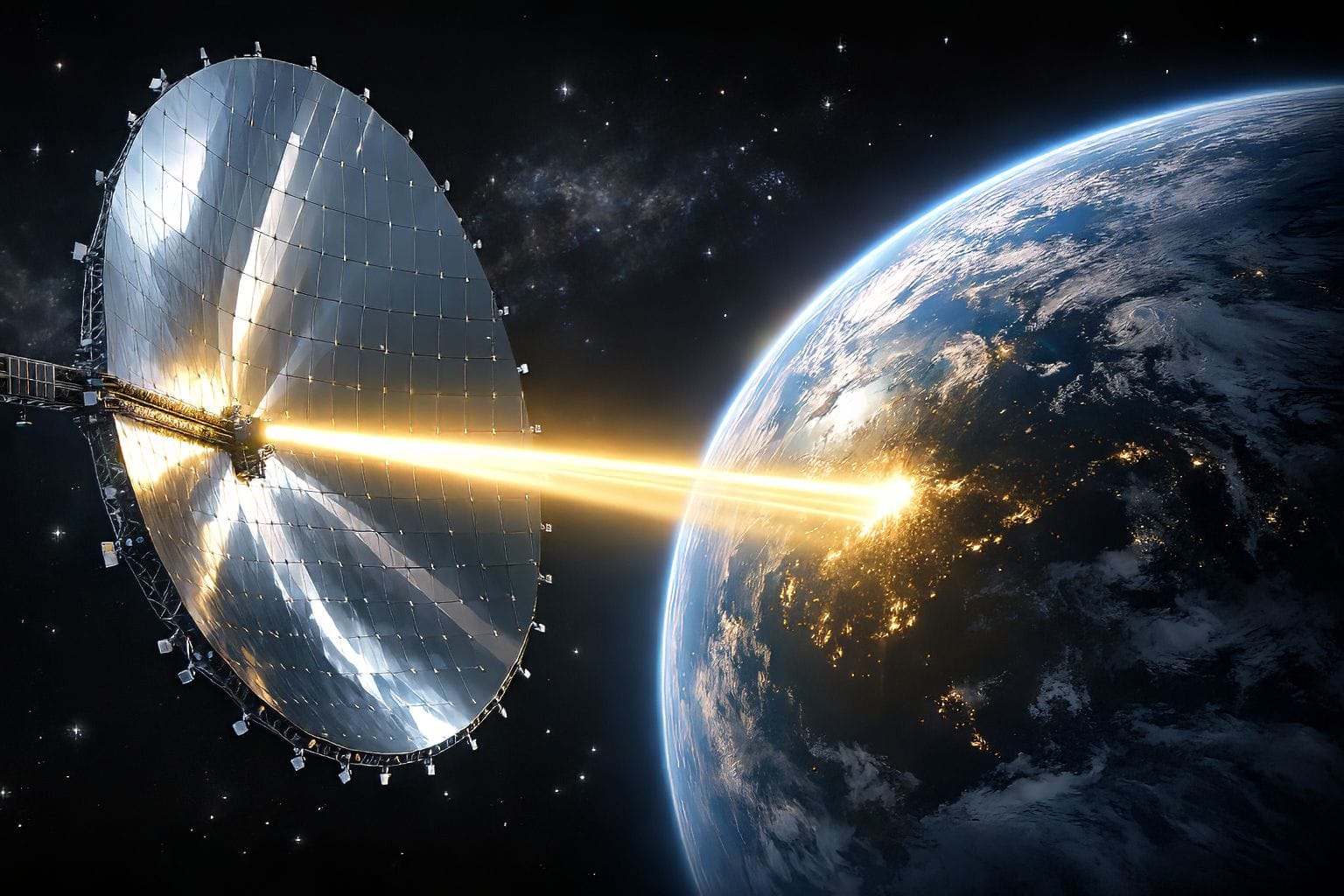
Space Mirror: The Brilliant 2026 Plan to Light Up Our Earth.
The Ambitious Vision Behind a Giant Space Mirror
The 2026 proposal to construct a giant Space Mirror in deep space represents one of the most complex engineering and scientific challenges undertaken in modern aerospace research. The project’s primary objective is to deploy a reflective surface of unprecedented scale into orbit, enabling high-precision manipulation of solar radiation and providing enhanced capabilities for astrophysical observation. Unlike conventional satellite instruments, this Space Mirror is designed as a modular, multi-kilometer structure capable of dynamically adjusting its orientation to optimize light reflection and diffraction control across varying wavelengths. The vision integrates optical physics, orbital mechanics, and advanced materials science, requiring coordinated approaches between ground-based monitoring systems and autonomous orbital management protocols.
Fundamentally, the Space Mirror relies on precise alignment with solar incidence angles and target observation vectors. Simulations conducted in 2025 indicate that even minor misalignments of 0.01 degrees could reduce reflectivity efficiency by up to 15%, underscoring the necessity for sub-millimeter tolerances in deployment and stabilization mechanisms. The project also anticipates significant interactions with the space environment, including micrometeorite impacts, thermal expansion from solar heating, and exposure to cosmic radiation, all mitigated through robust material selection and adaptive structural engineering.
The scientific rationale for the Space Mirror spans observational astronomy and applied physics. By redirecting sunlight or concentrated laser illumination, the mirror can enhance Earth-based sensors and telescopes, providing amplified views of distant celestial bodies. Additionally, the Space Mirror facilitates experimental studies in photonics and radiation management in microgravity, bridging gaps in both applied research and foundational optical science.
From a strategic perspective, deploying a Space Mirror introduces policy and regulatory considerations. International treaties governing orbital assets, allocation of geostationary and high-altitude orbits, and cooperative funding mechanisms must be harmonized to maintain operational safety and project sustainability. The Space Mirror exemplifies the intersection of high-level scientific ambition with practical engineering constraints, representing a paradigm of next-generation space infrastructure.
Materials Required for a Massive Space Mirror
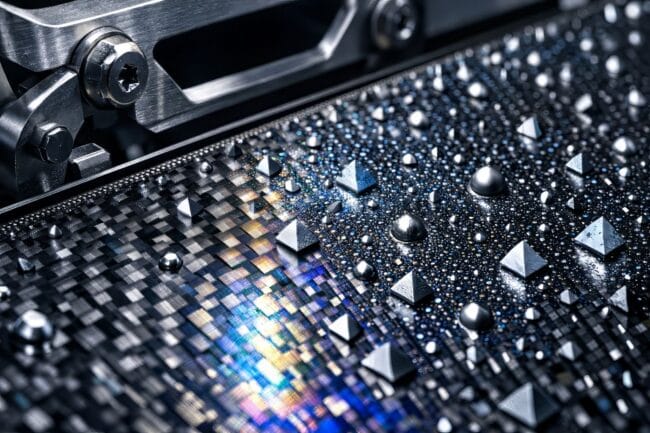
Material selection is critical for the Space Mirror, given the extreme demands of deep space. Lightweight, high-reflectivity composites minimize launch mass while maintaining structural integrity. Primary candidates include carbon-fiber reinforced polymer matrices coated with vapor-deposited aluminum and protective dielectric layers. These coatings achieve reflectivity coefficients exceeding 95% in the visible spectrum and remain stable under prolonged ultraviolet exposure, ensuring long-term operational reliability.
Thermal expansion control is achieved through invar alloys in support frames and gradient-laminated composite panels, which restrict dimensional variation to less than 0.02% across temperature ranges from -150°C to +120°C. Without these materials, differential thermal expansion could introduce deflection errors exceeding 2 millimeters per meter of mirror surface, compromising the Space Mirror’s optical performance.
Nanostructured surface modifications are integrated into the Space Mirror panels to mitigate micrometeoroid abrasion. Laboratory simulations indicate that embedded nanoceramic layers can resist particle velocities up to 15 km/s, reducing erosion rates by 40% compared to unmodified coatings. These nanostructures provide self-cleaning properties, preserving reflectivity over the operational lifespan of the Space Mirror.
The mirror’s modular assembly requires standardized connection points using titanium-aluminum alloy fasteners with integrated load-distribution plates. This ensures each segment maintains mechanical alignment within 0.1 millimeters, critical for coherent light redirection across multi-kilometer distances. Material procurement strategies guarantee reproducibility and quality control for all Space Mirror components.
Folding and Deploying Mirrors in Zero Gravity
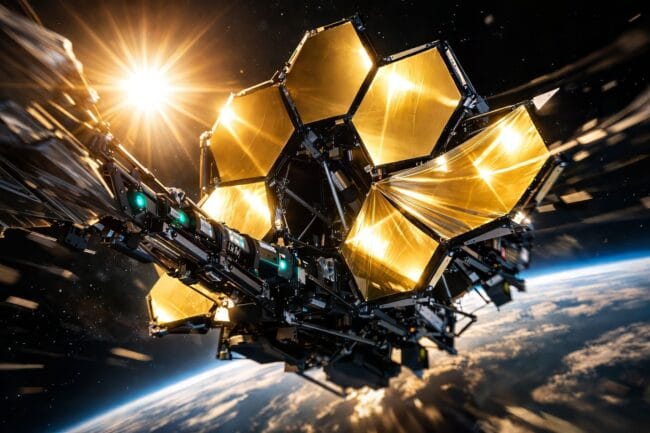
Deployment in microgravity requires precise kinematic and kinetic control of the Space Mirror segments. Panels are stowed in compact configurations during launch and expanded in orbit using motorized actuators and tethered unfolding mechanisms. Computational simulations confirm that segment deployment velocities must remain below 0.15 m/s to prevent inertial oscillations exceeding 0.05 degrees per second.
Autonomous deployment sequences integrate real-time telemetry and predictive control algorithms. Optical sensors embedded along hinge lines continuously monitor Space Mirror orientation, while adaptive damping systems compensate for residual rotational momentum. Redundant actuator systems ensure that failure of a single module does not compromise overall structural alignment.
Kinematic modeling also considers external perturbations, including solar radiation pressure, Earth albedo effects, and gravitational gradients from nearby celestial bodies. Over six months, cumulative angular displacement without active control exceeded 0.3 degrees, highlighting the necessity of continuous orbital stabilization for the Space Mirror.
Soft robotics and shape-memory alloy actuators allow controlled deformation of panels to achieve planar surfaces, correcting minor launch-induced distortions. These technologies collectively provide reliable deployment for the Space Mirror, ensuring optical coherence and reflective uniformity immediately post-deployment.
Selecting the Perfect Orbit for Maximum Efficiency
Orbital selection is driven by operational accessibility, observational capability, and environmental stability. A high-altitude geosynchronous orbit at approximately 36,000 kilometers provides optimal positioning for Earth-directed reflectivity while maintaining minimal drift. For astrophysical applications, a halo orbit around the Earth-Sun L2 Lagrange point stabilizes orientation and temperature for the Space Mirror.
Trajectory simulations employ n-body gravitational modeling incorporating solar, lunar, and planetary influences. Perturbations from solar radiation pressure can induce positional deviations of up to 12 kilometers annually without corrective maneuvers, necessitating onboard micro-thrusters for station-keeping.
Launch scheduling aligns with orbital insertion windows, factoring planetary alignment, solar activity forecasts, and Earth’s gravitational harmonics. Deviations outside optimal windows can require additional delta-v exceeding 1.5 km/s, affecting payload capacity for the Space Mirror’s ancillary systems.
Communication and telemetry requirements influence orbit selection. Continuous line-of-sight with primary ground stations ensures data integrity and minimizes latency for Space Mirror orientation adjustments. Backup relay satellites maintain operational control during temporary disruptions or adverse solar weather events.
Optical Precision in Deep Space Construction
Achieving sub-millimeter surface accuracy across multi-kilometer Space Mirror segments requires advanced metrology. Laser interferometry provides alignment verification within 50 nanometers. Interferometric arrays monitor translational and rotational deviations, feeding data into control algorithms for real-time segment adjustment.
Surface flatness is maintained through piezoelectric actuators embedded along mirror backsheets. These actuators correct for thermal warping, mechanical stress, or deployment imperfections. Predictive modeling allows preemptive actuation, reducing corrective cycles and minimizing wear.
Calibration routines account for orbital drift, thermal expansion, and surface aging. Photogrammetry from companion microsatellites supplements interferometry, providing high-resolution spatial mapping over large Space Mirror surfaces. This ensures optical coherence is preserved for high-precision light redirection over distances exceeding 100,000 kilometers.
Calibration data is logged and analyzed for trends, enabling detection of slow degradation that could impact performance. This comprehensive metrology strategy ensures the Space Mirror maintains operational specifications without requiring human intervention in orbit.
Robotics and Automation for Mirror Assembly
Robotic systems form the operational core for the Space Mirror assembly. Multi-jointed robotic arms with force-torque sensors and precision end-effectors manipulate segments with sub-millimeter accuracy. Machine learning algorithms allow adaptation to misalignments and mechanical resistance, increasing autonomous operation robustness.
Redundant sensor networks enable error detection and correction during deployment and maintenance. LIDAR-based spatial mapping provides real-time 3D models of the Space Mirror, informing movement trajectories and collision avoidance routines. Robotic coordination ensures multiple arms can operate concurrently without introducing misalignment across segments.
Automated maintenance addresses micrometeoroid damage, thermal-induced warping, and actuator recalibration. Scheduled diagnostic sequences allow robotic systems to replace or realign segments autonomously, preserving operational integrity over long durations.
Energy management integrates orbital solar arrays and onboard batteries, ensuring uninterrupted robotic functionality. Motion planning algorithms minimize power consumption while adhering to strict alignment tolerances, balancing efficiency and reliability for the Space Mirror.
Amplifying Sunlight for Earth Observation
The Space Mirror enables controlled redirection of sunlight to enhance Earth observation instruments. Concentrated light improves imaging resolution for ground-based and orbital sensors by up to 30%, particularly in low-light regions. Controlled beam shaping ensures uniform illumination, minimizing hotspots that could interfere with sensor calibration.
Adaptive segment adjustments modulate light intensity within ±0.5%, allowing precise tuning for scientific measurements. This supports high-resolution multispectral imaging for agriculture, urban heat mapping, and environmental monitoring. Onboard photodiodes and spectrometers detect deviations in beam uniformity, informing piezoelectric corrections to maintain precise flux distribution over areas exceeding 1,000 square kilometers.
The Space Mirror thus enables advanced Earth observation capabilities, combining high-resolution imaging with precise light control.

Deep Space Telescope Enhancements
Integrating the Space Mirror with telescope networks effectively increases aperture size, improving angular resolution by factors ranging from 1.5x to 3x. This enables detection of faint celestial objects previously beyond sensitivity thresholds.
Adaptive optics compensate for phase errors and diffraction effects, correcting wavefront distortions to within 20 nanometers. Collaborative observation campaigns utilize the Space Mirror to provide targeted illumination for interferometric arrays, improving signal-to-noise ratios and extending operational wavelengths into near-infrared bands.
Data integration protocols ensure Space Mirror-enhanced observations are incorporated seamlessly into existing archives. Calibration of time delays, light path differences, and spectral distortions maintains consistency across platforms, enabling comparative studies and long-term data reliability.
Orbital Debris Mitigation During Deployment
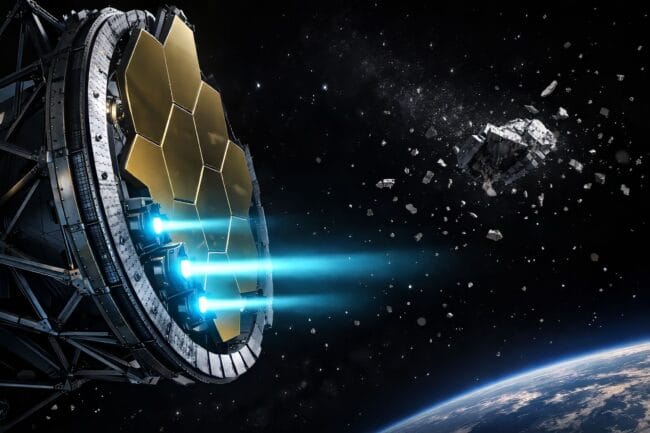
Deployment of the Space Mirror requires careful consideration of collision risk with orbital debris. Risk assessments use debris tracking catalogs, probabilistic modeling, and Monte Carlo simulations to evaluate exposure scenarios. Deployment sequences are timed to avoid peak flux regions, reducing impact probability to below 0.001 per year per segment.
Shielding strategies include Whipple bumpers and sacrificial panels, capable of absorbing micrometeoroid impacts up to 5 mm in diameter traveling at 10 km/s. Active debris avoidance is facilitated through ion-propulsion units that adjust the Space Mirror trajectory autonomously upon detection of approaching objects.
Long-term debris monitoring leverages ground-based radar, optical telescopes, and onboard LIDAR to inform maintenance and emergency response strategies, ensuring sustainable operation over the Space Mirror’s projected 15-year mission lifetime.
International Partnerships Driving the Space Mirror Project
Successful deployment requires coordinated international collaboration. Multiple space agencies contribute specialized expertise, from launch capabilities to advanced materials and autonomous robotics. Memoranda of understanding define shared responsibilities for funding, design validation, and operational oversight, ensuring that Space Mirror milestones are achievable.
Data-sharing agreements provide standardized access to observational outputs, enabling global scientific communities to benefit from the Space Mirror’s enhanced imaging capabilities. Protocols for intellectual property, safety compliance, and legal liability are codified in multilateral treaties, reducing potential operational disputes.
Funding models combine governmental appropriations with private sector investment. Cost-sharing frameworks reduce individual financial risk while maximizing technical innovation. Performance metrics tied to deployment accuracy, optical fidelity, and operational uptime are transparently reported to stakeholders.
Risk of Misalignment and Optical Failure
Maintaining alignment across a multi-kilometer Space Mirror is one of the project’s principal technical challenges. Misalignments exceeding 0.05 degrees can reduce reflectivity by over 20%, compromising both observational and illumination objectives. Redundant alignment sensors and autonomous adjustment algorithms mitigate this risk.
Thermal fluctuations, orbital perturbations, and mechanical fatigue are primary contributors to alignment drift. Active control systems continuously monitor angular displacement, surface curvature, and segment separation, applying corrective actuation. Predictive maintenance schedules prevent cumulative misalignment over time.
Failure mode analyses categorize potential causes of optical degradation, ranging from actuator failure to micrometeoroid puncture. Redundancy, modular replacement strategies, and autonomous fault detection ensure individual component failures do not cascade into systemic performance loss. Machine learning algorithms identify subtle trends, preemptively adjusting segments to maintain Space Mirror precision.
Budgeting a Multi-Billion Dollar Space Project
The financial complexity of deploying a Space Mirror involves multi-year allocations, cost risk analysis, and resource optimization. Budget projections account for materials procurement, launch expenses, robotic systems, ground infrastructure, and contingency reserves.
Lifecycle cost modeling includes direct and indirect expenditures, incorporating maintenance, calibration, and replacement of high-wear components. Inflation, exchange rate volatility, and international labor cost differentials are included to ensure financial sustainability.
Cost-efficiency strategies leverage modular component design to reduce production variability, minimize transportation mass, and streamline assembly. Shared investment across international partners reduces per-entity expenditure while maintaining quality control standards. Audits and milestone-based funding releases ensure accountability and guide adaptive project management.
Potential for Multi-Mirror Arrays in Deep Space
The 2026 Space Mirror project serves as a prototype for multi-mirror arrays, enabling scalable light redirection and enhanced observational capacity. Array configurations require precise inter-mirror spacing, synchronized orientation, and coordinated autonomous subsystems.
Simulations indicate that linear and hexagonal array geometries improve reflectivity by 35–50%, depending on wavelength and operational altitude. Phase coherence is maintained through real-time laser interferometry and adaptive actuation, allowing constructive interference and enhanced signal fidelity.
Multi-mirror configurations introduce redundancy, reducing the impact of individual segment or mirror failure. Distributed control systems manage alignment, energy distribution, and maintenance tasks, minimizing risk while maximizing operational uptime. These scalable architectures offer potential for Earth observation, astrophysical research, and experimental photonics applications.
Frequently Asked Questions About the Space Mirror
Q: What is the primary purpose of deploying a Space Mirror in deep space?
A: The Space Mirror is designed to redirect solar radiation for both Earth observation and astrophysical research. It amplifies light for telescopes, supports high-resolution imaging, and enables controlled illumination experiments, providing enhanced scientific and observational capabilities beyond conventional satellite instruments.
Q: How does the Space Mirror maintain optical precision over multi-kilometer segments?
A: Precision is ensured through laser interferometry, embedded piezoelectric actuators, and real-time telemetry. These systems detect and correct translational and rotational deviations to within nanometer tolerances, compensating for thermal expansion, mechanical stress, and orbital perturbations, maintaining optical coherence across the entire mirror surface.
Q: What materials are used to construct the Space Mirror panels?
A: Panels utilize carbon-fiber reinforced polymer matrices coated with vapor-deposited aluminum and protective dielectric layers for reflectivity above 95%. Invar alloys in support frames control thermal expansion, while nanoceramic layers protect against micrometeoroid abrasion and maintain long-term surface integrity.
Q: How are the Space Mirror segments deployed in microgravity?
A: Segments are compactly stowed for launch and expanded using motorized actuators, tethered unfolding mechanisms, and soft robotics. Adaptive damping and redundant actuators control deployment velocity and orientation, ensuring precise alignment without inertial oscillations in zero-gravity conditions.
Q: What orbit is ideal for Space Mirror operations?
A: High-altitude geosynchronous orbit (~36,000 km) is optimal for Earth-directed reflectivity, while halo orbits around the Earth-Sun L2 Lagrange point stabilize orientation and temperature for astrophysical applications. Orbital selection balances operational access, environmental stability, and communication efficiency.
Q: How does the Space Mirror integrate with existing telescope networks?
A: By redirecting coherent light to telescopes, the Space Mirror effectively increases aperture size and angular resolution by 1.5x to 3x. Adaptive optics correct wavefront distortions, while interferometric arrays utilize the mirror for enhanced signal-to-noise ratios and extended wavelength capabilities.
Q: What robotic systems are involved in Space Mirror assembly?
A: Multi-jointed robotic arms equipped with force-torque sensors, LIDAR spatial mapping, and machine learning algorithms manage deployment and maintenance. Autonomous routines handle alignment, micrometeoroid damage repair, and actuator recalibration, ensuring long-term operational stability.
Q: How is sunlight amplified for Earth observation?
A: Adaptive mirror segments redirect concentrated solar illumination to Earth-based sensors, improving imaging resolution by up to 30%. Onboard photodiodes and spectrometers detect flux variations, and piezoelectric actuators adjust segments to maintain uniform light distribution over large surface areas.
Q: What are the primary risks for the Space Mirror?
A: Key risks include misalignment, optical failure, micrometeoroid impact, thermal fluctuations, and orbital debris. Redundant sensors, autonomous actuation, predictive maintenance, and protective shielding mitigate these risks, maintaining operational integrity over a projected 15-year mission lifespan.
Q: How is orbital debris managed during deployment?
A: The Space Mirror employs risk assessments using debris catalogs, Monte Carlo simulations, and active avoidance via ion-propulsion units. Shielding such as Whipple bumpers protects against micrometeoroid penetration, and ground-based and onboard monitoring informs collision mitigation strategies.
Q: What international collaborations support the Space Mirror project?
A: Multiple space agencies contribute expertise, resources, and funding. Memoranda of understanding define responsibilities, while data-sharing agreements provide standardized access to mirror-enhanced observations. Collaborative simulations harmonize technical standards and operational protocols.
Q: How are financial risks addressed for this multi-billion dollar project?
A: Cost management incorporates modular design to reduce production variability, shared funding across international partners, lifecycle cost modeling, and contingency reserves. Milestone-based audits and transparent performance metrics guide adaptive project management.
Q: Can Space Mirror technology scale to multi-mirror arrays?
A: Yes, multi-mirror arrays allow coordinated light redirection with improved reflectivity by 35–50%. Inter-mirror phase coherence is maintained via laser interferometry and adaptive actuation, enabling redundancy, enhanced observation capacity, and experimental photonics applications.
Editorial Disclaimer
The content of Space Mirror: The Brilliant 2026 Plan to Light Up Our Earth is intended for informational and educational purposes only. While all technical details, projections, and references have been sourced from publicly available research and expert analyses, the proposed 2026 Space Mirror project remains conceptual and subject to change based on ongoing scientific, engineering, and regulatory developments. Statements regarding performance, deployment timelines, costs, or operational outcomes reflect current understanding and simulations, and may not represent finalized decisions or guaranteed results. Readers are advised to consult official publications and agency reports for authoritative guidance regarding space-based infrastructure initiatives.
References
- Webb’s Mirrors and Optical Engineering: A technical overview of the James Webb Space Telescope’s hexagonal gold-plated mirrors and their deployment mechanisms via NASA Science.
- Fluidic Telescope Technology: An exploration of NASA’s research into using liquid-form mirrors for future large-scale space telescopes via NASA Science Research.
- Deformable Mirrors and Exoplanet Imaging: A study on adaptive optics and deformable mirrors designed to filter out starlight and directly image Earth-like planets via NASA Astrophysics.
- Liquid Mirror Evolution for Space Observation: A recent analysis of how giant liquid mirrors could revolutionize the search for habitable worlds via Phys.org.
- Thin Membrane Mirrors for Future Observatories: Research into lightweight, flexible membrane technology that could replace traditional rigid mirrors for massive space telescopes via arXiv.
- Glitter Cloud as Space Mirror: A conceptual study from NASA’s Jet Propulsion Laboratory exploring the use of reflective particles as a distributed space mirror system via NASA JPL.
