
China’s 1MW Flying Wind Turbine: The Future of Energy
Wind energy has always followed a simple rule: go where the wind is strongest. For decades, engineers responded to this challenge by building taller towers and moving turbines far offshore. Now, China is attempting something far more ambitious by lifting the generator itself into the sky.
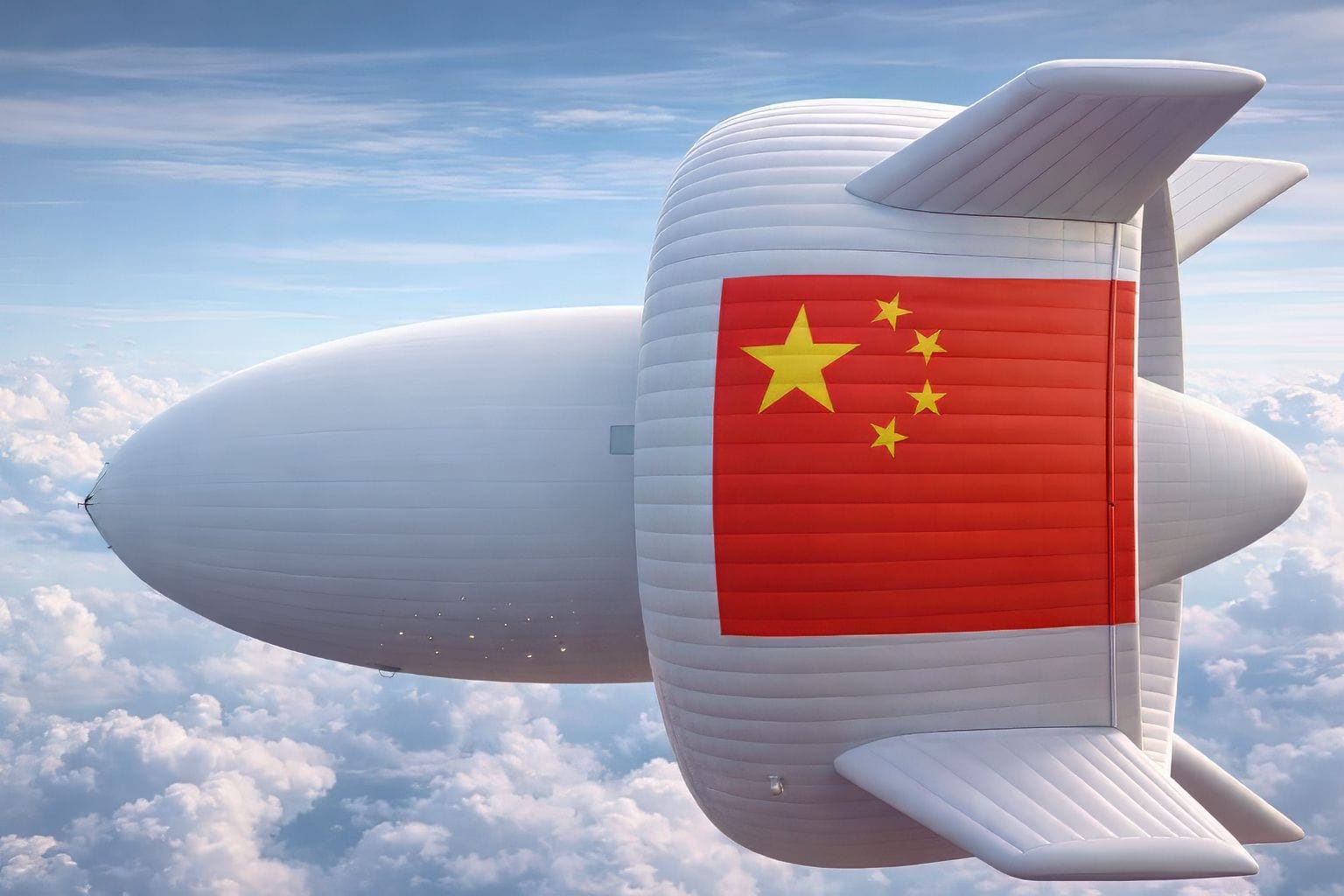
China’s 1MW Flying Wind Turbine, suspended by tethers and guided by autonomous systems, represents a major shift in how renewable electricity might be produced in the future. Instead of competing for coastal real estate or erecting massive steel structures, energy developers could tap into the steady winds that sweep across higher altitudes.
The idea sounds futuristic, and perhaps even theatrical. Yet, behind the spectacle lies a serious engineering effort aimed at addressing real problems in grid stability, land use, and renewable scalability. This article examines how this airborne system works, what makes it technically significant, and whether it can evolve from a daring prototype into a commercial power source.
How the 1MW Airborne System Actually Works
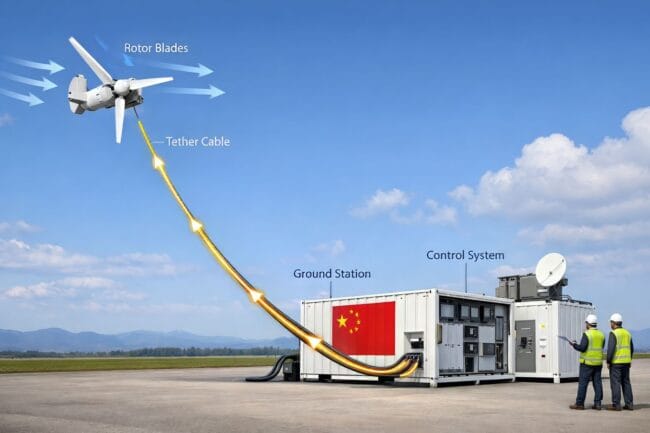
The whole logic behind China’s 1MW Flying Wind Turbine is actually quite simple: it ditches heavy steel towers to chase better wind at higher altitudes. Instead of a fixed base, engineers put the generator on a winged platform and let it climb hundreds of meters into the sky. Up there, the air is not just faster, it is also much more reliable. A high strength cable keeps the whole thing tied to a mobile station on the ground, while also doubling as the straw that sucks the electricity down to the grid.
This isn’t your average backyard kite. A megawatt class system like this acts much more like a high tech drone. It is packed with sensors that keep a constant eye on wind speed, air turbulence, and the exact angle of the craft. These sensors send data back to the flight controls dozens of times every single second. The onboard rotors or wings then make tiny, split second tweaks to stay steady and keep the power generation high. The flight path follows a very specific loop, designed to grab as much energy as possible from the passing air.
You can think of the ground station as the real brain of the operation. It does a lot more than just hold onto the rope. It manages the tricky task of converting power, keeps the right amount of pull on the tether, and handles everything from launch to landing. When you see it in person, the setup feels more like a small scale space mission than a traditional wind farm. Even though the turbine is busy working up in the clouds, its command center never leaves the ground.
The Physics of High Altitude Winds and Why They Matter
There is a simple reason why the air is so much more powerful once you get away from the ground. Down here, trees, hills, and even city buildings act like a giant brake, creating friction that slows the wind to a crawl. But move up a few hundred meters, and those obstacles vanish. The air is free to accelerate and stay steady. For energy experts, this is a huge deal. Because of how the math works, even a tiny increase in wind speed can lead to a massive jump in the power you get. This is exactly what makes China’s 1MW Flying Wind Turbine such a breakthrough. It reaches up into those fast, clean currents that traditional towers just can’t touch.
These airborne systems are designed to hunt for the best wind. Instead of waiting for a breeze to hit a stationary blade, these turbines go where the energy is. At high altitudes, the wind doesn’t just blow harder. It is also more consistent. This solves one of the biggest headaches for power grids, which is the constant fluctuation of energy from typical wind farms. Having a steadier flow of electricity means we don’t have to worry as much about those long, calm periods when the lights might go out.
The real challenge, though, is the sheer complexity of the sky. The atmosphere isn’t just an empty space. It is a shifting world of temperature changes and pressure pockets. To keep China’s 1MW Flying Wind Turbine operational, engineers had to move away from just “building it bigger.” Instead, they used clever aerodynamics and real time meteorology. The system has to be smart enough to climb or dip to stay in the most energetic corridors. It is a delicate dance between high tech materials and a deep understanding of how the atmosphere actually moves.
Who Is Actually Flying This Thing?
You can’t expect a human to sit at a screen and fly a massive power plant 24/7. It just isn’t possible. Instead, the China’s 1MW Flying Wind Turbine relies on incredibly smart software to handle the heavy lifting. The system is constantly sucking in data from every sensor it has, including GPS, wind gauges, and even ground-based radar. All of this information helps the turbine build a live map of the sky so it can stay stable and catch as much energy as possible without any human help.
This is where machine learning really starts to shine. These models aren’t just reacting to the wind. They are predicting it. By looking at patterns, the software can guess when a big gust is coming and adjust the flight path before the wind even hits the blades. Over time, as more of these turbines spend years in the sky, they develop a kind of digital “muscle memory.” They learn exactly how to move during different seasons or in weird weather, making the whole operation more efficient every single day.
Safety is the one thing the engineers never gamble with. Even though a giant turbine hovering in the clouds looks like a bold experiment, the software running it is incredibly boring and cautious. It is packed with backup systems and “fail-safe” modes. If even one sensor looks slightly off, the computer takes the most conservative path possible to stay safe. It might look like an adventurous piece of tech, but its brain is more like a very careful accountant who hates taking unnecessary risks.
Plugged Into the Grid
Making power in the sky is one thing, but getting it into the grid without causing a blackout is a whole different story. Grid operators are notoriously difficult to please. They don’t just want power. They want perfectly steady energy that won’t fry the system. Because of this, China’s 1MW Flying Wind Turbine has to rely on some serious hardware back on the ground. This ground station works like a buffer. It cleans up the raw electricity and smooths it out before it ever touches a single home or factory.
The wind isn’t always there, which is a massive headache for any renewable project. High altitude winds are definitely more reliable, sure, but they still have their moments. To fix this, the industry is looking at batteries or even hydrogen storage to fill the gaps. The way I see it, these flying turbines aren’t just standalone toys. They have to be part of a much bigger, smarter energy network. You need a solid backup plan for those rare times when the air goes still.
Let’s be real. Utility companies don’t care how cool a turbine looks while it’s hovering in the clouds. They only care about the bottom line. They look at spreadsheets, not aerodynamics. They want to know if the system is reliable and how much it costs to fix when something inevitably breaks. For airborne wind tech to really make it big, it has to prove it is a workhorse, not just a science experiment. Engineers might love the flight data, but the people signing the checks only care about long-term results.
A Bold Leap or Just a Fancy Experiment?
So, where does all of this leave us? The China’s 1MW Flying Wind Turbine is definitely a massive step away from how we usually think about green energy. It is bold, it is high-tech, and it tackles the wind problem from an angle that most people never even considered. By reaching into the higher atmosphere, it taps into a source of power that is basically sitting there waiting for us. But we have to be honest with ourselves. This isn’t a guaranteed win just yet.
The path ahead is still full of big “ifs.” We still need to see if these systems can survive years of brutal ocean salt and unpredictable storms without falling apart. We also need to see if the costs actually stay low enough to make sense for big energy companies. It is one thing to have a successful test flight. It is another thing entirely to have thousands of these things powering our cities without constant breakdowns.
Ultimately, the success of this tech won’t be decided by how cool the physics looks on a whiteboard. It will be decided by the results. If engineers can prove that these flying turbines are reliable and cheap to run, then the sky is literally the limit. We are looking at a potential revolution in how we power the world. It is an exciting moment, but now comes the hard part: making it work in the real world, day in and day out.
The Red Tape in the Sky
Finding a spot for the China’s 1MW Flying Wind Turbine isn’t as simple as just launching it into the clouds. The sky is actually a very crowded place. You have commercial planes, military jets, drones, and even weather balloons all sharing the same space. Because of this, getting a permit isn’t just about filling out one form. It is a massive paperwork headache that involves talking to aviation authorities, defense departments, and even telecom companies. It is a whole portfolio of approvals, not just a single piece of paper.
Safety is the biggest concern here, and for good reason. Authorities are going to demand strict rules on where these things can fly and how they are tracked. Every single turbine will probably need a way to broadcast its position to nearby aircraft in real time. And if something goes wrong, there has to be a rock-solid plan for a controlled descent. You can’t just have a megawatt-class machine floating around without a clear “emergency stop” button that the flight controllers can trust.
The real problem is that laws always move slower than technology. Lawmakers don’t care about how exciting a new invention is. They want cold, hard data before they change any rules. Right now, the people building these flying turbines might find that their toughest battles aren’t happening in the sky against the wind. Instead, the real fight is happening in quiet conference rooms, trying to convince skeptical officials that this tech is safe enough to be part of our everyday lives.
A Bold Leap or Just a Fancy Experiment?
Let’s be realistic. Flying turbines probably won’t replace those giant steel towers we see on hillsides anytime soon. Traditional wind farms are efficient, everyone understands how they work, and banks are happy to fund them. Power companies aren’t in the habit of throwing away a proven system just because something newer and more “photogenic” comes along. It is going to take a lot of work to change that mindset.
The more likely future is one where these flying systems find their own special niche. They are perfect for remote areas, offshore platforms, or places where building a massive concrete foundation is just impossible. Instead of trying to kill off solar or traditional wind, the China’s 1MW Flying Wind Turbine will likely work alongside them. It is another tool in the box, helping us get clean energy from places we couldn’t reach before.
At the end of the day, whether this project becomes a global standard or just a cool story in a history book depends on the data, not the hype. If the reliability is there and the costs make sense, we are looking at a real revolution. If not, it will still be remembered as a brave attempt to solve a massive problem. Either way, it is a clear sign that the search for clean energy is officially moving upward.

A Global Race for the Sky
China is definitely leading the charge right now, but they aren’t the only ones trying to make this happen. Across Europe, startups are busy testing out massive energy-generating kites, and in the US, researchers are experimenting with everything from tethered gliders to rotating wings. Everyone has plenty of imagination, but what really sets these projects apart is the ability to actually build them at scale. It is one thing to have a cool idea in a lab, but it is another thing entirely to get it flying in the real world.
When you see a project like China’s 1MW Flying Wind Turbine, it sends a clear message. It shows that they have the industrial muscle and the policy support to take a big risk. In the energy industry, being willing to absorb some early losses to gain long-term leadership is a huge advantage. Sometimes, having the patience to see a project through is even more valuable than just being technically brilliant.
This international competition is actually great for everyone because it speeds up the whole process. Between global conferences and different countries running their own pilot programs, there is a lot of pressure to make these designs better and faster. It turns out the sky is becoming a very busy laboratory. We are watching a global race unfold, and the winner will be whoever can turn this high-flying tech into a dependable source of power for the rest of us.
From a Cool Prototype to a Real Industry
Building a couple of prototypes is one thing, but churning out thousands of them on a factory line is a whole different ball game. You have to rethink every single screw and cable. For the China’s 1MW Flying Wind Turbine to become a reality, every part has to be made with perfect consistency. The tethers need extreme quality control so they don’t snap, and the electronics have to be tough enough to survive years of rain, wind, and sun without blinking.
The supply chain is where things usually get messy. We are talking about rare magnets, high-tech fibers, and sensors that you can’t just buy at a local store. These aren’t infinite resources. Getting your hands on enough of these materials to build a whole fleet of turbines is just as much of a challenge as the engineering itself. If you can’t secure the supplies, your deployment timeline is going to fall apart, no matter how good your tech looks on paper.
Automation is likely the only way forward. To keep costs down and quality up, you need robots on the assembly line and smart systems that can predict a mistake before it even happens. In the world of green energy, this is the “make or break” moment. It is the point where a clever invention either matures into a world-changing industry or just quietly fades away because it was too hard to build at scale.
The Nature Trade-Off: Is It Actually Greener?
One of the best things about airborne wind is that it doesn’t take up much space on the ground. You don’t need those massive, sprawling wind farms that eat up miles of land. Instead, you have small ground units and a lot of empty space around them. This is a huge win for local wildlife habitats and, let’s be honest, it looks a lot better than a forest of steel towers. If you move these systems offshore, they get even further out of everyone’s way.
But we have to look at the flip side. Just because it is not on the ground doesn’t mean it has zero impact. We are moving the “problem” higher up into the sky. This means we have to be really careful about bird migration paths and where bats are flying. Even insect layers in the atmosphere matter more than you’d think. If we put these in the ocean, we also have to think about how the anchors and the maintenance boats might mess with life under the waves.
In the end, checking the environmental impact is going to get a lot more complicated, not easier. Lawmakers are going to want long-term proof that these flying turbines aren’t causing some new disaster we haven’t thought of yet. A technology that is supposed to save the planet has to prove that it isn’t creating new blind spots. It is not enough to just be “green” on paper. You have to show that the China’s 1MW Flying Wind Turbine can live in harmony with the actual birds and fish, day in and day out.
The Tether: More Than Just a String
You can think of the tether as the literal backbone of the whole operation. It is probably the hardest part to get right. This cable has to be light enough to let the turbine stay in the air, but also incredibly tough so it doesn’t snap under the constant pulling of the wind. It isn’t just a rope either. It is also the power line. This means the China’s 1MW Flying Wind Turbine relies on this single link to stay anchored and to send electricity back down to the ground. If the tether fails, the whole project fails.
To make this work, engineers have to move away from heavy steel and use advanced stuff like carbon fibers or special polymers. These materials are amazing because they are super strong without adding too much weight. But they aren’t easy to work with. You have to constantly check them for tiny cracks or signs of wear. Since the wind is always tugging and pulling at different angles, the material is under a massive amount of stress every single second. It is a constant battle against fatigue.
Moving electricity through a moving cable is another huge headache. You have to make sure you aren’t losing too much power along the way. Plus, the insulation has to survive everything from freezing rain to baking sun, all while the cable is twisting and turning in the sky. In a setup like this, the cable is no longer just a passive part of the machine. It is a structural, electrical, and safety-critical piece of tech that has to perform perfectly 24/7.
Why One Megawatt in the Air Is a Serious Claim
Hitting the one megawatt mark is a big deal because it takes the technology out of the lab and into the real world. This is utility grade power, the kind of scale that can actually keep the lights on for hundreds of homes. Building China’s 1MW Flying Wind Turbine was no small feat. It forced engineers to master complex aerodynamics, use high end composites, and develop cables that can handle immense stress without snapping.
The logic for going high is simple. Winds way above the ground are much faster and stay more consistent than the messy air we have near the surface. This is a game changer for inland areas where traditional turbines usually struggle to perform. Since even a slight bump in wind speed leads to a massive jump in power output, those high altitude currents are basically a gold mine for renewable energy.
There is a huge financial side to this as well. If you can get the same power from a flying unit as you do from a massive tower, the costs drop through the floor. Traditional wind projects spend a fortune on steel, concrete foundations, and giant cranes. By getting rid of those massive structures, you are not just saving material. You are completely rewriting the rulebook for how companies invest in green energy projects across the entire industry.
Control Systems That Keep the Turbine Airborne
Keeping a whole power plant floating in the sky is a massive challenge. The platform has to juggle several things at once: lift, drag, the pull on the cable, and the actual power output. If even one of these gets out of balance, the system loses its stability or has to make an emergency landing. Neither of these is a good outcome for an energy grid that needs a steady flow of power.
This is where the brain of China’s 1MW Flying Wind Turbine comes into play. The system relies on autonomous controls that never stop working. Flight algorithms are constantly tweaking the orientation and path of the turbine. They react instantly to sudden wind gusts or changes in the air. Most of this tech is borrowed from aerospace engineering and high end drone navigation, where precision is everything.
There is actually a bit of irony here. Even though the turbine looks like something from the far future, its software is built to be very cautious. Everything is backed up. The sensors, the communication links, and the electronics all have redundant systems. If anything feels off, the software is programmed to prioritize a safe descent over catching more wind. Simply put, the system is built to shut down and land safely long before it has a chance to fail in a dangerous way.

Environmental Impact Versus Conventional Turbines
Supporters of this technology argue that airborne systems could fix many of the headaches caused by traditional wind farms. For one, the ground footprint is tiny. This means much less damage to the local landscape and the surrounding ecosystem. If these are deployed offshore, you would not need those massive concrete foundations that tear up the seabed. It is a much cleaner way to set up shop in the ocean.
The visual part is a bit of a toss-up. A turbine hovering high in the clouds is definitely hard to miss. However, a thin cable and a compact flying platform might actually be easier on the eyes than a literal forest of massive steel towers. Noise is another big win here. Since all the loud, rotating parts are hundreds of meters up in the air, the sound levels at ground level should be much lower.
Wildlife and flight safety are still the biggest hurdles. Birds, drones, and traditional planes all use the same airspace that China’s 1MW Flying Wind Turbine needs to occupy. Dealing with these risks is going to require high end monitoring systems and new rules that do not even exist yet. Having the engineering talent to build this is one thing. Cramming it into our already crowded skies is a completely different challenge.
Scaling From Demonstrator to Commercial Fleet
Prototypes are usually quite forgiving, but commercial energy fleets are not. To get past the experimental phase, the teams behind China’s 1MW Flying Wind Turbine have to prove it can actually last. This means showing that the system is reliable over the long haul, has a predictable maintenance schedule, and can stay stable through every season and weather change.
Manufacturing brings its own set of headaches. You have to mass produce lightweight composite parts without losing any strength. The cables are another story. These tethers are not just accessories, they are the backbone of the whole system and they have to survive constant mechanical stress and the elements. Any weak spot here could drive up maintenance costs, and that is the kind of surprise that utility companies hate the most.
Getting this power into the grid is just as tough. The electricity generated up in the clouds still has to meet very strict rules for frequency and voltage once it hits the ground. Power companies are not going to rebuild their entire networks just to fit airborne platforms. This technology has to prove it can play by the existing rules of our current infrastructure, not the other way around.
What Makes China’s Project Different
The idea of pulling energy from the wind using kites or drones isn’t just a Chinese thing. Startups in Europe and research teams in the US have been messing around with these concepts for quite a while now. But what really puts the Chinese effort in a different league is the sheer scale of it. They have the kind of industrial muscle and government backing that most small startups can only dream of.
Building something with a one megawatt target shows that this isn’t just a fun science project anymore. It is a serious bet on the future. To pull this off, you need massive aerospace factories, power grid managers who are willing to take a risk, and government officials ready to write an entire playbook for sky based power plants. It is very rare to find all those pieces moving in the same direction at once.
There is a huge strategic element here too. Right now, every country is rushing to cut carbon emissions while trying to keep their own energy supplies safe. In that kind of race, “weird” tech like this becomes a powerful tool for both climate goals and industrial dominance. These flying turbines might look like a bit of a show, but they fit right into a much bigger plan to stop relying on fuel from other countries.
The Realistic Future of China’s Flying Turbine Program
Is China’s 1MW Flying Wind Turbine going to replace traditional wind farms anytime soon? Almost certainly not. Huge towers and massive offshore arrays are proven, bankable technologies with decades of data to back them up. Power companies do not walk away from that kind of reliability without a very good reason.
A more likely future is one where these technologies live side by side. Flying systems could be perfect for remote spots, deep offshore zones where you cannot build a foundation, or places where huge towers just are not an option. They might even work alongside solar farms, picking up the slack at night or during the winter months when the sun is not helping as much.
At the end of the day, the success of this project will depend more on spreadsheets than on the spectacle itself. Things like maintenance costs, insurance premiums, and boring regulatory approvals will decide its fate. If the numbers actually add up, the rest of the industry will follow with plenty of enthusiasm. If they don’t, this will just stay an impressive example of how far renewable engineering can reach into the sky, even if it does not stay there forever.
Frequently Asked Questions: China’s Flying Wind Turbine
Q: What is China’s 1MW flying wind turbine?
A: Think of it as a power plant that stays in the sky. It is a renewable energy system that flies at high altitudes while being attached to a ground station by a strong cable. Instead of sitting on a heavy tower, it reaches up where the wind is much stronger and steadier.
Q: How does a flying wind turbine produce electricity?
A: It uses rotors or wings to catch the wind and spin generators right there in the air. That electricity then travels down through a special tether to the ground station. From there, the power is cleaned up and sent straight into the electrical grid.
Q: Why operate at high altitude instead of building taller towers?
A: The simple answer is that the wind is better up there. Near the ground, trees and buildings slow the air down. Hundreds of meters up, the wind is fast and never really stops. Since faster wind means a huge jump in power, it makes more sense to go higher than to build a massive, expensive steel tower.
Q: Is one megawatt a meaningful level of power?
A: Absolutely. One megawatt is a serious amount of energy. It is enough to power hundreds of homes at once. Reaching this level with a flying system is a massive engineering win and proves that this isn’t just a small science experiment anymore.
Q: How is the turbine kept stable in the air?
A: It has its own “brain.” Smart software constantly watches the wind and adjusts the turbine’s position in real time. It uses GPS and sensors to stay steady. If the weather gets too crazy, the system is programmed to bring the turbine down safely.
Q: Is this technology safe for aircraft and nearby communities?
A: Safety is the number one priority. These turbines won’t be flying just anywhere. They need special permits, restricted flight zones, and systems that tell nearby planes exactly where they are. Everything is monitored 24/7 to make sure there is no risk to people or aircraft.
Q: What are the environmental benefits compared to traditional wind farms?
A: The biggest plus is that you don’t have to ruin as much land with concrete foundations. It has a much smaller footprint. Of course, we still have to keep an eye on bird migration and local wildlife, but overall, it is a much less intrusive way to get green energy.
Q: Can flying turbines replace conventional wind farms?
A: Not entirely, at least not yet. Traditional wind towers are still very good at what they do. Flying turbines are more likely to fill the gaps, working in remote places, islands, or deep-sea locations where building a normal tower is just too hard or expensive.
Q: What challenges must be solved before large scale deployment?
A: We need to prove that the cables can last for years and that the systems are cheap enough to build in large numbers. Getting the right insurance and convincing regulators that it is 100% safe are also huge steps that still need work.
Q: When could airborne wind systems become commercially common?
A: It all depends on the data from these first big tests. If the costs stay low and the machines stay reliable, we could start seeing them in specialized markets pretty soon. It won’t happen overnight, but the progress is moving faster than most people expected.
Editorial Disclaimer
This article is based on a mix of public reports, technical research papers, and what experts are currently saying about China’s 1MW Flying Wind Turbine and similar airborne programs. We have done our best to keep everything accurate, but keep in mind that in the world of fast-moving tech, things change quickly. Technical specs and timelines can shift as soon as new data comes in from the field.
The thoughts and analysis shared here are just for information. They aren’t meant to be professional engineering advice or investment tips. If you are looking to make big decisions based on this technology, you should definitely talk to a qualified pro or check the primary technical sources yourself first.
When we talk about what might happen in the future, we are sharing current expert opinions, not making promises. Like any brand-new energy system, there is always a chance that real-world performance will look a bit different once these things are running at full scale.
Reference
- Megawatt-Class High-Altitude Wind Power System: The official academic announcement regarding the successful maiden flight and grid-connection of the world’s first megawatt-class airborne wind energy system, developed by the Tsinghua University Department of Electrical Engineering.
- World’s First Megawatt-class Commercial Airborne Wind Power System: An authoritative report on the test flight success under harsh Gobi Desert conditions, provided by the official Chinese government ecological and economic portal eco.gov.cn.
- China Completes World’s First Megawatt-level Floating Wind Power Test: A comprehensive news coverage by the state-level China News Service (CNS), explaining the significance of the “Power Plant in the Sky.”
- China Tests Buoyant Turbine to Harvest Wind Energy in Sky: A strategic analysis of high-altitude wind energy harvesting and its role in China’s renewable energy goals, reported by China Daily.
- World’s First Urban-use mW-class High-altitude Wind Turbine: Updates on the urban application and grid-connection testing phase of these airborne systems via Global Times.
