

A Century of Fashion: 9 Eras That Shaped Style
Fashion is more than just fabric; it is the silent architecture of our social evolution. Across this Century of Fashion, we have used clothing to break chains, signal power, and define the boundaries of our identity. From the liberating silhouettes of the 1920s to the digital frontiers of tomorrow, this visual essay explores the 9 eras that shaped style, revealing how every garment we wear is a mirror held up to history.
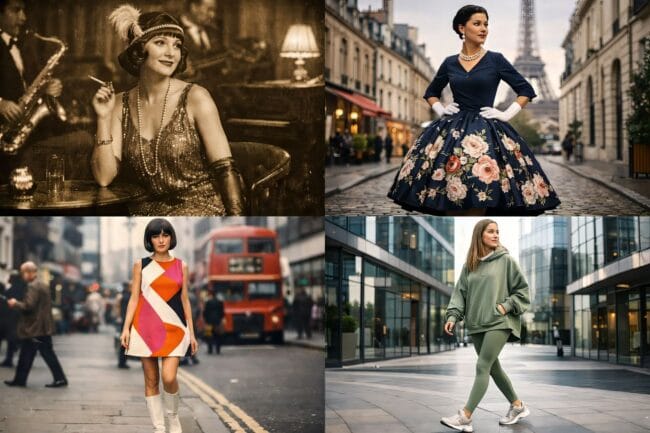
Women’s Fashion: The Architecture of Liberation
Women’s fashion is no longer just clothing. It is a social instrument of expression. The 1920s were not simply about shortening skirts. They represented women claiming their right to occupy public spaces and participate fully in society. Leaving the corset behind symbolized a break from confinement and control, turning garments into tools of empowerment. Today, “Athleisure” goes beyond comfort. It embodies the perpetual readiness of the modern woman. She is simultaneously professional, athletic, and individual. Fashion has become a structural reflection of liberation.
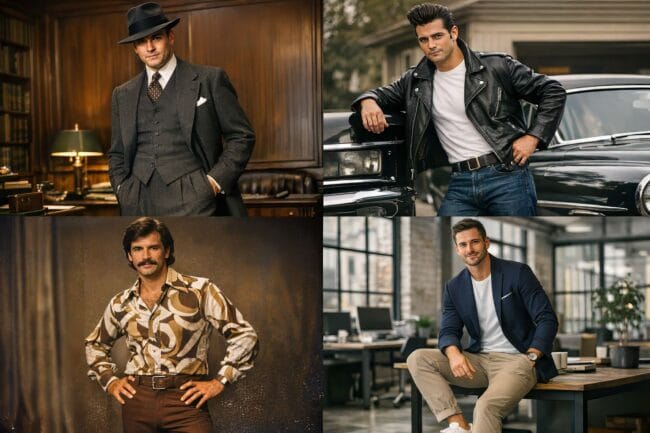
Men’s Fashion: The Softening of Power
Men’s fashion has witnessed the democratization of authority. In previous centuries, a tailored suit and tie acted as social armor, signaling hierarchy and control. Today, these rigid symbols have softened. “Business Casual” emphasizes ideas over etiquette, allowing personality to communicate influence more than traditional dress codes. Sneakers in boardrooms or casual layers in formal settings are statements of 21st-century freedom. Clothing has transformed from a tool of dominance to an instrument of self-expression and ethical presence.
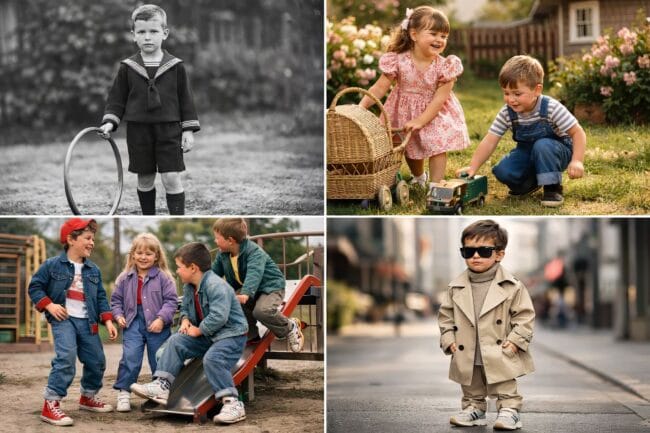
Children’s Fashion: Protecting the Sanctuary of Childhood
Historically, children were dressed as miniature adults. Their clothing was often designed to accelerate growth into societal roles. Modern fashion recognizes childhood as a protected domain. Fabrics are chosen for safety, comfort, and durability, while design allows imagination and play to flourish. Clothing has become a form of technological care, respecting autonomy while subtly teaching social and aesthetic awareness. Children are no longer imitators. They are architects of their own miniature worlds.
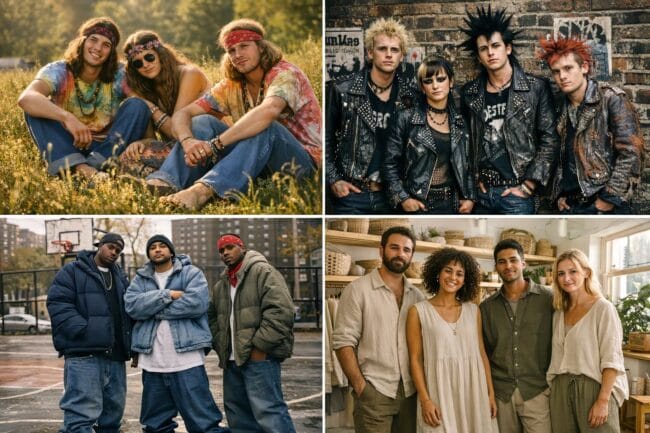
Fashion has evolved into a language of social belonging and ethical signaling. In the past, subcultures such as Hippies, Punks, or Hip-Hop communities communicated resistance through style. In the digital era, clothing has become a visual algorithm. Eco-Minimalists, for example, broadcast responsibility toward the planet through their garments. Fashion has become a global ethical code. Identity and values now travel across cultural and geographic boundaries. It is less about rebellion and more about conscious affiliation.
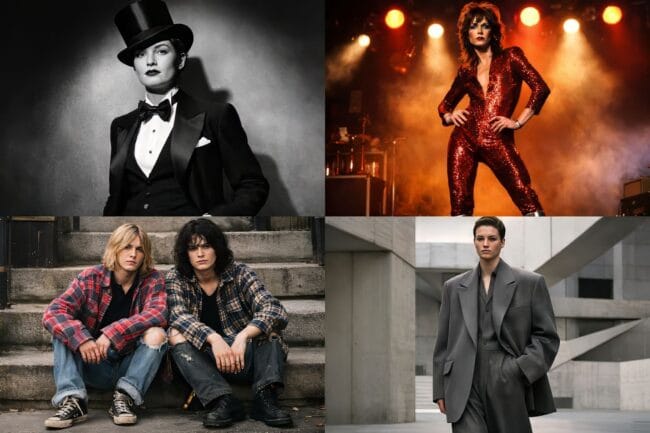
Unisex Fashion: The Post-Gender Horizon
Clothing no longer answers the question “Are you male or female?” It now asks, “Who are you?” The 20th century challenged gender norms, from Marlene Dietrich’s tuxedos to the Glam Rock era’s glitter and makeup. Today, Gender-Fluid fashion represents a post-gender horizon. Garments become extensions of the body rather than markers of social roles. The focus shifts to individuality, creativity, and authentic self-expression, dissolving centuries-old binaries.
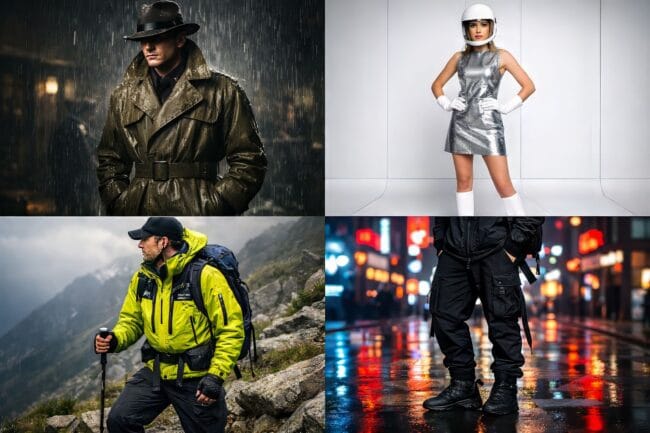
Techwear: The Urban Exoskeleton
Techwear has transformed from functional clothing into an urban exoskeleton. In megacities, garments serve as shields against weather, stress, and urban pressures. Trench coats, Gore-Tex jackets, and modern multifunctional fabrics protect while enhancing performance. Techwear equips humans with quasi-superhuman abilities for daily urban life. Clothing here is survival, identity, and empowerment intertwined.
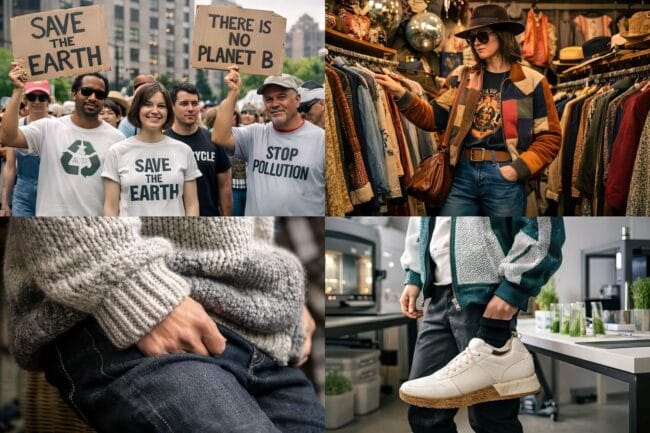
Sustainable Fashion: The Conscious Rebirth
Sustainability in fashion is no longer a trend. It is industrial repentance. The industry acknowledges past environmental harms and strives for a zero-footprint future. Slow fashion, recycled materials, and bio-design, where garments grow rather than are manufactured, represent a conscious return to nature assisted by technology. Modern style carries ethical responsibility, showing that elegance can coexist with environmental mindfulness.
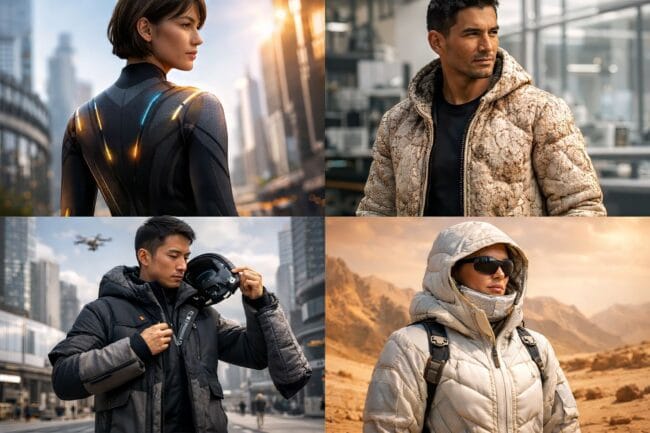
Future Fashion: The Digital Soul
The future of clothing will transcend material limitations. Garments may be composed of light, holograms, or virtual reality constructs, forming a digital wardrobe. Biotechnology, AR, and smart fabrics will allow personalization at unprecedented levels. Fashion becomes the interface between body, mind, and technology, with creativity as the only boundary. Clothes evolve from objects into extensions of consciousness, reflecting the wearer’s identity in physical and digital dimensions.
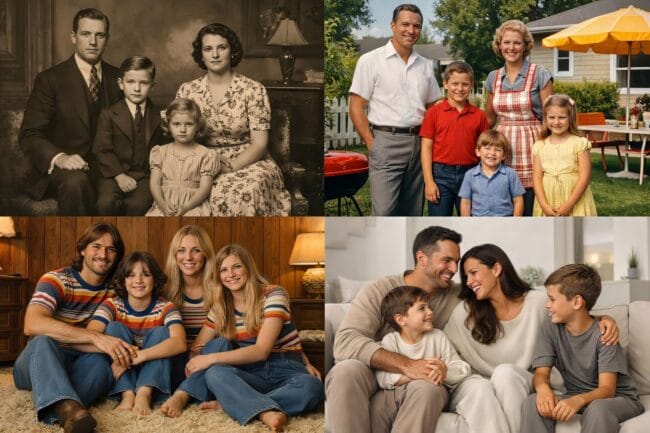
Family Fashion: The Geometry of Belonging
Family fashion now emphasizes emotional synchronization rather than uniformity. Past generations aimed for identical appearance. Today, style expresses harmony rather than sameness. Coordinated palettes, textures, and aesthetics communicate unity while preserving individuality. Clothing becomes a geometric narrative of belonging, visually asserting that families are ecosystems where diversity and connection coexist.
Curated Perspectives: My Top 5 Iconic Style Shifts
1. The 1920s Flapper: The First Breath of Freedom
“To me, this era represents the first loud roar of liberation. It’s not just about the fringe and beads. It’s about the moment women’s fashion finally broke the corset’s grip. It was the birth of the modern woman.”
Explore 1920s Flapper Style: Vogue
2. The 1950s ‘New Look’: Architectural Elegance
“Post-war fashion proved that beauty could be a form of healing. I admire how Christian Dior used structured silhouettes to bring back a sense of luxury and femininity to a world that had been through so much chaos.”
Read About Dior’s New Look: Google Arts & Culture
3. The 1970s Punk Movement: Fashion as a Weapon
“Punk is my favorite example of fashion as social protest. It’s fascinating how imperfection, safety pins, torn fabric, and raw energy, was transformed into a high-fashion statement that still influences designers today.”
See Punk at The Met: MET Museum
4. The 1990s Minimalism: The Art of Less
“The 90s taught us that silence can be louder than noise. Stripping away excess to find the pure essence of a garment laid the foundation for what we now call ‘Quiet Luxury.’ Minimalism wasn’t just style. It was a philosophy that prized simplicity, restraint, and authentic form over flashy ornamentation.”
Learn About 90s Minimalism: Wikipedia
5. The Rise of Modern Techwear: The New Urban Armor
“We are living in the evolution. Techwear isn’t just a trend. It’s a functional response to our digital lives. It merges performance, advanced materials, and futuristic design, serving both practicality and aesthetic innovation. I see it as an urban exoskeleton, clothing that works as hard as the person wearing it.”
Explore Techwear: Cyber-Techwear
The Final Word: Beyond the Runway
Fashion is more than the clothes we wear. It is the medium through which we express who we are and how we connect with the world. Over the past hundred years, style has evolved beyond silhouettes and fabrics. It has reshaped identity, challenged norms, and expanded our understanding of humanity. Looking back at a century of transformation, one truth remains: the most exciting chapter is happening right now. Every outfit tells a story, each choice reflects intention, and every detail contributes to the ongoing conversation of style. Wear your choices with purpose, because the history of fashion is still being written by those bold enough to define it.
