
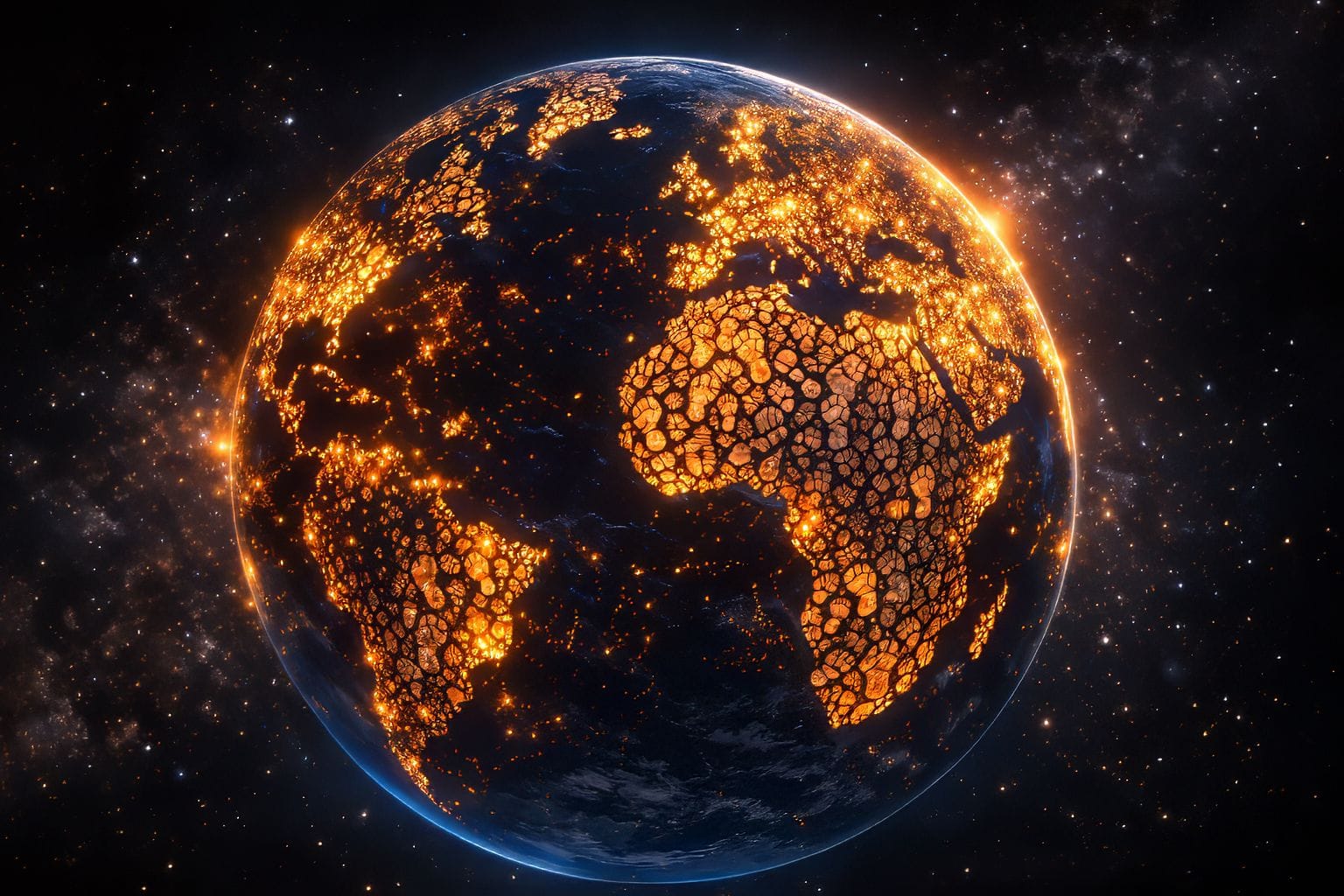
8 Billion and Counting: Can We Build a Sustainable Future?
Eight billion people is easy to say. It fits cleanly into headlines and policy reports. A number you can glance at, nod to, and move on. But the moment you pause and try to feel its scale, the abstraction dissolves.
Eight billion is the early-morning gridlock where cities wake before sunrise. It is the hesitation before turning a tap in neighborhoods where water pressure is never guaranteed. It is the silence of half-empty classrooms in towns where populations are shrinking faster than communities can adapt. It is humanity’s collective footprint stretching outward, reshaping coastlines, clearing forests, crowding skylines, and rewriting the boundaries between nature and infrastructure.
This is not a story built on alarmism. Nor is it a victory lap for human progress. It is a story about magnitude. About what happens when civilization grows beyond any precedent, and whether the systems holding it together, food networks, climate stability, energy supply, economic coordination, are resilient enough to evolve at the same pace.
Because population is not just a count of people. It is a multiplier of demand, complexity, and consequence. Every additional million alters supply chains, urban planning, emissions trajectories, and political priorities. Growth changes how cities breathe, how resources circulate, and how risks cascade across borders.
That leads to a question that sounds straightforward but resists simple answers: can humanity construct a sustainable future while continuing to expand, redistribute, and urbanize at planetary scale?
To understand that, the discussion cannot remain in charts or projections. It has to begin where the number becomes human experience.
The Moment Humanity Crossed Eight Billion
In a crowded maternity ward in Manila, fluorescent lights flicker softly over rows of cradles. The air hums with urgency and quiet celebration. Nurses move swiftly, checking monitors, weighing newborns, and jotting down notes. A tiny hand curls around a nurse’s finger. A newborn cries for the first time, startling a young mother who grips the side of her bed with a mixture of awe and exhaustion. The scent of antiseptic mingles with the faint sweetness of infant powder, and somewhere a lullaby plays over a crackling speaker.
Thousands of miles away, similar moments unfold. In Lagos, the corridors of the maternity ward are filled with footsteps and soft voices. In São Paulo, nurses whisper encouragement to exhausted parents while swaddling babies in bright blankets. Each child is a universe in miniature, a story just beginning. Collectively, these births mark a milestone far greater than any single life. Humanity has quietly tipped past eight billion people. The United Nations and other institutions recognize this not merely as a number but as a moment to reflect on what it means to exist at such scale.
It was never about one child. Demographers understand that milestones like this are approximations, symbolic markers in the continuous rhythm of births and deaths. Still, symbols carry weight. They make us pause and ask whether our growth represents triumph, strain, or a mixture of both. They challenge us to consider the delicate balance between human ambition and planetary limits.
The reality is both inspiring and unsettling. Advances in medicine have extended lifespans, agricultural innovation feeds billions, and societies have built systems that allow populations to flourish. Yet this same scale stretches the planet’s resources and infrastructure to unprecedented limits. Water supplies falter under pressure, energy grids strain, food networks are pushed to the edge, and cities contend with congestion, pollution, and social disparity.
Crossing eight billion was not a destination. It was a signal. A reminder that the next chapter of humanity demands care, foresight, and stewardship far beyond what came before. It calls for action at the level of governments, communities, and individuals. Every birth is a story, every life a responsibility, and together they shape the future of a planet that now carries eight billion hearts, breaths, and footsteps.
Why Numbers Alone Do Not Tell the Whole Story
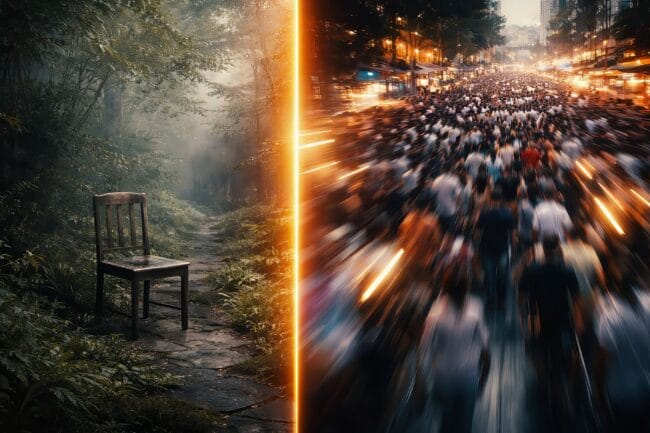
Population numbers on a page are neat and deceptively simple. Eight billion. A line of digits that governments, analysts, and media outlets repeat with ease. But the reality behind that number is far more complicated. It hides a world of contrasts, of crowded streets and empty villages, of youthful energy and aging solitude. Numbers compress this complexity into something impersonal, something that fails to capture the lived human experience.
In a quiet village in Germany, the local school stands almost empty. The playground swings slowly in the wind, making a creaking sound that echoes through empty streets. Pension systems strain under the weight of aging populations, and local shops close one by one as the community shrinks before its own eyes. In Japan, entire neighborhoods lie abandoned, homes overtaken by ivy and moss, silent witnesses to decades of demographic decline.
Now consider Lagos, where streets pulse with life from dawn till dusk. Children spill out of classrooms, vendors call across crowded markets, and the city vibrates with movement and energy. In Mumbai, schoolyards are packed with laughter and chatter, neighborhoods stretch endlessly, and youth populations surge, reshaping labor markets, economies, and the rhythm of daily life. In Nigeria and India, millions of young people are beginning their lives, their footsteps altering the trajectory of entire nations.
Yet even this comparison only scratches the surface. Numbers do not show the ways cities swell beyond their capacity, how migration redraws borders and lives, or how unequal access to education and healthcare shapes the potential of communities. Nor do they reflect the scale of consumption. A million people living lightly on the land may leave a smaller mark than fifty thousand living in luxury. It is lifestyle, not simply headcount, that determines real pressure on ecosystems, food systems, and climate stability.
The lesson is urgent. To build a sustainable future, we cannot rely on totals alone. We must look deeper, into the realities of everyday life: how communities live, how they work, how they consume, and how their choices ripple out across the planet. Only then can we understand what it truly means to sustain eight billion lives.
The Geography of Expansion and Decline
Driving through a village on the outskirts of Tokyo, the silence is almost overwhelming. Shuttered shops lean wearily under years of neglect. Empty houses sit behind overgrown gardens, weeds curling through cracked windows, vines climbing walls that once held laughter and life. Streets that used to echo with the voices of children and the hum of daily activity now carry only the whisper of the wind. Aging populations have left their mark on every corner, turning infrastructure into relics of a busier past and leaving a haunting sense of absence.
Thousands of miles away, Lagos is alive in a completely different way. The city vibrates with energy from morning until night. Informal settlements stretch outward in every direction, markets overflow with people shouting, negotiating, and trading goods, and buses and motorbikes weave through the streets in a near-constant rhythm. Growth here is not an abstract number. It is visible in every street, audible in every conversation, and tangible in the weight of daily survival and ambition. Each neighborhood tells a story of millions of lives intersecting, adapting, and striving.
These two realities are not isolated cases. They sit at opposite ends of a global demographic spectrum that is reshaping geopolitics, economies, and urban planning. Nations with declining populations face empty towns, productivity gaps, increasing healthcare burdens, and the slow decay of communities. Regions with surging populations contend with overcrowded schools, housing shortages, and the challenge of delivering services to millions whose needs grow faster than infrastructure can respond.
Geography decides which challenges are most urgent. Yet geography is never fixed. Migration, climate change, and economic opportunity continually redraw the map. Villages shrink and cities swell. Resources and attention shift in response, leaving the world a constantly changing mosaic of contraction and expansion, abundance and scarcity, hope and struggle.
Feeding Billions Without Breaking Ecosystems
Human survival begins with soil, water, and sunlight. In sprawling fields across the Midwest, tractors hum as they plant seeds in perfectly straight rows. In the rice paddies of Vietnam, farmers wade knee-deep in water, guiding seedlings with practiced hands. Agriculture has scaled alongside population growth through mechanization, chemical fertilizers, and a web of global supply chains that stretch from farm to fork. Yet every gain carries a cost. Forests have been cleared, rivers carry nutrient runoff, and the delicate balance of ecosystems trembles under human hands.
The paradox is stark. Across the planet, food production theoretically meets caloric needs, yet inefficiencies and waste leave millions undernourished. In New York warehouses, grains rot in storage. In Nairobi markets, vegetables wilt in the sun. Millions go hungry not because there is not enough, but because the systems that move food are imperfect, uneven, and sometimes indifferent.
Innovation offers glimpses of a way forward. Satellites now guide precision irrigation, ensuring every drop of water nourishes crops without flooding rivers. Plant breeders develop varieties that withstand heat waves and drought, resilient against a shifting climate. In the heart of Singapore, vertical farms rise floor by floor, reducing the need for long-distance transport and bringing fresh greens to urban tables. These solutions do not erase the strain on ecosystems, but they reduce it, buying time and space for the natural world to breathe.
Feeding billions is no longer only an agricultural challenge. It is a challenge of systems engineering, of thinking across supply chains, water networks, energy grids, and climate feedback loops. It requires coordination between scientists, policymakers, and farmers, between urban planners and rural communities. Success depends on balance: producing enough to nourish humanity while protecting the living systems that sustain it.

Consumption Versus Headcount Debate
The most difficult conversation about sustainability is also the one we cannot avoid: responsibility. For decades, population growth has been blamed for environmental degradation. But the reality is far more complex. It is not just how many people exist, but how they live, what they consume, and the systems that support their lifestyles.
Imagine a wealthy suburb in the United States. Houses glow with air conditioning late into the night, cars idle in driveways, and supermarkets overflow with prepackaged abundance. Electricity hums through every appliance and device. A single resident’s energy use can equal that of dozens of people elsewhere. Now shift thousands of miles away to a village in rural Ethiopia. Families rise with the sun, fetch water from shared taps, and cook meals with whatever the land provides. Electricity is scarce, and consumption is limited to the bare essentials. One lifestyle leaves a footprint larger than entire communities elsewhere.
This contrast reframes the conversation. It moves the focus from sheer population size to behavior, from totals to patterns of consumption and production. Environmental impact is shaped as much by how we live as by how many we are. Policymakers cannot solve these challenges simply by counting births. They must navigate economic inequalities, industrial systems, and social habits, arenas often fraught with political and cultural sensitivity.
The lesson is clear. A sustainable future will not come from restricting population growth alone. It requires rethinking how resources are valued, distributed, and used. It demands innovation, policy reform, and collective shifts in everyday behavior. The challenge is systemic, embedded in the fabric of daily life, yet it is also an opportunity to create a world where abundance no longer comes at the expense of the planet.
Climate Change and Population Stress Points
Environmental upheaval is no longer a distant warning; it is a lived reality shaping where and how people can survive. Along low-lying coasts in Bangladesh, villages once vibrant with fishing communities vanish beneath rising tides. Families scramble to higher ground, carrying belongings, memories, and livelihoods. In parts of the Sahel, parched fields crack under the sun as droughts intensify, forcing farmers to abandon land that has sustained generations. Cities bake under relentless heat waves, with asphalt and concrete turning streets into ovens, testing the limits of urban life.
Migration increasingly becomes a matter of survival rather than choice. Floods, desertification, and storms displace communities who have nowhere else to go. What was once an economic decision transforms into a necessity, a forced movement that reshapes neighborhoods, labor markets, and entire regions.
Urban planners and policymakers face cascading challenges. Infrastructure must be designed not just for the population that exists today but for the potential influx of displaced communities. Roads, water systems, hospitals, and schools all come under pressure, revealing weaknesses long hidden in ordinary conditions. Every storm, every heat wave, every flood exposes the delicate balance between human settlement and natural limits.
This dynamic represents one of the defining uncertainties of our century. People may no longer choose where to live based on preference but based on survival. Geography itself becomes fluid, reshaped by climate and necessity.
Resilience becomes the foundation of sustainable planning. Communities, cities, and nations must anticipate change, absorb shocks, and adapt quickly. The question is not just how many people the planet can support, but how populations can thrive in a world increasingly defined by environmental stress.
Technology as a Sustainability Multiplier
In a world where population growth and environmental stress collide, technology offers a measure of cautious optimism. In the control room of a solar farm in Spain, screens flicker with real-time energy output. Artificial intelligence models predict electricity demand across entire regions, ensuring that energy is allocated where it is needed most. In Singapore, sensors hidden in water pipelines monitor flow and detect leaks before residents even notice, optimizing scarce resources for millions of people living in high-density urban spaces.
Innovation does not stretch the planet’s natural boundaries. Forests cannot regrow overnight, oceans cannot instantly absorb waste, and deserts cannot bloom on command. But technology can stretch operational efficiency within those limits, allowing humanity to do more with less. Smart grids prevent blackouts by balancing demand and supply. Autonomous tractors plant and harvest crops precisely, reducing fertilizer runoff and chemical waste. Data analytics spot infrastructure strain before bridges buckle and pipelines burst.
Even with these advances, technology alone cannot correct systemic imbalances. Machines cannot enforce policy, algorithms cannot govern fairness, and sensors cannot resolve inequality. Yet when applied responsibly, technology becomes a multiplier. It increases the capacity to sustain larger populations while limiting proportional environmental degradation.
The distinction is crucial. Tools amplify intention. They are only as effective as the governance, planning, and ethical frameworks that guide their use. With careful integration, technology becomes not a solution in isolation, but a bridge to a future where human needs and planetary limits are balanced.

Urbanization as the Defining Demographic Force
The most significant demographic shift of our time is not simply population growth. It is concentration. Every year, millions of people move into cities, reshaping skylines, streets, and the rhythm of daily life. In Nairobi, informal settlements spill across hillsides, teeming with energy and ambition. In Shanghai, neon-lit avenues pulse with commuters weaving through metro stations at rush hour. Cities are living organisms, constantly expanding, contracting, and evolving.
Urban density can magnify problems. Congestion slows commutes and frays patience. Pollution clouds the horizon and seeps into lungs. Inequalities become visible on every street corner, where luxury high-rises overlook informal neighborhoods. Yet density also creates opportunity. Shared infrastructure reduces per capita energy use. Efficient public transit cuts emissions and connects lives. Concentrated innovation accelerates problem solving as engineers, entrepreneurs, and planners cluster together, exchanging ideas and resources at unmatched speed.
The challenge lies in design. Cities must evolve from reactive growth to proactive planning. Mixed-use zoning allows neighborhoods to breathe, green corridors connect parks and waterways, and modular housing strategies offer flexibility as populations surge. Digital traffic management smooths flows, preventing chaos before it emerges. Every street, every building, every meter of infrastructure matters when millions live side by side.
Urbanization is not inherently unsustainable. Poorly managed urbanization is. The future of sustainability may depend less on rural land use and more on the governance, foresight, and ingenuity applied in metropolitan centers. Cities hold the promise of efficiency and resilience, but only if they are built and managed with humanity and the planet in mind.
Rethinking GDP in a Finite World
Economic numbers can feel distant and abstract, yet they shape the lives of millions. Gross domestic product dominates policy discussions and public perception, celebrated as the ultimate measure of progress. Headlines boast record growth, investors applaud rising markets, and politicians present economic expansion as proof of national success. The focus is almost always on output and consumption, on producing more goods, delivering more services, and inflating numbers on spreadsheets.
Yet infinite growth is impossible on a planet with limits. Forests cannot endlessly yield timber. Oceans cannot endlessly feed human appetites. Rivers cannot endlessly absorb waste. Extractive acceleration cannot persist without destabilizing the ecosystems that sustain life. This tension is no longer a theoretical debate. It is visible in flooded cities, desertifying farmland, and heatwaves that ripple across continents, touching millions of lives in real and immediate ways.
Alternative frameworks are emerging. Measures that incorporate environmental health, social equity, and human well-being offer a broader and more meaningful view of prosperity. Bhutan’s Gross National Happiness, urban well-being indices, and corporate sustainability reporting seek to value what GDP overlooks. These are not just numbers; they are reflections of what societies truly consider important, signaling intention as much as measurement.
Transitioning to these frameworks demands courage and institutional willingness. Policymakers must redefine success beyond production volume, investors must rethink priorities, and societies must learn to value sustainability alongside profit. Economic indicators do more than describe reality. They shape investment flows, influence regulatory decisions, and guide political narratives.
If humanity hopes to build a sustainable future, the systems used to measure progress must evolve. They must reflect values that prioritize resilience, equity, and the health of the planet alongside human prosperity. Only then can economic ambition align with ecological limits and ensure that growth serves both people and the planet.

Imagining a Sustainable Civilization
It is easy to frame the future in stark binaries: crisis or triumph, collapse or adaptation. Reality rarely conforms to such absolutes. Human history shows a remarkable capacity to adjust when pressures mount. Agricultural revolutions transformed the way we fed billions, industrialization reshaped economies and cities, and the digital era connected people and information across continents almost instantaneously. Each shift arose from necessity, creativity, and collective action.
Today’s challenges are unprecedented in scale, yet so too is human capability. Scientists collaborate across oceans, sharing data in real time. Communities exchange knowledge instantaneously, building collective awareness of how deeply intertwined people and the planet have become. Every innovation, policy, and social movement contributes a thread to a larger tapestry of adaptation.
A sustainable civilization will not emerge from a single breakthrough or doctrine. It will evolve gradually, through careful redesign of energy systems, food production networks, urban planning, and consumption habits. Incremental changes, when multiplied across millions of decisions, have the power to reshape societies without waiting for a single perfect solution.
Hope does not reside in idealism alone. It lies in evidence of adaptability, in examples of communities bouncing back from floods, cities embracing green infrastructure, and nations experimenting with circular economies. Humanity’s trajectory remains unfinished, contingent on the choices made daily by governments, industries, and individuals alike.
Eight billion people embody complexity, strain, and potential in equal measure. The question is not whether sustainability is achievable in theory. The question is whether collective will aligns with collective knowledge. The answer is not written yet, but every informed choice, every deliberate action, brings that vision closer within reach.
Your Role in a Sustainable Future
Reaching eight billion people is a collective story, but sustainability begins with individual choices. Each person’s daily habits ripple outward, shaping demand, influencing industry, and affecting ecosystems. Recognizing the power of personal responsibility transforms abstract statistics into tangible action.
Reduce, Rethink, Reuse
- Consumption choices matter: Prioritize products with lower environmental footprints. Small shifts like choosing reusable packaging, buying seasonal local foods, or reducing single-use plastics accumulate when multiplied across millions.
- Energy awareness: Turning off unused electronics, lowering heating or cooling when possible, and supporting renewable energy reduce pressure on power grids and fossil fuel consumption.
Mindful Mobility
- Transportation impacts: Walking, cycling, public transit, or electric vehicles cut carbon emissions. Planning trips efficiently and consolidating errands can shrink your personal footprint while easing urban congestion.
Advocate and Educate
- Community influence: Share knowledge on sustainable practices. Encourage workplaces, schools, and local governments to adopt greener policies. Collective advocacy amplifies individual action.
- Voting with values: Support policies that prioritize renewable energy, conservation, and equitable resource distribution. Civic engagement is a channel through which citizens shape the systems that sustain us.
Engage in Local Solutions
- Urban and community initiatives: Plant trees, participate in community gardens, or join local clean-up and water preservation efforts. Tangible involvement connects people to the ecosystems they depend on.
- Food systems: Reduce food waste, compost organic material, and support ethical, sustainable producers. Responsible consumption directly mitigates strain on agricultural and natural systems.
Cultivate Awareness
- Reflect on impact: Track personal resource use and explore its global implications. Digital tools, apps, and carbon calculators help translate lifestyle into measurable ecological effects.
- Intergenerational perspective: Consider the world you leave for future generations. Every choice contributes to a legacy of resilience or depletion.
Even amidst global-scale challenges, individuals possess actionable leverage. Eight billion people may seem overwhelming, but when millions of conscious decisions converge, the planet’s trajectory shifts. Sustainable civilization is built one informed choice at a time. Your daily actions are threads in the intricate tapestry of collective responsibility, powerful, necessary, and transformative.
FAQ – Understanding a Sustainable Future with Eight Billion People
Q: Why is crossing eight billion people such a significant milestone?
A: Surpassing eight billion is not just a number. It symbolizes the unprecedented scale of humanity, highlighting the pressures on resources, infrastructure, and the environment. It prompts reflection on how population growth intersects with sustainability challenges.
Q: Does population size alone determine environmental impact?
A: No. While more people increase demand for resources, lifestyle, consumption patterns, and industrial practices often have a greater influence. One high-consumption individual can have a larger ecological footprint than dozens living sustainably.
Q: How does urbanization affect sustainability?
A: Cities concentrate populations, which can create efficiency in infrastructure, energy use, and innovation. However, poorly planned urbanization can worsen inequality, congestion, and pollution. Sustainable urban design is key to balancing growth and livability.
Q: Can technology help feed billions without harming ecosystems?
A: Yes. Innovations such as precision agriculture, vertical farming, smart water management, and renewable energy optimize resources, reduce waste, and improve efficiency. Technology acts as a multiplier, allowing societies to support larger populations with less ecological strain.
Q: Is economic growth compatible with a finite planet?
A: Traditional GDP-focused growth often ignores ecological limits. Alternative frameworks that measure well-being, social equity, and environmental health offer a more sustainable view of prosperity. Aligning economic ambition with planetary boundaries is crucial.
Q: What role does climate change play in population pressures?
A: Rising seas, extreme heat, droughts, and other climate events force migration and reshape population distribution. Communities are increasingly displaced out of necessity, creating cascading challenges for urban planning, infrastructure, and resource allocation.
Q: Can humanity achieve a sustainable civilization?
A: A sustainable civilization is possible, but it requires collective action, informed policy, innovation, and behavioral shifts. Incremental redesigns in energy, food, urban planning, and consumption habits can create resilience and long-term sustainability.
Editorial Disclaimer
This article, “8 Billion and Counting: Can We Build a Sustainable Future?”, is intended for informational and journalistic purposes. All analysis, examples, and insights have been compiled from publicly available research, expert commentary, and observed global trends. While every effort has been made to ensure accuracy, demographic and environmental data are subject to change, and projections may evolve over time.
The content is not a substitute for professional advice in policy, environmental planning, or economic strategy. Readers should consider this article as a broad, narrative exploration of population growth and sustainability challenges rather than a prescriptive guide. The opinions expressed reflect the synthesis of publicly available information and do not constitute official recommendations from any governmental or institutional body.
References
- World Population Prospects 2024 (Summary): The official UN report detailing the latest demographic data, including global population peaks and fertility rate declines via UN DESA.
- World Urbanization Prospects 2025: A strategic documentation of the shift toward urban living, projecting that over two-thirds of the global population will reside in cities by 2050 via UN DESA.
- 8 Billion Strong — Infinite Possibilities: An analysis of the milestone of 8 billion people on Earth, emphasizing the need for sustainable development and shared responsibility via United Nations.
- Leveraging Population Trends for Sustainability: A policy brief exploring how demographic changes, such as aging populations and migration, can be managed to achieve a more sustainable future via UN DESA Policy Brief No. 167.
- UNFPA 8 Billion Report: A look at the human rights and reproductive health aspects of the global population reaching 8 billion, advocating for individual agency and gender equality via UNFPA.
