
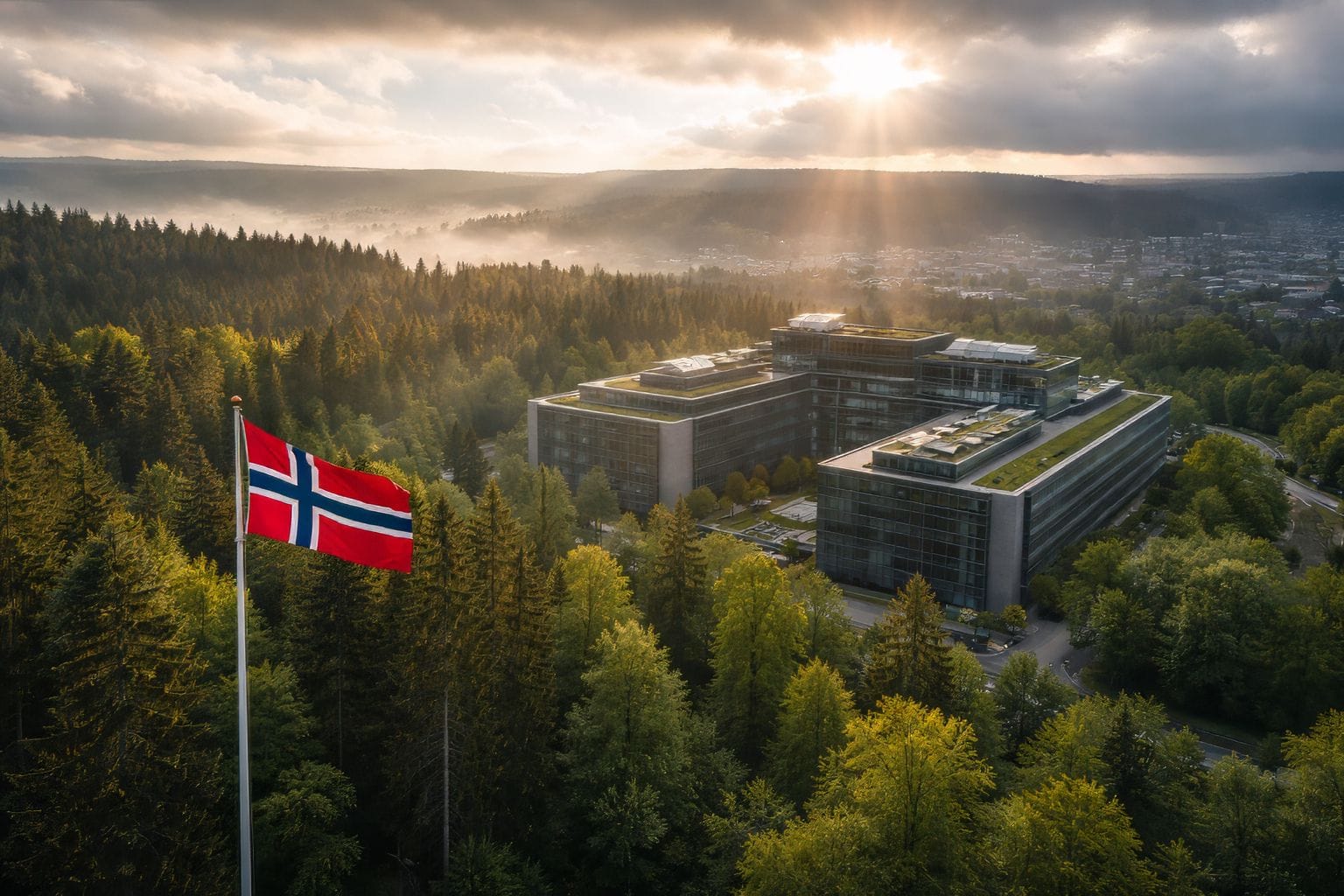
Deforestation-Free Nation: Norway’s 1st Amazing Global Win
From Promise to Policy
While many countries issue broad environmental pledges, Norway has turned commitment into enforceable law. Leveraging its extensive public procurement budget, worth several billion Norwegian kroner annually, the government now refuses to purchase any product linked to forest destruction, embedding sustainability into the very core of its operations. This transformation from voluntary corporate responsibility to binding state policy positions Norway as a leading force in the global Deforestation-Free Nation movement.
The policy specifically targets four commodities that drive the majority of forest loss worldwide: palm oil, soy, beef, and timber. Palm oil and soy are particularly important, as they are among the primary causes of deforestation in tropical regions. Combined, these products account for nearly 10% of global carbon emissions when harvested unsustainably, particularly through illegal logging or clear-cutting. Norway’s approach is both simple and radical. If a supplier destroys a forest to produce a good, the government will not buy it. By using the purchasing power of billions of kroner annually, Norway creates immediate economic consequences, encouraging companies to adopt sustainable practices while sending a clear signal to international markets that environmental protection and fiscal policy can be inseparable.
By embedding environmental accountability into procurement, Norway demonstrates that policy can actively shape global supply chains, turning conservation from a symbolic promise into a practical, enforceable reality.
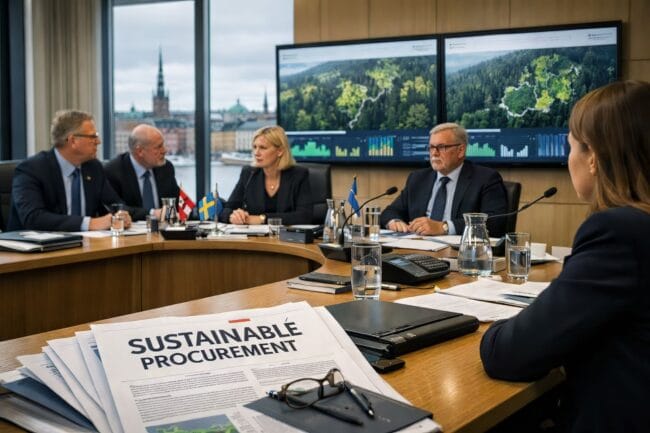
Mechanics of Accountability: How the Policy Works
The cornerstone of Norway’s success as a Deforestation-Free Nation lies in a rigorous framework that directly links state spending to environmental stewardship. Rather than relying on voluntary pledges, the government has implemented a combination of legislative mandates, technological oversight, and strict certification requirements. Suppliers must provide verified documentation confirming that their goods are free from forest destruction. This ensures that only responsibly sourced products enter Norway’s public supply chains.
Legislative Mandates and Supplier Requirements
Norway requires all suppliers to provide deforestation-free credentials. This ensures that products such as palm oil, soy, beef, and timber meet strict sustainability standards before they enter government contracts. By codifying environmental responsibility into law, the state transforms its procurement budget into a powerful tool for global forest protection.
Technological Oversight
Norway uses advanced technology to monitor compliance in real time.
- Satellite Imagery tracks forest cover in supplier countries, confirming that no illegal logging or clear-cutting occurs.
- AI-Driven Supply Chain Tracking uses artificial intelligence to analyze complex global supply networks and identify high-risk suppliers and shipments.
Independent Audits
Third-party auditors verify supplier claims. They review documentation and inspect operations on the ground. These independent evaluations prevent non-compliant products from entering Norway’s procurement system. This reinforces the integrity of the Deforestation-Free Nation initiative.
By combining legislation, technology, and independent verification, Norway ensures that its billions in annual public procurement do more than buy goods. They actively reshape global supply chains and set a replicable standard for sustainability worldwide.
How Norway Dries Up Funding for Forest-Destroying Industries
Norway’s deforestation-free policy goes beyond listing commodities. As the world’s first Deforestation-Free Nation, Norway strategically reduces financial support for industries that drive forest loss, leveraging the country’s enormous public procurement budget to reshape global supply chains. By refusing to purchase goods linked to deforestation, Norway creates a direct economic signal that sustainable practices are not optional. They are required.
Palm Oil
Palm oil has long fueled deforestation in Southeast Asia. Norway tackles this by demanding that all palm oil in public contracts comes from verified zero-deforestation sources. Suppliers who fail to comply lose access to billions of kroner in government spending annually. This approach pressures producers to adopt sustainable practices or risk losing one of the most reliable international buyers.
Soy
Soy cultivation in Brazil and other regions has been a leading cause of forest clearing. Norway’s policy now ensures that soy products entering government supply chains are fully traceable and certified deforestation-free. By withholding procurement funds from non-compliant soy producers, Norway effectively dries up capital flows to unsustainable farms and encourages global suppliers to shift toward environmentally responsible methods.
Beef and Livestock Products
Cattle ranching accounts for significant deforestation in South America. Norway’s refusal to purchase beef or livestock products tied to forest conversion imposes an economic cost on harmful practices. Farmers and exporters are incentivized to implement sustainable grazing, reduce land clearance, and meet traceability requirements if they wish to maintain access to Norwegian contracts.
Timber and Wood Products
Norway only buys legally and sustainably sourced timber. This policy forces logging companies to comply with strict environmental standards or risk losing public contracts. By redirecting billions of kroner toward responsible forestry operations, Norway creates a powerful financial incentive for sustainable timber production while reducing market demand for illegally or unsustainably harvested wood.
Through this strategy, Norway, as the first Deforestation-Free Nation, is not only conserving forests domestically. It is reshaping global supply chains and signaling to the international market that deforestation-linked products will face financial consequences. By turning procurement into a tool of enforcement, Norway demonstrates how a government can wield economic power to protect the planet.
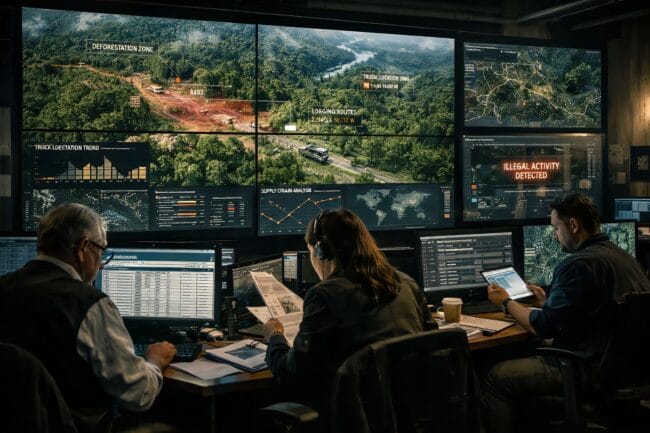
Monitoring, Compliance, and Enforcement
Maintaining Norway’s status as the first Deforestation-Free Nation requires rigorous monitoring, compliance, and enforcement. The government has implemented a multi-layered system to ensure that all public procurement adheres to strict deforestation-free standards. This approach guarantees transparency and accountability at every stage of the supply chain.
Advanced Monitoring Technologies
Norway combines satellite imagery, AI-based supply chain tracking, and third-party audits to verify that suppliers meet environmental requirements. High-resolution satellites allow officials to monitor forest cover in origin countries in real time, while AI tools trace complex global supply networks to identify high-risk shipments. Third-party auditors conduct inspections and validate documentation, preventing non-compliant products from entering the procurement system.
International Collaboration
To strengthen compliance, Norway collaborates with international organizations such as the United Nations, WWF, and other non-governmental organizations. These partnerships help track potential risks in global supply chains and ensure that Norway’s Deforestation-Free Nation standards influence suppliers worldwide.
Supplier Accountability
Suppliers are required to provide detailed documentation and certifications confirming that their products meet deforestation-free criteria. Failure to comply can result in contract termination, legal action, and public disclosure. By enforcing these measures, Norway promotes a culture of accountability and demonstrates that government procurement can be a powerful tool for sustainability.
Through advanced monitoring, strict verification, and global collaboration, Norway ensures that its procurement policies do more than protect domestic forests. They actively reshape international markets and reinforce the nation’s leadership as a Deforestation-Free Nation.
Norway has turned environmental protection into a form of currency. As the first Deforestation-Free Nation, the country’s procurement decisions act as a market signal to the world. When Norway refuses to purchase palm oil, soy, beef, or timber linked to forest destruction, these commodities instantly become “toxic” in the eyes of global buyers. Companies face more than the loss of access to Norway’s billions in annual procurement. They risk serious reputational damage, which can ripple across international markets. Short-term profit no longer outweighs long-term survival. By altering the rules of the game, Norway forces suppliers to internalize the real cost of deforestation, aligning economic incentives with environmental responsibility.
Economic Impact: Redefining Global Market Behavior
Norway’s approach does more than reward sustainability. It punishes unsustainable practices with tangible financial consequences. Companies that continue to engage in forest-destructive production are cut off from one of the world’s most influential markets. The fear of lost revenue combined with potential reputational backlash creates a cascading effect, pressuring competitors and partners worldwide to follow suit. This is a shift from voluntary corporate responsibility to enforced accountability, proving that government spending can directly reshape international markets while protecting forests.
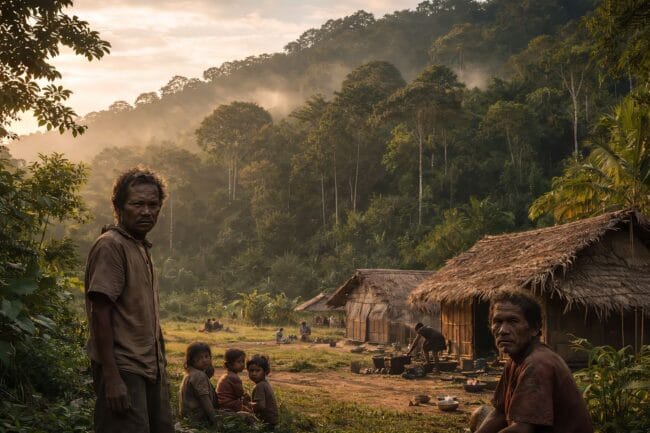
The policy also acts as a protective shield for local and indigenous communities. Forest clearing is rarely a neutral act. It often means the forced displacement of people and the destruction of traditional ways of life. When Norway refuses to buy soy grown on illegally cleared land or beef from recently deforested areas, it drains the financial resources that sustain exploitation. This empowers communities living on the frontlines of forest defense, turning public procurement into a tool for social justice as well as conservation.
Through this dual lens, Norway establishes a new ethical standard. Its deforestation-free policy demonstrates that profit and preservation no longer need to conflict. By linking government budgets to environmental and social responsibility, Norway proves that a nation can wield its economic influence to defend forests, empower communities, and set a replicable model for global sustainability.
Challenges and Solutions in Maintaining a Deforestation-Free Nation
Even as Norway celebrates its status as the first Deforestation-Free Nation, the initiative faces significant challenges. Ensuring that all public procurement remains free from forest destruction requires navigating complex global supply chains, preventing fraud, and balancing environmental goals with economic realities.
Complex Global Supply Chains
Many commodities, including palm oil, soy, beef, and timber, are sourced from multiple countries and suppliers. Tracking every step from production to delivery demands sophisticated systems and extensive cross-border cooperation. Norway invests in advanced monitoring technologies to trace products and ensure compliance, demonstrating that sustainability can be integrated into even the most intricate supply networks.
Illegal Logging and Fraudulent Certifications
Enforcing deforestation-free standards also requires addressing illegal logging and the circulation of falsely certified goods. Norway combats this by combining blockchain-based supply chain verification, AI monitoring, and independent audits. These measures prevent non-compliant products from entering public contracts, maintaining the integrity of the procurement process and sending a strong message to international suppliers.
Market Pressures and Economic Competition
Balancing environmental objectives with economic competitiveness is another challenge. Norway must ensure that its deforestation-free policies do not unduly disadvantage sustainable producers while maintaining incentives for compliance. By linking procurement eligibility to verified sustainability standards, the government creates a market environment where responsible practices are rewarded and destructive ones are penalized.
Integrated Solutions
Norway addresses these challenges through a combination of regulation, technology, and international collaboration. Investments in satellite monitoring, blockchain verification, and partnerships with organizations such as the United Nations and WWF help reduce risks and reinforce accountability. This multi-layered approach ensures that Norway remains a credible and effective Deforestation-Free Nation, setting a global example of how economic power can drive environmental protection.
Rethinking Fiscal Responsibility: Norway as a Deforestation-Free Nation
Norway has redefined the fiscal responsibility of a modern state, proving that a nation’s wealth can be used as a scalpel to remove environmental destruction from the global trade body. Public spending is no longer neutral. Each kroner disbursed by the government is a vote for the future. If a state purchases products linked to forest destruction, it becomes complicit in that destruction. Norway’s Deforestation-Free Nation initiative demonstrates that the state budget can and should act as an ethical filter, allowing only clean, responsible actors to compete on the global stage. By channeling public funds toward verified sustainable products, Norway transforms procurement from a passive expense into an active instrument for environmental stewardship.
Transparency is Non-Negotiable
Gone are the days when companies could claim ignorance of their supply chains. Satellite imagery, AI tracking, and blockchain verification have made concealment impossible. Norway has shown that technological oversight renders excuses for forest destruction obsolete. The lesson for other nations is clear: transparency is no longer optional. It is a technical certainty. By exposing every step of the supply chain, Norway ensures that deforestation-linked products cannot hide, reinforcing the credibility of the Deforestation-Free Nation framework and elevating global standards for accountability.
Innovation as an Economic Engine
Norway has also demonstrated that environmental regulations can catalyze economic transformation rather than stifle it. The deforestation-free law did not act as a barrier to business; instead, it created a new demand for high-tech eco-solutions, from satellite monitoring platforms to AI-driven traceability systems. Other countries can see that green regulation is not a constraint on economic growth. It is a mechanism to propel the economy to higher technological and ethical ground. By incentivizing innovation, Norway ensures that sustainability and profitability advance together, setting a precedent for how policy can shape markets, drive investment, and generate a new economic sector rooted in environmental responsibility.
Through these measures, Norway establishes a new paradigm for governance. Its status as the first Deforestation-Free Nation proves that a state’s fiscal power, combined with technological oversight and market leverage, can actively eliminate ecological harm from global trade, while empowering communities and creating incentives for innovation. This is not merely policy. It is a blueprint for how modern states can wield wealth, technology, and authority to defend the planet.
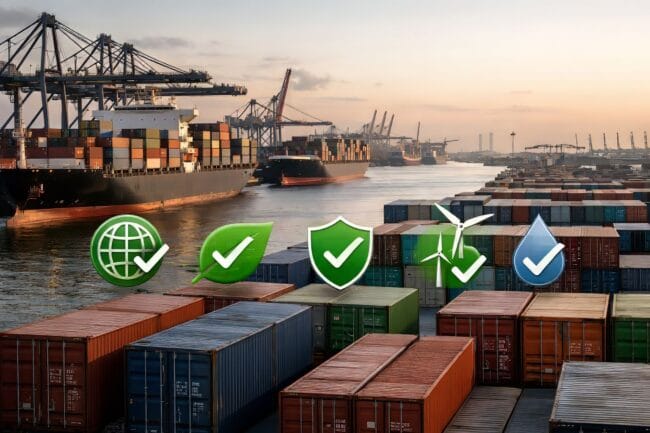
Case Studies and Practical Examples: How Norway Became a Global Arbiter
Norway’s deforestation-free policy is not just a set of rules. It has shifted the balance of power in global commodity markets, positioning the country as a decisive arbiter of environmental standards. By linking public procurement to verified sustainability, Norway has turned government spending into a force that rewards transparency, punishes destruction, and reshapes industry behavior worldwide.
Palm Oil in Indonesia: Quality as a Passport to Survival
In Indonesia, Norway has transformed certification into an elite club membership. Producers seeking access to Norwegian markets must demonstrate that their supply chains are fully deforestation-free. Norway is not merely a buyer; it is a validator. A palm oil shipment approved by Norwegian standards signals to European markets that the product is clean, opening doors to high-value contracts across the continent. This pressure has redirected investment from forest clearance to digital traceability systems and sustainable land management. Norway has effectively ended the era of “empty promises.” By moving from voluntary pledges to mandatory, tech-verified compliance, it has set a hard floor for what is acceptable in global trade.
Soy in Brazil: The Invisible Auditor in the Cerrado
In the soy fields of Brazil, Norway’s procurement policy acts as an invisible auditor. Where deforestation once promised quick profit, it now carries the risk of permanent economic isolation. Farmers in the Cerrado face a clear choice: adopt ecological integrity or be excluded from high-value international markets. Norway’s influence turns traditional cost-benefit calculations upside down, making forest destruction not only morally unacceptable but financially perilous. By linking global market access to environmental compliance, Norway has created a virtual enforcement presence that extends far beyond its borders.
Timber in Southeast Asia: The End of Shadow Trade
In Southeast Asia, Norway has become an ethical magnet for the timber industry. Companies that operate transparently and adopt verified forestry certifications gain preferential access to Norwegian public contracts, while “shadow” operators are systematically marginalized. Norway has shifted the timber sector from an era of empty promises to one where technological verification defines credibility. Procurement now attracts responsible suppliers and penalizes those who rely on opaque or illegal practices, demonstrating how government spending can enforce accountability and promote sustainable industry transformation.
Through these examples, Norway shows that being a Deforestation-Free Nation is more than a policy declaration. It is a strategic assertion of power in global markets, using fiscal leverage, technology, and standards to reward ethical behavior, reshape incentives, and protect both forests and communities worldwide.
Technological Innovations Supporting Norway’s Deforestation-Free Nation
Norway’s deforestation-free initiative relies not just on policy but on technology as a force multiplier, transforming government procurement into a precision instrument for global forest protection. By combining satellites, AI, blockchain, and predictive analytics, the country enforces compliance at a scale that was previously unimaginable.
Satellite Imagery and AI Monitoring: Eyes Across the Globe
High-resolution satellite imagery, paired with AI-driven analysis, allows Norwegian authorities to monitor forests in real time. Illegal logging and non-compliance are detected almost immediately, leaving no room for excuses. Norway has made it clear that in the era of digital oversight, “unknown” supply chains no longer exist. This combination acts as an invisible enforcer, ensuring that all products entering public procurement meet deforestation-free standards and reinforcing the country’s credibility as the first Deforestation-Free Nation.
Blockchain in Supply Chains: Immutable Verification
Blockchain technology provides transparent, unalterable records of commodity flows from farm or forest to final product. Every transaction is traceable and auditable, creating a permanent chain of evidence for compliance. Suppliers that embrace this system gain preferential access, while those relying on opaque practices are systematically excluded. Norway has effectively turned public procurement into a technological gatekeeper, rewarding responsible actors and marginalizing unethical practices.
Data Analytics and Risk Assessment: Predicting Environmental Threats
Beyond verification, Norway uses predictive data models to identify high-risk suppliers and regions before violations occur. These insights allow proactive interventions rather than reactive enforcement, making the deforestation-free framework both preventive and strategic. By combining data analytics with procurement policy, Norway transforms information into actionable leverage, demonstrating how a state can actively shape global environmental outcomes.
Through these technological innovations, Norway proves that being a Deforestation-Free Nation is not merely symbolic. It is a sophisticated system where policy, fiscal power, and cutting-edge technology converge to protect forests, empower ethical suppliers, and set a new standard for global sustainability.
Looking Ahead: Norway’s Long-Term Strategy as a Deforestation-Free Nation
Norway’s journey as the first Deforestation-Free Nation is far from complete. The country has demonstrated that policy, technology, and procurement power can reshape markets, but sustaining this leadership requires constant vigilance, innovation, and strategic foresight. Norway is turning its fiscal influence into a long-term instrument for global forest preservation, ensuring that ethical sourcing is not a temporary trend but a permanent standard.
Expanding Sustainability to the Private Sector
Future plans include extending deforestation-free requirements beyond public procurement to influence private sector practices. By linking access to domestic and international markets with verified compliance, Norway will create a broader ecosystem where sustainability is rewarded and forest destruction is economically penalized. This approach turns the market itself into an amplifier of ethical behavior, reinforcing the principle that responsible production is not optional but essential for business survival.
Strengthening Global Coalitions
Norway recognizes that forests do not respect national borders. Strengthening international coalitions with governments, NGOs, and multilateral organizations is central to preventing deforestation on a global scale. By coordinating standards, sharing data, and enforcing accountability across borders, Norway ensures that its deforestation-free influence extends far beyond its own procurement decisions.
Advancing Monitoring and Predictive Tools
The country continues to invest in cutting-edge monitoring systems and AI-driven predictive models to preempt deforestation risks. These tools allow authorities to anticipate illegal or high-risk activities before they reach markets, turning reactive enforcement into proactive stewardship. Norway’s integration of technology into governance demonstrates that being a Deforestation-Free Nation requires both oversight and foresight.
Promoting Awareness and Responsibility
Education and awareness among suppliers and consumers are also key pillars of Norway’s long-term strategy. By communicating the value of deforestation-free sourcing and providing clear guidance, Norway empowers stakeholders to make informed, responsible choices. This approach ensures that sustainability becomes embedded in the culture of commerce, not just in regulations.
Through these forward-looking initiatives, Norway proves that a nation’s commitment to forests can be enduring and transformative. Its long-term strategy illustrates that a Deforestation-Free Nation is not only a policy milestone but a replicable blueprint for using fiscal, technological, and diplomatic tools to protect ecosystems and foster ethical global trade.
A Model for the World: Norway’s Deforestation-Free Nation as a Global Blueprint
Norway’s achievement as the first Deforestation-Free Nation is not just a policy milestone; it is a redefinition of national power in global markets. Where governments have traditionally viewed budgets as neutral instruments, Norway has transformed public spending into an ethical scalpel, selectively cutting out environmentally destructive practices while elevating responsible suppliers to prominence. Every kroner spent becomes a statement: the state will not be complicit in forest destruction. In doing so, Norway has shifted the balance of power, making itself a global arbiter of ethical trade.
The model is both strategic and practical. By embedding deforestation-free standards into public procurement, Norway has created ripple effects that extend across continents. Indonesian palm oil producers now see certification not as a bureaucratic hurdle, but as a passport to the elite markets of Europe. Brazilian soy farmers in the Cerrado region face a clear and immediate choice: maintain ecological integrity or risk permanent exclusion from high-value markets. In Southeast Asia, timber suppliers who embrace transparency are rewarded, while those relying on shadow trade are systematically marginalized. Norway has effectively turned public procurement into a technological and ethical magnet, shaping global supply chains without firing a single shot.
Technology underpins the entire system. Satellite imagery and AI monitoring ensure that forest cover is tracked in near real-time, leaving no room for “unknown” supply chains. Blockchain provides immutable verification from farm or forest to finished product, creating an unprecedented level of accountability. Predictive analytics and risk modeling allow authorities to anticipate high-risk regions and suppliers, shifting the model from reactive enforcement to proactive stewardship. Norway proves that being a Deforestation-Free Nation requires not only policy but technological vigilance and market leverage.
The implications go beyond forests. Economically, Norway sends a clear market signal: products linked to environmental destruction are toxic assets in global trade. Companies seeking legitimacy must invest in traceability systems, sustainable land management, and ethical practices. Socially, the policy empowers local communities and indigenous populations, cutting off the financial incentives that have historically fueled displacement and exploitation. Norway’s approach aligns fiscal responsibility, technological oversight, and ethical consideration into a cohesive force for global good.
Most importantly, Norway demonstrates that a deforestation-free economy is not an idealistic utopia. It is a practical, scalable model where policy, technology, and market incentives converge to drive measurable environmental change. The question is no longer whether such a model is possible, but which nation will be brave enough to follow it next.
In this sense, Norway’s achievement is both a warning and an invitation. It warns that inaction has tangible consequences: countries that fail to adapt risk falling behind in markets increasingly defined by ethical standards. It invites nations to envision a future where economic growth and ecological stewardship are not at odds, but mutually reinforcing. For policymakers, business leaders, and environmentalists alike, Norway’s Deforestation-Free Nation is no longer a distant aspiration. It is a living blueprint, showing that deliberate governance, backed by technology and ethical clarity, can recalibrate global trade in favor of the planet.
Key Takeaways from Norway’s Deforestation-Free Nation
Norway’s journey as the first Deforestation-Free Nation offers critical lessons for policymakers, businesses, and global citizens alike.
Public Procurement as a Strategic Lever
Norway has shown that public spending is far more than a neutral fiscal exercise. Government procurement can act as a precision tool, rewarding ethical production and excluding destructive practices. By embedding deforestation-free standards into its purchasing decisions, Norway demonstrates that national budgets can drive meaningful environmental change and influence global markets.
Technology and Transparency Are Non-Negotiable
The era of “unknown supply chains” is over. Satellite monitoring, AI tracking, blockchain verification, and predictive analytics ensure that deforestation-linked products cannot hide. Norway proves that technological oversight transforms ethical commitments from aspirational pledges into enforceable, measurable outcomes. Transparency is no longer optional; it is a technical certainty that underpins accountability at every stage of the supply chain.
Global Cooperation Multiplies Impact
Norway’s efforts do not stop at its borders. Collaboration with international organizations, NGOs, and private sector actors amplifies the reach of its policies. By setting standards and sharing data, Norway ensures that deforestation-free principles resonate across continents, reinforcing global accountability and promoting responsible industry practices worldwide.
Ambitious Goals Are Achievable
Perhaps the most important takeaway is that ambitious environmental objectives are not theoretical ideals. Norway demonstrates that with strategic commitment, innovative technology, and coordinated collaboration, nations can transform markets, protect forests, and foster sustainable development. The Norwegian example is a tangible blueprint, proving that a Deforestation-Free Nation is not only possible but replicable, offering a roadmap for countries willing to align economic power with environmental stewardship.
FAQ – Norway’s Deforestation-Free Nation
Norway’s transformation into a deforestation-free procurement power is reshaping how governments use money, law, and technology to influence global trade. These questions move beyond basic explanations and examine the strategic architecture behind the world’s first Deforestation-Free Nation.
Q: Is this policy primarily environmental, or fundamentally economic in nature?
A: It is both, but its engine is economic. Norway weaponized its public purchasing power. When billions in annual procurement are redirected toward clean supply chains, forests become financially valuable standing rather than cleared. The state budget becomes an ethical filter, deciding which producers survive in premium markets.
Q: What makes Norway’s approach different from earlier sustainability pledges?
A: Enforcement. Previous initiatives leaned on voluntary commitments. Norway replaced trust with verification. Its Zero-Trust Model treats every claim as provisional until satellites, data platforms, and third-party audits confirm it.
Q: Why focus on palm oil, soy, beef, and timber specifically?
A: These four commodities form the backbone of industrial deforestation worldwide. Targeting them means attacking forest loss at its source rather than policing symptoms downstream.
Q: How does Norway prevent companies from hiding behind complex supply chains?
A: By collapsing distance. Satellite imagery links farms to ports. Blockchain logs transactions. AI scans shipment histories for risk patterns. The excuse of not knowing where a product originated has effectively disappeared.
Q: Is Norway acting as a regulator for the global market?
A: In practice, yes. Without issuing foreign laws, it functions as an economic referee. If a supplier fails Norway’s standards, that failure echoes across Europe and beyond, damaging reputation and closing doors to other buyers.
Q: Does this amount to economic coercion?
A: Norway would frame it as accountability. Participation remains voluntary, but access to public contracts is conditional. Companies are free to operate however they choose. They simply cannot expect taxpayer money to subsidize deforestation.
Q: What role does technology actually play in this system?
A: Technology is not decorative. It is structural. Satellites provide evidence. AI processes scale. Blockchain preserves records. Together they transform sustainability from aspiration into infrastructure.
Q: How does Norway deal with forged certifications and illegal logging networks?
A: Through layered defenses. Paper certificates alone no longer suffice. Geographic data, shipping logs, and land-use histories must align. When discrepancies surface, contracts can be frozen instantly while investigations unfold.
Q: Does this policy disadvantage small producers in developing countries?
A: It can, if support systems are absent. Norway counters this by encouraging capacity building and digital traceability tools. In many cases the policy elevates smaller ethical producers who previously could not compete with low-cost destructive operators.
Q: How does this affect indigenous communities living near forests?
A: Indirectly but powerfully. When destructive supply chains lose funding, land grabbing becomes less profitable. Norway’s procurement rules convert distant government budgets into shields for frontline communities.
Q: Has the policy changed corporate behavior outside Norway?
A: Yes. Certification investments, satellite monitoring subscriptions, and traceability software are increasingly seen as entry tickets to European markets. Compliance is becoming cheaper than exclusion.
Q: Could this model scale across the European Union or other major economies?
A: Technically yes. The systems already exist. The real barrier is political will. Norway has demonstrated feasibility. Replication depends on whether larger economies are prepared to align fiscal power with ecological goals.
Q: What critics misunderstand most about the initiative?
A: That it is about banning trade. It is not. It is about redefining what qualifies as legitimate commerce in a climate-constrained world.
Q: Is Norway positioning itself as a moral leader or a strategic one?
A: Both. Moral authority strengthens diplomatic leverage. By proving that environmental discipline can coexist with economic competitiveness, Norway enhances its credibility in climate negotiations and trade forums.
Q: What does the Deforestation-Free Nation model ultimately represent?
A: A preview of the next phase of capitalism. One where public money rewards resilience rather than destruction. Norway has shown that forests can be protected not only by protest or philanthropy, but by spreadsheets, procurement codes, and satellite feeds.
The lingering question is no longer whether such a system works. It is how quickly other governments will adopt it before environmental risk becomes financial catastrophe.
Editorial Disclaimer
This article, Norway’s Amazing Win: The 1st Deforestation-Free Nation, is an independent journalistic analysis intended to explore the policy mechanisms, economic implications, and global significance of Norway’s deforestation free procurement framework. It draws on publicly available research, international reporting, policy statements, and expert commentary to provide context rather than advocacy.
While every effort has been made to ensure accuracy at the time of publication, environmental policy, trade regulations, and monitoring technologies continue to evolve. Readers should understand that regulatory details, enforcement structures, and international responses may change as governments refine sustainability frameworks and global supply chains adapt to new standards.
The perspectives presented in this article reflect analytical interpretation rather than official positions of the Norwegian government, international organizations, or private entities mentioned. Inclusion of specific technologies, commodities, or regions does not constitute endorsement or condemnation of any company or country, but serves to illustrate broader systemic trends within the global movement toward deforestation free trade.
This piece is published for informational purposes only and should not be interpreted as legal, financial, or policy advice. Readers are encouraged to consult primary government documents, academic research, and international regulatory bodies for the most current and authoritative information regarding deforestation free procurement initiatives worldwide.
References
- Official Zero Deforestation Procurement Policy: The formal commitment by the Norwegian government to ensure that public procurement is free of products contributing to deforestation via Regjeringen.no (Government of Norway).
- International Climate and Forest Initiative (NICFI): Detailed information on Norway’s global leadership in supporting commodity markets that are free of deforestation and protecting tropical forests via NICFI.
- Global Impact of Norway’s Deforestation Ban: A high-level analysis of how Norway became the first country in the world to commit to a zero-deforestation supply chain policy via Forbes.
- Rainforest Foundation Norway Insights: Expert reporting on the parliamentary decision to exclude palm oil-based biofuels and other forest-damaging products from public tenders via Regnskogfondet.
- Supply Chain Policy and Conversion-Free Chains: A technical report by the World Wildlife Fund (WWF) regarding the critical role of government policies in achieving deforestation-free supply chains via WWF Forest Solutions.
- Climate Action and Policy Database: A structured overview of Norway’s legislative framework and national action plans to mitigate climate change through forest preservation via Climate Policy Database.
