

Amazon Layoffs 2026: 16,000 Jobs Cut in Efficiency Push
When Amazon confirmed that roughly 16,000 roles would be eliminated under what executives framed as a sweeping efficiency initiative, the announcement reverberated far beyond corporate campuses in North America and Europe. Amazon Layoffs 2026 instantly became a global talking point, not simply because of the number involved, but because the company has long served as a bellwether for how large enterprises adapt to shifting economic and technological realities. As one of the world’s most influential employers and logistics operators, Amazon often signals changes that ripple across the broader corporate landscape.
The reductions arrive at a moment when the technology sector is undergoing a fundamental recalibration. Years of aggressive expansion were fueled by inexpensive capital, surging digital demand, and a culture that rewarded experimentation at scale. That environment has evolved. Today, operational discipline, automation, and artificial intelligence have moved from supporting functions to the very core of corporate strategy, reshaping everything from organizational charts to capital allocation.
For Amazon, the layoffs are being positioned not as a retreat from growth, but as a decisive shift toward operational lean structures and strategic reallocation of talent and investment. Leadership has emphasized that the company is rebuilding itself around AI-driven systems, data-centric decision frameworks, and streamlined organizational design, an effort that goes well beyond trimming expenses and into the territory of full-scale corporate reengineering.
For the global workforce, the signal is unmistakable. Even the most dominant firms are no longer insulated from structural transformation. The forces reshaping Amazon are the same ones pressing on boardrooms worldwide, suggesting that the future of work inside the technology industry will be defined less by relentless hiring and more by precision, automation, and strategic focus.
What Happened at Amazon
The announcement of Amazon Layoffs 2026 confirmed that roughly 16,000 roles will be eliminated across corporate, technical, and project-based teams. The reductions are global, affecting offices and facilities across multiple continents. The move is part of a broader effort to streamline operations, refocus resources, and prepare the company for a new era dominated by artificial intelligence and automation.
Recruitment departments, internal support units, and experimental projects faced the largest cuts. At the same time, divisions driving cloud computing, logistics automation, and AI development continue to expand. Amazon leadership stresses that these layoffs are intended to enhance efficiency and strategic focus, not to signal a slowdown in innovation or growth.
From Rapid Expansion to Organizational Recalibration
Amazon grew at an extraordinary pace over the last decade. The company built hundreds of fulfillment centers, launched new corporate hubs, and invested in healthcare, entertainment, consumer devices, and advanced logistics technologies. While this growth solidified Amazon’s global dominance, it also created overlapping roles, management layers, and projects that failed to deliver long-term value.
As operational complexity increased, executives recognized the need to reassess priorities. Teams and projects that were once experimental or nonessential were evaluated for their contribution to strategic goals. This assessment led directly to the current wave of workforce reductions.
Strategic Focus and Operational Lean
The layoffs reflect a shift from expansion-driven growth to targeted, strategic execution. Amazon is applying operational lean practices to simplify management, eliminate redundancies, and redirect talent and capital to high-impact areas. This approach prioritizes efficiency and accountability while positioning the company for sustained success.
By reorganizing teams, pausing low-priority projects, and emphasizing data-driven decision making, Amazon aims to maintain innovation momentum with a smaller, more focused workforce. For employees, investors, and the global market, Amazon Layoffs 2026 demonstrates a proactive adaptation to the evolving technological and economic landscape.
Operational Lean and Strategic Reallocation
The announcement of Amazon Layoffs 2026 highlights a shift in how the company approaches efficiency. Amazon frames the workforce reductions not as simple cost cutting but as part of a broader operational lean initiative. The goal is to reduce internal complexity, streamline decision-making, and redirect resources toward business areas with higher returns. This marks a deliberate move from reactive downsizing to strategic organizational design.
Over time, large organizations inevitably accumulate inefficiencies. Projects multiply, reporting lines thicken, and support functions expand to accommodate experimentation. Amazon leadership has made clear that the current restructuring is designed to compress these layers, remove duplicated roles, and simplify workflows, creating a more agile and responsive organization.
Strategic Reallocation at the Core
Central to this transformation is strategic reallocation. Capital, engineering talent, and executive attention are being shifted away from projects that no longer align with long-term priorities. Resources are being concentrated on platforms expected to define Amazon’s next phase of growth, including artificial intelligence, cloud services, and automation-driven logistics operations.
Investor expectations reinforce this approach. Markets are less tolerant of unrestrained spending or speculative ventures. Key performance indicators, such as productivity per employee, operating margins, and disciplined capital deployment, now guide strategic decisions. While workforce reductions are challenging for employees and managers alike, they serve as a visible demonstration that Amazon is actively aligning its structure with long-term objectives.
AI at the Center of Corporate Reengineering
The events surrounding Amazon Layoffs 2026 highlight how artificial intelligence is reshaping the company at every level. AI is no longer one tool among many; it has become the organizing principle around which entire divisions are redesigned and workflows reimagined.
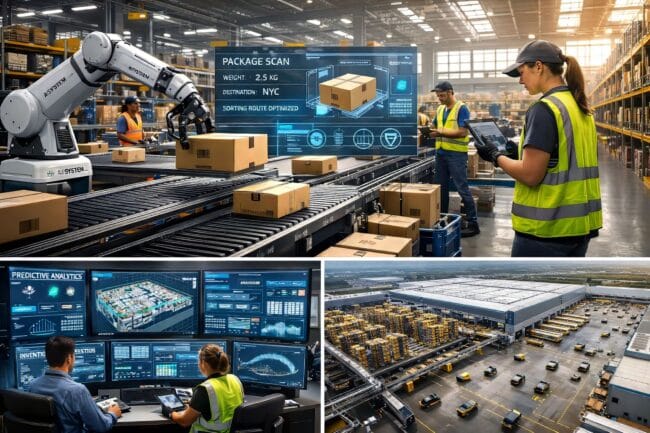
Across Amazon’s operations, machine learning systems influence demand forecasting, pricing strategies, inventory management, and fraud detection. In fulfillment centers, robotics platforms and automated sorting systems are redefining how goods move from warehouse to customer. Customer service teams increasingly rely on algorithmic triage tools to resolve routine inquiries before human agents intervene.
Within Amazon Web Services, generative AI solutions and custom-designed chips have become major investment priorities. Significant capital is being deployed to data centers optimized for advanced AI workloads, reflecting confidence that enterprise demand for AI infrastructure will remain robust for years.
Organizational Reengineering, Not Incremental Change
This focus on AI represents more than incremental optimization. Entire workflows are rebuilt around data pipelines and predictive models. Teams now prioritize software engineers, hardware specialists, and systems architects over traditional generalist corporate roles. Decision-making authority flows increasingly from dashboards and simulations rather than hierarchical management structures.
In this context, some roles become redundant not because the company is shrinking but because the nature of work itself is evolving. Amazon is reengineering its operations to align human effort with advanced technological capabilities, creating a workforce that is smaller, more strategically focused, and deeply integrated with AI-driven systems.

Which Teams and Regions Are Affected
The scale of Amazon Layoffs 2026 extends across multiple business units and geographic regions, highlighting that this is a coordinated, company-wide realignment rather than a localized adjustment. While Amazon has not released a detailed public breakdown, internal communications and reporting provide a clearer picture of the impact.
Teams Feeling the Impact
Recruiting teams have been among the most affected, reflecting slower hiring plans and tighter operational focus. Certain research initiatives and pilot programs were reportedly discontinued entirely, forcing some employees to seek internal transfers while others take exit packages. This demonstrates how Amazon is prioritizing strategic divisions over experimental or low-return projects.
A Global Restructuring
Geographically, the layoffs are far-reaching. North American offices account for a large portion of the affected roles, but teams in Europe and parts of Asia are also involved. The international scope signals that this is not a reaction to weakness in a single market but part of a deliberate global strategy to align resources with long-term priorities.
Local Economies and Ripple Effects
In cities where Amazon serves as a major employer, the effects extend beyond corporate walls. Large campuses support local ecosystems, including restaurants, housing markets, transportation networks, and smaller suppliers. Sudden workforce reductions can create ripple effects in these communities, affecting local economies even when broader labor markets remain resilient.
The Amazon Layoffs 2026 story is not just about numbers on a spreadsheet. It reflects the growing reality that global companies must constantly adapt, and workforce decisions resonate far beyond the office.
A Sector-Wide Recalibration
The impact of Amazon Layoffs 2026 reflects a broader trend sweeping the technology industry. Companies that once prioritized rapid hiring and aggressive diversification are now reassessing organizational complexity and focusing on strategic priorities.
Industry-Wide Restructuring
Across the sector, social media platforms, enterprise software providers, hardware manufacturers, and fintech startups are implementing restructuring programs. These initiatives aim to simplify operations, concentrate on core revenue drivers, and reduce inefficiencies accumulated during years of unchecked expansion.
AI as a Catalyst for Change
Artificial intelligence has accelerated this shift. Tools that can generate software code, automate analytics, or manage customer interactions are reshaping the economics of white-collar work. Rather than eliminating entire professions overnight, AI reduces the number of people needed for specific tasks, prompting executives to redesign teams and workflows for greater efficiency.
The New Rules of Growth
The cumulative effect is a technology sector in transition. Growth remains a central goal, but it is now paired with discipline. Expansion decisions are increasingly evaluated through the lens of return on investment, scalability, and technological leverage.
For employees, the lesson is clear and sobering. Even elite technical credentials no longer guarantee long-term job security. Adaptability, continuous retraining, and the ability to integrate with emerging technologies are becoming essential career assets in a rapidly evolving industry.
Leadership Principles and Corporate Culture
The story of Amazon Layoffs 2026 cannot be understood without considering the company’s distinctive internal culture. Amazon has long been guided by a set of Leadership Principles that shape decision-making and organizational priorities.
Bias for Action and Frugality
Among the most prominent principles are Bias for Action, which encourages rapid decision-making and experimentation, and Frugality, which emphasizes efficiency and prudent use of resources. Viewed through this lens, the current layoffs are consistent with long-standing corporate doctrine. Streamlining complex structures, discontinuing underperforming projects, and redirecting resources toward high-impact initiatives all align with a culture that values speed, discipline, and relentless optimization.
Executives have often argued that frugality drives innovation by forcing teams to focus on what truly matters. In this phase of restructuring, that philosophy is being applied at scale, reshaping headcount, investment flows, and organizational design across the company.
Balancing Principle and Practice
At the same time, the tension between principle and practice is unavoidable. Workforce reductions test morale, loyalty, and employees’ sense of stability, especially in a company that has long been associated with rapid growth. How effectively leadership communicates the rationale behind these decisions will influence Amazon’s corporate culture for years to come.
Through this lens, Amazon Layoffs 2026 is more than a numbers exercise; it is a reflection of a corporate philosophy in action, demonstrating how leadership principles continue to guide strategic choices in a rapidly evolving technological and economic landscape.
Impact on Workers and Regional Economies
The human consequences of Amazon Layoffs 2026 go far beyond numbers on a spreadsheet. Each affected employee represents a unique story of adaptation, resilience, and career reinvention in an era of rapid technological change.
Recalibrating Careers
Many displaced workers are leveraging professional networks and industry contacts to navigate the next stage of their careers. Skills in cloud infrastructure, machine learning, logistics engineering, and large-scale systems management have become particularly valuable. Recruiters from startups, tech giants, and consultancies are actively seeking this talent, recognizing the experience Amazon employees bring in managing operations at global scale.
Local Economies Under Pressure
The impact of the layoffs varies by region. In major tech hubs, former employees often find opportunities relatively quickly, joining innovative startups or established competitors. In smaller cities and towns, where Amazon serves as a major employer, the effects are more pronounced. Local businesses, from restaurants to retail stores, can experience reduced foot traffic and spending. Housing markets may soften, and municipal employment programs can face heightened demand.
Automation and Community Resilience
The restructuring also underscores a broader trend: the interplay between automation, digital transformation, and social stability. As AI and robotics reduce the need for certain roles, communities that rely heavily on large employers must adapt quickly. Policymakers, labor advocates, and local governments are watching closely, treating Amazon Layoffs 2026 as a real-world example of how technological innovation reshapes not just corporate structures, but entire regional economies.
This phase of transition highlights a sobering lesson for workers and communities alike: adaptability, continuous learning, and technological literacy are now critical assets. The impact of large-scale corporate restructuring extends far beyond the company itself, influencing career trajectories, local economies, and the broader social fabric.

Market Signals and Investor Logic
The announcement of Amazon Layoffs 2026 sent ripples through global financial markets, turning spreadsheets into storylines and earnings calls into narratives about the future of work. Investors watched closely, weighing not just the number of roles cut but the message behind each decision.
Reading Between the Lines
Layoffs often carry a dual signal. They can spark worries about slowing growth or missed opportunities, yet they also reveal a company willing to make bold moves to protect profit margins and sharpen its competitive edge. For Amazon, the market focused less on the sheer count of affected employees and more on how resources were being redirected toward strategic growth areas.
Betting on the Future
Capital flows tell a story of ambition. Amazon continues to invest heavily in cloud infrastructure, AI platforms, robotics, and advertising technology. The message is clear: this is not a retreat but a calculated pivot. Workforce reductions signal operational discipline, while massive investments highlight the sectors expected to define Amazon’s next decade.
Confidence Through Discipline
Cost control has become a watchword. Reducing headcount is a tangible demonstration of commitment to efficiency and long-term value creation. Investors now wait to see how quickly AI and automation translate into sustained revenue growth. Amazon Layoffs 2026 are not merely a corporate reset. They are a statement showing that Amazon is aligning its workforce, capital, and strategy to meet both technological opportunities and market expectations, demonstrating how a tech giant adapts at scale.
What Comes Next
As the dust settles from Amazon Layoffs 2026, the company is signaling a shift toward a future where scale, data, and automation define both operations and workforce structure.
Logistics at the Core
Logistics continues to be central to Amazon’s identity. Robotics, predictive routing software, and real-time inventory analytics promise faster delivery and lower per-unit costs. These advancements also reshape workforce requirements, placing greater emphasis on technicians, engineers, and data specialists instead of traditional administrative roles.
Cloud and AI-Driven Growth
Amazon’s cloud services are increasingly focused on advanced AI workloads. Massive investments in custom-designed chips and energy-intensive data centers indicate confidence in enterprise demand for AI infrastructure. This focus on cloud technology ensures that the company remains a leader in computing services while integrating AI deeply into business operations.
Retail Transformation
In retail, Amazon continues to experiment with automated checkout systems and hyper-personalized recommendation engines. Algorithms are embedded ever deeper into the customer experience, streamlining operations and enhancing engagement while reducing the need for routine human intervention.
A Workforce Reimagined
Taken together, these priorities point to a workforce very different from the one assembled during Amazon’s previous expansion. Fewer administrative layers, more specialized technical roles, and an increased emphasis on productivity per employee define the company’s new approach. Amazon Layoffs 2026 are therefore not just a moment of contraction. They are part of a broader strategy to align talent with the technological and operational realities of the next decade.
A Signal to the Global Workforce
Amazon’s decision to cut 16,000 jobs as part of its operational efficiency initiative is about far more than a single company’s bottom line. Amazon Layoffs 2026 serve as a window into how global corporations are increasingly reshaping themselves around artificial intelligence, automation, and data-driven management.
This transformation sends a clear message to professionals: lifelong learning, technological fluency, and adaptability are no longer optional. For policymakers, it highlights the urgent need to create systems that support workers displaced by rapid innovation. For companies, it underscores the delicate balance between financial discipline and social responsibility.
The era of unchecked hiring sprees is giving way to a new model. Success now favors organizations that prioritize speed, precision, and strategic focus, qualities that have long been central to Amazon’s corporate culture. Administrative layers are compressed, teams are specialized, and decisions are guided as much by data and AI insights as by human managers.
While the long-term impact of this transformation will take time to fully materialize, one thing is already clear. The future of work within the world’s largest technology firms is being rewritten, line by line and algorithm by algorithm, reflecting a corporate landscape where efficiency, innovation, and adaptability define the next chapter.
FAQ – Amazon Layoffs 2026
Understanding Amazon’s workforce reductions can be complex. These frequently asked questions provide context, insight, and clarity on the company’s strategy, AI integration, and implications for employees and the global labor market.
Q: What are the Amazon Layoffs 2026?
A: Amazon Layoffs 2026 refers to the company’s decision to eliminate approximately 16,000 jobs worldwide. This move affects corporate, technical, and project-based teams and is part of a broader operational efficiency initiative. The restructuring is not a retreat from growth, but a strategic realignment focused on AI, automation, and data-driven operations.
Q: Which teams and regions are most affected?
A: Internal reports indicate that recruiting, internal support functions, and experimental projects were hit hardest. North American offices account for a large share of the cuts, but Europe and parts of Asia are also affected. The global reach highlights that this is a coordinated company-wide restructuring, not a response to a single market.
Q: Why is Amazon making these cuts now?
A: The layoffs are part of an operational lean strategy aimed at reducing complexity, streamlining decision-making, and reallocating talent and capital toward high-priority areas like AI, cloud computing, and robotics. The move demonstrates financial discipline while positioning Amazon for sustainable long-term growth.
Q: How is AI shaping these layoffs?
A: Artificial intelligence is central to Amazon’s transformation. Machine learning systems now drive demand forecasting, pricing, inventory management, and warehouse automation. Workflows are being restructured around AI, creating fewer roles for routine tasks and more opportunities for technical specialists and data-focused positions.
Q: What does this mean for employees?
A: Affected employees often hold highly sought-after skills in cloud infrastructure, logistics engineering, and AI systems. Many are exploring new roles in tech companies, startups, and consulting firms. The situation underscores the importance of adaptability, lifelong learning, and technological proficiency for career resilience.
Q: How does this impact investors and the wider market?
A: The layoffs signal operational discipline to investors while reallocating resources toward profitable, high-growth sectors. Local economies in cities with major Amazon offices may feel effects such as reduced consumer spending and job market pressure. Policymakers are observing closely, as the restructuring highlights the intersection of automation and social stability.
Q: Does this mean Amazon is shrinking?
A: No. These layoffs are part of strategic reallocation, not a retreat. Amazon continues to invest heavily in AI, cloud services, and logistics automation. The company is streamlining operations while preparing for long-term growth, aiming for a leaner, more technologically integrated workforce.
Editorial Disclaimer
This article analyzes Amazon Layoffs 2026: 16,000 Jobs Cut in Efficiency Push and its impact on corporate operations, workforce strategy, and the adoption of artificial intelligence and automation. It is intended for informational and professional purposes only.
All content is based on independent research, publicly reported developments, and professional interpretation. The insights presented reflect analysis of trends and organizational changes but are not predictions or guarantees of future outcomes.
Readers should exercise their own judgment when using this material for career decisions, business planning, or investment considerations. Neither the author nor the publisher assumes responsibility for actions taken based on the information in this article.
This disclaimer ensures that the article is read as a contextual and analytical overview of Amazon’s strategic restructuring and its implications for employees, investors, and the broader technology landscape.
References
- Global Restructuring and Workforce Reductions: A primary report on Amazon’s decision to cut 16,000 jobs globally as part of a broader shift toward operational efficiency and corporate restructuring via Reuters.
- AI Integration and Efficiency Push: An analysis of how Amazon is reallocating resources toward artificial intelligence while streamlining its corporate workforce to drive long term growth via Forbes.
- Strategic Corporate Realignment: Detailed coverage of the internal restructuring efforts under CEO Andy Jassy and the cultural shift within the tech giant via Business Insider.
- Impact on the Tech Industry: A broader look at how Amazon’s job cuts reflect a larger trend of efficiency pushes across corporate America in 2026 via The Washington Post.
- Official Internal Communications: Reporting on the formal notices sent to employees and the specific roles affected by the latest round of restructuring via Yahoo Finance.
