
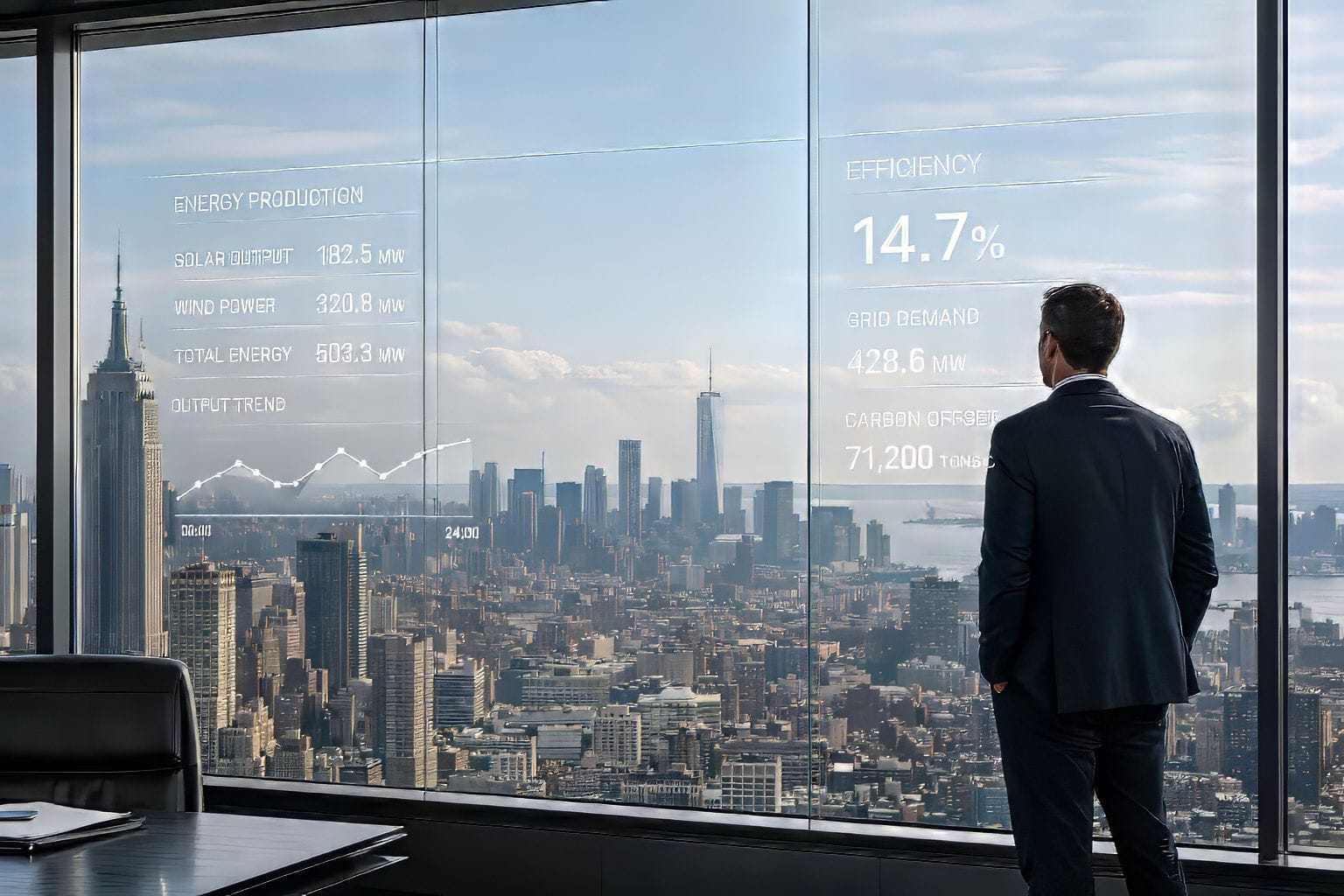
Transparent Solar Reaches 14.7% Efficiency, A Major Leap
For decades, architects and engineers have imagined windows that do more than frame a view, they wanted glass that quietly generates electricity while flooding interiors with natural light. Transparent Solar technology promised exactly that, but for years, progress was frustratingly slow. Early prototypes rarely exceeded 5 to 7 percent efficiency, leaving the concept largely confined to laboratories and research papers.
That barrier is now shifting. A new milestone, 14.7 percent efficiency for semi-transparent solar cells, signals that Transparent Solar is no longer just an experimental idea. This leap pushes the technology closer to commercial viability, especially in dense urban areas where roof space is limited, but glass facades stretch across entire city blocks.
What makes this breakthrough particularly significant is not just the number itself, but what it represents. It is a step toward energy-generating buildings that blend seamlessly into modern architecture. Office towers, residential skyscrapers, and public transit hubs could soon contribute to local power grids without compromising aesthetics or natural lighting.
Behind the scenes, materials science and clever engineering are driving these advances. Selective light-harvesting layers capture invisible ultraviolet and infrared light while allowing visible light to pass through. Innovative designs, like the all-back-contact architecture developed by UNIST, move metal wiring to the rear of the panel, keeping the front surface perfectly clear.
For city planners and sustainability advocates, Transparent Solar opens up a new frontier. Buildings are no longer passive energy consumers, they can become distributed power generators, supporting smart grids, reducing peak load pressures, and helping meet ambitious climate targets.
As the technology moves from lab benches to real-world applications, the question is no longer whether Transparent Solar can work, but how quickly it will transform the skylines and streetscapes of tomorrow.
Understanding the 14.7% Efficiency Milestone
Why Numbers Matter in Solar Research
In solar research, efficiency numbers define the boundary between possibility and reality. Traditional rooftop panels can convert over 20 percent of sunlight into electricity, setting a high benchmark for performance. Transparent Solar panels, however, have long struggled to surpass 5 to 7 percent because they must allow visible light to pass through rather than absorb it. For years, this limitation kept the technology in the lab, a promising concept rather than a practical solution.
What Makes 14.7 Percent a Breakthrough
Reaching 14.7 percent efficiency is more than a new record; it represents a technological turning point. This milestone narrows the gap with conventional panels enough that Transparent Solar windows can begin competing in real-world urban environments. Cities with limited roof space but glass facades stretching across entire skylines now have a new surface to generate energy.
At this efficiency, a skyscraper clad in energy-generating glass transforms from a curiosity into a genuine contributor to the urban power supply. Buildings are no longer passive structures—they become active participants in the city’s renewable energy ecosystem.
The Science Behind Semi-Transparent Photovoltaics
Selective Light Harvesting: How It Works
The core innovation behind Transparent Solar lies in what researchers call selective light harvesting. Unlike traditional solar panels that absorb the entire spectrum of sunlight, these cells are engineered to remain clear in the visible range while capturing ultraviolet and infrared wavelengths that human eyes cannot perceive.
Special coatings and layered semiconductors redirect this invisible light toward electrical contacts, generating power without darkening the glass. This approach allows buildings to maintain natural daylight inside while producing electricity for the grid.
A Window That Works for the Grid
To occupants, Transparent Solar windows appear largely like conventional glass. Yet to the power network, they act as distributed solar generators, quietly contributing energy throughout the day. The result is a seamless integration of energy production into everyday architecture, turning ordinary facades into functional, renewable energy surfaces.
Engineering Transparency Without Sacrificing Output
The Challenge of Clarity Meets Power
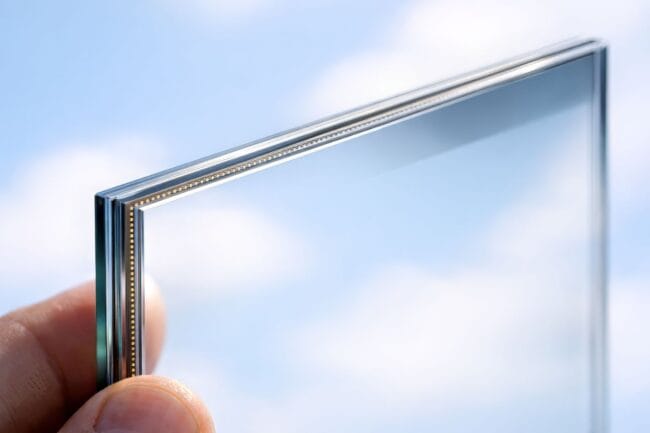
Creating a window that produces electricity while remaining clear is no small feat. In traditional solar cells, metal wiring, electrodes, and charge-collecting layers sit on the front surface, blocking light, the very element a window must let through. This inherent conflict has long kept Transparent Solar from reaching its full potential.
UNIST’s Breakthrough Design
Researchers at South Korea’s Ulsan National Institute of Science and Technology (UNIST) found a way to resolve this dilemma with an all-back-contact architecture. By relocating the current-collecting metal grid entirely to the rear, the front surface of the panel stays perfectly smooth, fully transparent, and unobstructed.
The result is striking. To the eye, the panel resembles ordinary architectural glass, seamlessly blending into a building’s design. Yet behind this clarity, electricity flows efficiently, producing power that can be fed into the grid. This innovation transforms the concept of Transparent Solar from an experimental curiosity into a practical, scalable technology for real-world applications.
Materials Driving the New Performance
The Science Behind Every Layer
Behind every breakthrough in Transparent Solar, there is meticulous materials science. Achieving both transparency and electricity generation requires more than clever design, it demands the right combination of substances, engineered at the microscopic level.
Two compounds, in particular, play a central role:
- Titanium dioxide, a stable semiconductor that efficiently guides electrons through the device, ensuring minimal energy loss.
- Nickel oxide, which serves as a transparent conducting layer and enhances charge separation, boosting overall efficiency.
Building a Transparent, Durable Stack
Combined with other thin film layers, these materials form a stack that is optically subtle yet electrically active. Their durability and compatibility with industrial-scale manufacturing make them suitable for large construction projects, where performance over decades is critical. In effect, every window is both a piece of architectural glass and a miniature power plant, ready to contribute clean energy without compromising aesthetics.
From Research Lab to Skyscraper Windows
Scaling Transparent Solar for Real Buildings
Laboratory prototypes of Transparent Solar panels are typically only a few centimeters across. Real buildings, however, require panels measured in meters, capable of covering entire facades without losing performance or clarity.
The Role of Seamless Modularization
Bridging this gap demands a technique engineers call seamless modularization. Rather than scaling up a single fragile cell, manufacturers tile many smaller transparent units together. This method maintains both uniform appearance and electrical continuity across large surfaces.
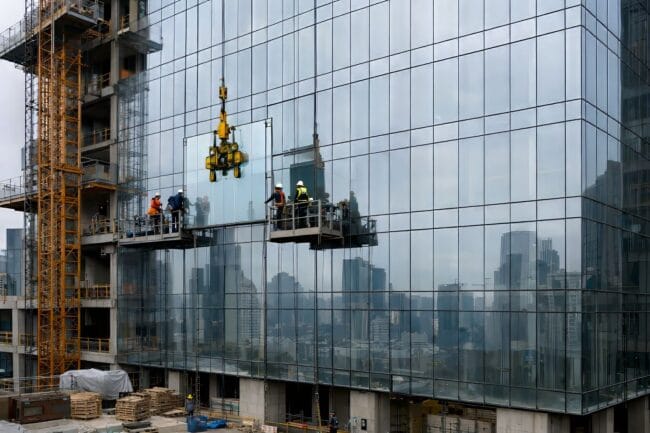
If perfected, entire curtain walls of high rises can act as distributed power plants, generating electricity without visible seams or dark patches disrupting the facade. It is a crucial step that transforms a laboratory innovation into a commercial, scalable Transparent Solar product ready for urban deployment.
Windows as Power Plants: What This Means for Urban Energy
Reimagining City Surfaces
Cities consume vast amounts of electricity, yet roof space for traditional solar panels is limited. Transparent Solar changes this equation entirely. Glass is already a dominant surface in urban architecture, covering office towers, residential buildings, airports, and shopping centers.
Buildings as Energy Producers
If these surfaces begin generating electricity, the role of buildings transforms. They shift from being passive energy consumers to active, hybrid producers. Local energy generation reduces pressure on central grids during peak hours and contributes to climate targets, all without altering the visual appeal of the skyline.
The Backbone of Smart Cities
In smart city planning, Transparent Solar could serve as a foundation for distributed renewable infrastructure. By integrating energy generation directly into the built environment, cities gain resilient, scalable power sources while maintaining modern architectural design and natural daylight for occupants.
Electric Vehicles and Solar Rooflines
Expanding Transparent Solar Beyond Buildings
The benefits of Transparent Solar extend beyond architecture. Automakers are now exploring solar-integrated glass for panoramic roofs and windshields. These systems may not replace charging stations, but they can supplement vehicle power, extend driving range, operate climate controls while parked, and support auxiliary electronics.
Every Watt Counts
For electric vehicles designed with efficiency in mind, every watt recovered from sunlight matters. Transparent Solar allows designers to incorporate energy generation without compromising visibility, interior lighting, or the sleek exterior lines that define modern vehicles. This integration represents a new frontier where transportation and renewable energy converge seamlessly.
Comparing Traditional Panels and Solar Windows
Efficiency vs. Integration
Rooftop panels remain the champions of raw efficiency. They are thick, dark, and angled for optimal sunlight exposure, making them ideal for conventional solar installations. Transparent Solar, however, addresses a different challenge: integration.
Where Solar Windows Excel
Solar windows shine in areas where traditional panels struggle. Vertical facades, dense downtown districts, and architecturally sensitive buildings leave little room for conventional solar modules. By integrating directly into building envelopes, Transparent Solar preserves aesthetics, avoids heavy mounting structures, and maximizes urban surface area utilization.
Urban Advantage
In city environments, surface area often matters more than peak efficiency. By transforming existing glass into a power-generating surface, Transparent Solar creates a competitive edge, turning everyday building materials into functional energy assets without compromising design or daylight.
Why Efficiency Is the Key Metric
The Power of Incremental Gains
A single percentage point may seem minor, but across millions of square meters of glass, it translates into enormous energy production. Each incremental improvement in Transparent Solar efficiency generates megawatt hours of additional electricity over a building’s lifetime, making a tangible impact on urban energy supply.
Scaling Laboratory Success to Cities
When scaled across entire districts, even small gains in efficiency ripple outward into meaningful reductions in fossil fuel consumption. This is why the recent leap to 14.7 percent efficiency has captured global attention. It signals that Transparent Solar is no longer inching forward, it is accelerating, moving closer to becoming a practical, widespread solution for urban energy generation.
Cost Per Square Meter and Payback Period Projections
Understanding the Investment
For developers and investors, the promise of Transparent Solar is only compelling if it makes economic sense. Beyond efficiency, stakeholders evaluate cost, installation complexity, maintenance, and the timeline for financial return.
Key Considerations
When assessing Transparent Solar for a project, decision makers typically focus on:
- The price of solar-integrated glass compared to conventional high-performance glazing
- Installation and integration expenses
- Ongoing maintenance requirements
- Payback period based on projected electricity savings
From Laboratory Innovation to Market-Ready
While exact costs vary by region and project scale, industry analysts anticipate prices will decline as manufacturing techniques mature. When Transparent Solar approaches the cost of premium architectural glass yet continues to produce electricity reliably for decades, payback periods can align with commercial real estate expectations.
At this stage, adoption moves beyond pilot projects and early experiments. Buildings can become active energy contributors, transforming capital expenditures into long-term value while supporting sustainability objectives. This marks a critical step toward mainstream deployment of Transparent Solar in urban construction.
Testing Under Real-World Conditions
Meeting the Challenges of Urban Environments
Cities present some of the harshest conditions for Transparent Solar technology. Solar windows must withstand wind loads, pollution, hail, temperature fluctuations, and continuous exposure to moisture and ultraviolet radiation. They also need to perform reliably under overcast skies and winter sun angles, where sunlight is weaker and indirect.
Ensuring Long-Term Durability
Long-term durability testing is essential. Accelerated aging chambers, outdoor demonstration buildings, and multi-year monitoring campaigns are used to verify that laboratory efficiencies translate into real-world performance. Only through rigorous testing can manufacturers ensure that solar windows remain efficient and resilient on busy streets and storm-battered coastlines.
Building Trust Through Reliability
Ultimately, trust in Transparent Solar is built not in spreadsheets or simulations, but in glass that continues to generate electricity year after year. Demonstrated reliability is what will convince architects, developers, and city planners to adopt this technology on a large scale.
The Roadmap to Market Dominance
Transparent Solar is entering a pivotal phase in its evolution. Researchers are racing to push efficiencies higher while stabilizing materials to ensure decades of reliable operation. At the same time, manufacturers are experimenting with pilot production lines, and architectural partners are bringing early showcase projects to life.
Industry observers increasingly see the near-term future as decisive. This is the period when Transparent Solar transitions from a niche innovation into a recognized, mainstream building technology. The combination of proven performance, scalable production, and integration into high-profile urban projects sets the stage for widespread adoption.
If momentum continues, this era may be remembered as the moment when windows stopped being passive architectural elements and quietly began powering the cities around them. Buildings, once mere consumers of energy, are poised to become active participants in the renewable energy ecosystem, reshaping urban skylines one transparent pane at a time.
FAQ – Transparent Solar
Understanding Transparent Solar can seem technical. These frequently asked questions provide clear guidance, context, and insight into the technology, efficiency breakthroughs, and urban applications, presented in a simple, easy-to-read format.
Q: What is Transparent Solar?
A: Transparent Solar refers to solar panels designed to let visible light pass through while capturing ultraviolet and infrared light to generate electricity. Unlike conventional panels, they can function as windows or building facades without blocking natural daylight.
Q: How efficient are these panels?
A: Recent breakthroughs have achieved 14.7 percent efficiency, a level that allows Transparent Solar to start competing with conventional panels in urban settings, where surface area is limited.
Q: Can they replace rooftop solar panels?
A: Not entirely. While rooftop panels excel in raw efficiency, Transparent Solar excels in vertical surfaces, dense downtown areas, and architecturally sensitive buildings where conventional panels cannot fit.
Q: Are they durable enough for real-world use?
A: Yes. Panels undergo long-term testing for wind, hail, temperature changes, moisture, and UV exposure. Field demonstrations and accelerated aging tests ensure reliability over decades.
Q: How do costs and payback periods compare?
A: While exact costs vary, analysts expect Transparent Solar to approach the price of high-end architectural glass. Payback periods could become acceptable for commercial real estate, turning windows into energy-generating assets.
Q: Can this technology integrate with vehicles?
A: Yes. Automakers are experimenting with solar-integrated glass for panoramic roofs and windshields. These systems can supplement electricity for climate control, auxiliary electronics, and extend driving range without compromising visibility.
Editorial Disclaimer
This article, titled “Transparent Solar Reaches 14.7% Efficiency, A Major Leap”, is provided for informational and educational purposes. The content focuses on recent developments in Transparent Solar technology, including efficiency breakthroughs, material innovations, urban and automotive applications, and projections for commercial adoption.
While the information reflects the latest research and industry observations, it is not intended as professional advice. Developers, architects, investors, or other decision-makers should perform their own due diligence and consult qualified experts before implementing or investing in Transparent Solar solutions.
Performance estimates, cost projections, and payback calculations are based on current studies and demonstrations. Actual results may vary depending on project scale, location, environmental conditions, or manufacturing advances.
By reading this article, you acknowledge that it is a summary of research and industry insights, intended to inform and educate, and it is not a substitute for personalized professional guidance.
References
- Record-Efficiency All-Back-Contact Solar Cells: A seminal study published in the Proceedings of the National Academy of Sciences (PNAS) detailing the 14.7% efficiency milestone in neutral-colored transparent crystalline silicon cells via PNAS.
- Technical Framework for Transparent Modularization: Detailed research on the development of crystalline silicon solar cells enabling seamless modularization for building integration via PubMed Central.
- Strategies for Urban Energy Generation: High-impact research from the Royal Society of Chemistry regarding semi-transparent solar cell strategies for maximum power output in urban environments via Energy & Environmental Science.
- Performance of Semi-Transparent Perovskite Cells: A rigorous performance investigation of solution-processed perovskite solar cells specifically tailored for the building sector via ScienceDirect.
- Stable Photovoltaics for Building Integration: Academic research focusing on the stability and efficiency of semi-transparent solar cells using mesoporous TiO2 films via ACS Omega.
