
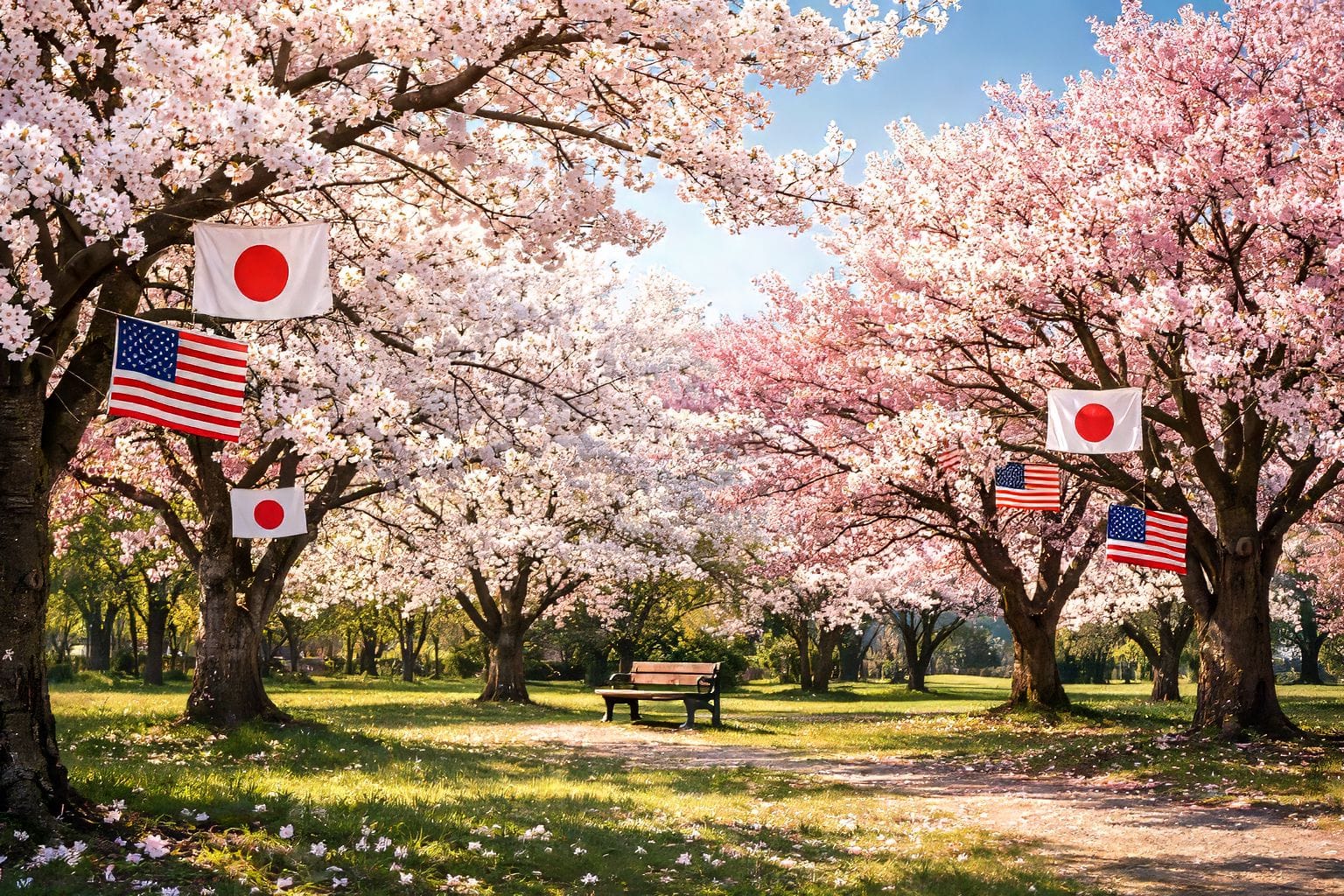
America 250 Cherry Trees, Japan’s Historic Gift Explained
When a Gesture Is Meant to Grow
Let’s be real. When world leaders swap gifts, they usually go for something that looks good in a glass case or sits quietly in an archive. But Japan’s move to send the America 250 Cherry Trees to the U.S. breaks that pattern. You can’t just shove a tree on a shelf and forget about it. These things need to stay in the ground, deal with the weather, and require decades of actual work to keep them alive. That is exactly why the America 250 Cherry Trees announcement feels so different. It’s a commitment, not just a photo op.
This whole idea links back to a huge moment over a hundred years ago. Back then, Japan sent thousands of trees to D.C. as a sort of diplomatic gamble. It worked. Today, everyone knows those pink blossoms, but most people forget it all started as an experiment in friendship.
Now, with the America 250 Cherry Trees tied to the big 2026 anniversary, we are seeing history repeat itself. But things are messier now. We have crumbling seawalls, climate shifts, and massive construction projects changing the landscape. This story isn’t just about pretty flowers. It is about whether a symbolic promise can actually survive the grit and reality of modern city life.
A Century of Blossoms and Political Memory
Look at it this way. That first gift of trees back in the early 1900s? It was not just some random present. Leaders back then actually had a plan. They felt that if they planted something living and beautiful, it could help two different cultures get along better. And it actually worked. Fast forward to now, and you cannot imagine Washington without those blossoms. Those trees have seen everything. They stood there while two countries went from being enemies in a war to being the closest allies.
But there is one thing people usually forget. Trees are not like stone statues. They get old and they get sick. A single bad storm can snap them like they are nothing. Also, when the city has to fix a wall or a road, those trees are often right in the way. Over the years, so many of them had to be replaced quietly behind the scenes. It costs a ton of money and takes years of planning. The reason we still have this tradition is not just because of some poetic idea. It is because of the hard work. It is about budgets, maintenance teams, and people who spend all day worrying about roots and dirt.
This is exactly why the America 250 Cherry Trees project matters so much today. It is more than just a 2026 birthday gift. It is a way to refresh the whole thing. The number 250 in the America 250 Cherry Trees gift is a nice way to honor history, sure. But the real story is about making sure they actually survive the next hundred years. Because let’s face it. If you do not put in the work, even the best gift in the world just ends up as mulch on the ground.
Soft Power That Works Slowly
Usually, when we think of diplomacy, we imagine leaders in suits locked in a meeting room with piles of documents. But the America 250 Cherry Trees initiative proves that diplomacy can happen right out in the open. These trees talk to regular people. They speak to commuters on their way to work, families walking by the water, and students out for a field trip. That kind of everyday presence is what gives these gifts their real power. It is hard to ignore a friendship when it is blooming right in front of you.
By choosing the America 250 Cherry Trees instead of some stone statue or a metal plaque, Japan is showing they are in this for the long haul. You can’t rush a tree. A sapling planted today won’t be big and strong for years. It is a lot like a solid relationship between two countries. It does not just happen because of one big announcement. It grows slowly, bit by bit, through patience and care.
But let’s be honest. Symbolism doesn’t do all the work on its own. The America 250 Cherry Trees project only really means something if people actually get involved. It takes cultural festivals, student programs, and experts sharing knowledge to turn a simple planting ceremony into a real connection. In the end, those pink petals are just the start of the story. They are an opening line, not the whole conversation.
Turning Ceremony Into Substance
If this gift is going to be more than just a good photo op, both sides need to get the details right from the very beginning. It comes down to the basics. Who is going to pay for the watering systems? What happens if some of the America 250 Cherry Trees get a disease and die? Which specific neighborhoods get the new trees and why? These are the questions that really matter. They decide whether people see the America 250 Cherry Trees project as a smart investment or just some fancy decoration.
Where the trees actually go is also a big deal. If you put all of them in the famous tourist spots, it just feels like a show for the cameras. But if you spread the America 250 Cherry Trees out across different parks and local districts, it sends a much better message. It shows that this anniversary is for everyone to share, not just for people visiting the capital. Those kinds of small decisions about where to plant a tree actually say a lot about a government’s priorities.
Getting regular people involved is what makes the whole thing feel real. When local residents help out with planting or watering, the story behind the America 250 Cherry Trees stops feeling like some distant political speech. It becomes part of the neighborhood. The trees end up as part of daily life, sitting right there next to the sidewalks and playgrounds where people actually live.
The Complex Journey of a Living Cargo
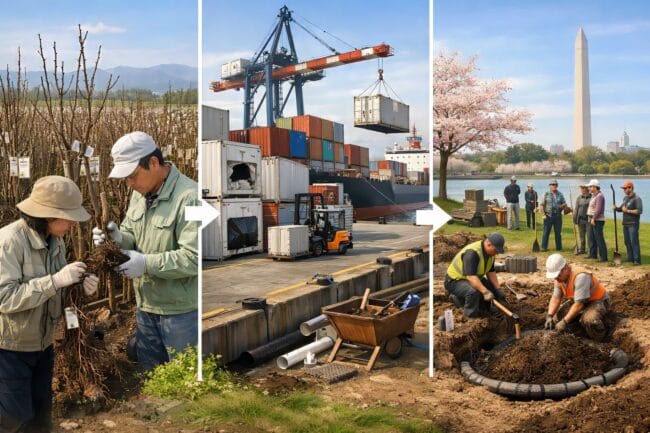
Shipping hundreds of trees across an ocean is not like moving furniture. It is actually more like running a medical operation. Before the America 250 Cherry Trees even leave Japan, nurseries have to certify that every single sapling is in perfect health. Inspectors are constantly checking roots and bark for any tiny pests. Quarantine rules are incredibly strict because nobody wants to accidentally ruin a local ecosystem. There is zero room for guessing here.
Timing is another huge headache. You can’t just plant these whenever you want. The America 250 Cherry Trees need to be moved while they are dormant. This creates a tiny window for shipping and means everything has to be perfectly timed with the crews waiting on the other side. While the planting sites are being prepped, storage facilities have to keep the roots moist and the temperature exactly right. If you miss the mark by even a little bit, the trees won’t survive.
Then you have the challenge of urban soil. The ground near waterfronts or busy roads is usually a mess. It is often packed too tight, has terrible drainage, or is full of old construction junk. To make sure the America 250 Cherry Trees actually grow, engineers and tree experts have to work together. They rebuild planting pits, move underground pipes, and make sure that, years from now, the roots won’t destroy the sidewalks. All this invisible work is what really decides if we will see blossoms decades from now.
Planning for the Long Haul
A real plan is about a lot more than just a fancy photo of people with shovels. The work for the America 250 Cherry Trees starts way before anyone digs a hole. It begins with picking the right kind of trees and checking out the nurseries to make sure everything is perfect. Then you have the whole process of shipping and double checking them. But even when they are finally in the ground, the job is just getting started. It takes years of pruning, regular watering, and health checks to keep them alive.
Things only work out when everyone knows exactly what they are supposed to do. Once the crowds leave, you need a solid plan. Embassies handle the official diplomatic stuff. Different government offices look after the land and the pipes. At the same time, local groups are usually the ones doing the daily work. If we want the America 250 Cherry Trees project to succeed, we need to see real reports on the costs and how many trees actually make it. It keeps everyone honest. It makes sure the project is based on facts instead of just big promises.
Cultural Life Beyond the Bloom
Cherry blossoms are already a huge deal in Washington. They bring in crowds of tourists and give a nice boost to local businesses every spring. Adding the America 250 Cherry Trees is a chance to make that impact even bigger, especially if we connect them with schools and arts programs.
Schools could actually use these trees as a classroom. It is a perfect way to teach kids about botany and history at the same time, showing them how a simple plant can become a symbol of friendship between nations. Artists and performers also get a lot out of this. The way the blossoms appear and then disappear so fast is a huge inspiration for people who create art about nature and politics.
Volunteer groups are what really make this work. When local people get involved in things like mulching or tracking when the flowers start to open, the America 250 Cherry Trees stop looking like “imported” decorations. They start to feel like they belong to the neighborhood. They become something the whole community owns and takes care of together.
Of course, the economic side is important too, but we have to be careful. You don’t want the commercial stuff to take over the whole thing. If it becomes all about selling souvenirs, the meaning of the gift gets lost. The best way to do it is to keep the focus on the culture and the environment. That way, the America 250 Cherry Trees project stays special for everyone.
Ecology, Climate, and Responsible Planting
Putting decorative trees into a busy city is not as simple as it looks. You have to be really careful. Experts need to look at the soil, how much salt is in the air near the water, and how hot the summers are getting. Even the rain is changing. A type of tree that did great fifty years ago might really struggle today. That is why picking the America 250 Cherry Trees is not just about following tradition. It is about looking at climate models and figuring out what will actually survive in the future.
Modern city planning is about more than just making things look pretty. It is about making the city work better. When you put trees in the right spots, they cool down the streets, soak up extra rainwater, and give birds and bees a place to live. So, the America 250 Cherry Trees are not just there for the scenery. They are actually a part of the city’s plan to deal with a changing climate.
The work of watching over these trees never really stops. People have to track how fast they grow, look out for diseases, and check for damage after big storms. All of that info helps leaders decide how to spend money and when to plant new ones. At the end of the day, it is this constant care that turns a gift from another country into a permanent part of the city.
Public Debate and the Shape of the Narrative
Let’s be honest. Any time a big project like this shows up, people are going to have opinions. Some folks just love the idea of more flowers and the whole friendship vibe. Others? They want to talk about the money. They want to know about the environment and if this is actually a good use of the land. Both sides are right to ask these things. The only way to keep everyone happy is to just be open about the whole process.
If you want people to actually get behind the America 250 Cherry Trees project, you have to show them the math. Share the maintenance plans and the budgets. Don’t just let politicians do all the talking. Bring in the tree experts and the people who actually live in the area. When the facts are out there, people stop guessing and start trusting the process.
Usually, the news only cares about the big opening day with the cameras and the speeches. But that is not what people remember. What really matters is what happens a year or two later. If the America 250 Cherry Trees are healthy and the parks look great, that is going to mean way more than any fancy ribbon-cutting ceremony.
A Gift Measured in Decades
Japan’s plan to send over these trees for the 250th anniversary is a big deal, mostly because it’s not something you can just finish in a weekend. To make it work, everything has to line up. We are talking about shipping dates, the right soil, watering systems, and enough volunteers and money to keep things going. Every single one of these details matters. They decide if the America 250 Cherry Trees project becomes a permanent part of the city or just something people forget about in a few years.
If this is done the right way, these trees will grow into landmarks that remind everyone of this partnership every single spring. They will shade the benches and line the paths along the water in a way that no official speech ever could. Gifts that are literally rooted in the ground take a lot of patience and work. But when you get it right, they usually last much longer than the politics that started the whole thing in the first place.
Frequently Asked Questions: America 250 Cherry Trees
Q: What exactly does the America 250 Cherry Trees project refer to?
A: It is pretty simple. Japan is sending over 250 cherry blossom trees to help the U.S. celebrate its 250th birthday. People just use the name America 250 Cherry Trees as a quick way to talk about the whole gift and all the planning that goes into it.
Q: Why is Japan giving the America 250 Cherry Trees gift right now?
A: These trees have been a major symbol of friendship between the two countries for a century. It all started with a gift back in the early 1900s that basically defined what spring looks like in D.C. Sending the America 250 Cherry Trees now is just a way to keep that bond going and show that the partnership is still as strong as ever.
Q: Where will the America 250 Cherry Trees be planted?
A: Most of them are going into famous public parks, especially in spots where the older trees are starting to die off. But the cool part about the America 250 Cherry Trees project is that they might spread some out into different neighborhoods too. That way, more people get to see them without having to travel to the big tourist spots.
Q: Who is going to take care of the America 250 Cherry Trees?
A: It is a big team effort. You have the federal government and city park departments working with tree experts. Even local volunteer groups are getting involved. Everyone knows that the America 250 Cherry Trees won’t survive without a lot of long term care and a solid budget.
Q: What kind of species are being used for the America 250 Cherry Trees?
A: Experts are being really picky about this. They are looking for trees that can handle the city soil and the changing weather. While everyone loves the classic Yoshino look, the America 250 Cherry Trees might include some tougher varieties that are better at fighting off bugs and disease.
Q: Is the America 250 Cherry Trees project just for show, or does it actually help the city?
A: It is definitely both. Sure, it’s a beautiful gesture, but the America 250 Cherry Trees initiative also helps with real world stuff. It is about fixing up the parks, helping the environment, and even creating new programs for local schools.
Q: Can regular people help out with the America 250 Cherry Trees?
A: Definitely. That is actually a big part of the plan. There will be volunteer days and workshops where you can learn how to look after them. It is a way for people to feel like the America 250 Cherry Trees are something they actually own and protect.
Q: Why use the America 250 Cherry Trees for diplomacy instead of building a statue?
A: Statues are just blocks of stone that sit there. Trees are different. They are alive. They grow and change every year, just like a real friendship. The America 250 Cherry Trees become a part of your daily walk or your commute, and they usually end up lasting much longer than any political trend.
Editorial Disclaimer
We put this article, America 250 Cherry Trees, Japan’s Historic Gift Explained, together just for your information and to help explain the story. We did a lot of digging through news reports and public records to make sure the facts about Japan’s 250 cherry tree gift are as accurate as possible.
But keep in mind, this is not an official document from the Japanese or U.S. governments. It is not meant to be professional advice on diplomacy, law, or even how to plant a tree. Any opinions we shared about why the America 250 Cherry Trees project matters are just our own take on the history and culture behind it.
If you need the absolute latest on planting dates or official rules, it is a good idea to check with the government or the experts actually running the project. We are not liable for any choices you make based on what you read here.
References
- History of the Cherry Trees: The official historical timeline detailing the arrival of cherry blossoms in Washington, D.C., and the origins of the gift from Japan via National Park Service (NPS).
- Japan’s Gift for the 250th Anniversary (2024): Coverage of Prime Minister Kishida’s pledge to donate 250 new cherry trees to celebrate the United States’ 250th anniversary of independence via Reuters.
- Construction and Tree Replacement: A report on the 250 new trees provided by Japan to replace those lost during essential infrastructure repairs around the Tidal Basin via AP News.
- The Cultural Journey to America: An in-depth exploration of the cultural and diplomatic efforts that established the cherry blossom as a symbol of spring in the United States via National Geographic.
- Original Gift Documentation: Primary historical documents and archival materials confirming the 1912 gift from the City of Tokyo to Washington, D.C., via the Library of Congress.
- APHIS Preservation of Tradition: Insights into how the USDA ensures the health of the trees and preserves the tradition through rigorous phytosanitary protection via USDA APHIS.
- The Complicated History Behind the Trees: An analysis of the early diplomatic challenges and the complex origins of Washington’s iconic cherry blossoms via TIME.
