

Zero-Cost Valentine’s Day Ideas That Feel Priceless
Why meaningful experiences matter more than spending
Love does not need a price tag. The truth is that the most meaningful gestures are the ones we create ourselves. This year, you can make a Zero-Cost Valentine’s Day that feels thoughtful, personal, and unforgettable. No fancy gifts are required. Just a little planning, some creativity, and a focus on what really matters: moments that make both of you feel seen, appreciated, and connected.
Think of it like this. A day designed with intention beats anything bought from a store. Small, deliberate actions can create bigger memories than any expensive bouquet or box of chocolates. This guide will show you exactly how to do it. Simple, repeatable, and genuinely special.
$0 Valentine’s Day Benefits
The first point is simple: having little money does not mean having little meaning. Human attention is the real currency. When you invest your time, creativity, and focus in someone, you offer something rare and unforgettable. Neurologically, new experiences spike dopamine, and shared moments create lasting memories. Expensive gifts rarely have the same impact unless paired with intentional planning and storytelling. That is why a well-designed Zero-Cost Valentine’s Day can feel more meaningful than any store-bought present.
Second, limits boost creativity. Designers understand this: constraints reduce indecision and force clear choices. A $0 budget limits what you can buy and shifts your energy into designing experiences. Where will you be? What will you say? How will you frame the day? Answering these questions leads to more meaningful moments than the usual “buy or not” decisions most gift-based plans rely on. With a Zero-Cost Valentine’s Day, the focus is on thoughtful action, not expense.
Third, reproducibility matters. A successful Zero-Cost Valentine’s Day can work anywhere, for anyone. It creates a pattern you can repeat and refine over time. This approach builds lasting memories and traditions, rather than delivering just a one-time emotional spike.
Principles of Design – From Concept to Micro-Execution
Start with a clear outcome. Don’t aim for just “a good time.” Focus instead on a specific emotional state: warmth, awe, restoration, or playful connection. Pick one. This clarity makes it easier to choose activities, set the tone, and manage pacing, especially when planning a Zero-Cost Valentine’s Day.
Use a three-act structure: initiation, immersion, and resolution. Initiation sets the context, such as a short note, an unexpected audio clip, or a simple ritual. Immersion is the main activity, occupying 20 to 60 minutes of focused attention. Resolution closes the experience with reflection, like a short letter, a shared promise, or a mini time capsule. Following this structure ensures your Zero-Cost Valentine’s Day is memorable and resonates naturally with human memory.
Control sensory variables deliberately. Light, sound, and motion are powerful levers. Soft directional light, such as a lamp behind curtains or a string of LEDs, curated music with personal associations, and comfortable seating can shift perception more than any purchased item. These low-cost, or in our case no-cost, adjustments make a Zero-Cost Valentine’s Day feel thoughtful and elevated, even without spending a dime.
Practical Zero-Cost Valentine’s Day Ideas
Below are reproducible ideas designed for a Zero-Cost Valentine’s Day. Each idea can be completed for $0 using common devices and household items. Pick one, prepare a short plan, and execute without improvising the core beats.
The Micro-Documentary
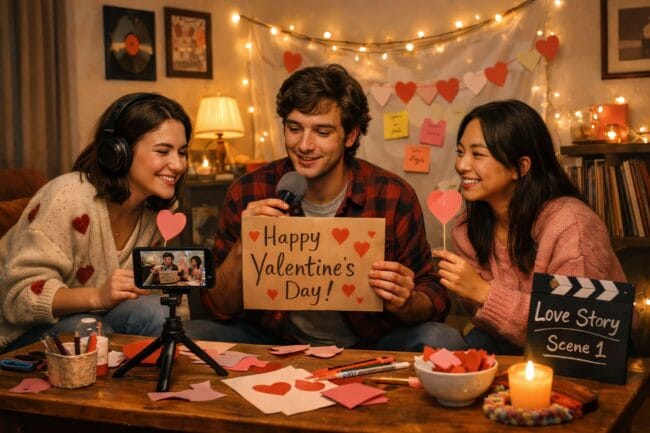
Record five 20–60 second clips in places that matter, such as your first meeting spot, a favorite store corner, or a cozy home nook. Add a spoken 30–60 second closing monologue. Stitch them into a 3–5 minute sequence and watch together.
The Day-Long Breadcrumbs
Schedule a series of short texts or voice notes across the day. Each message reveals a micro-memory or a tiny task, for example, “At 3 PM, look at the window where we first met” or “Play song X and dance for one minute.”
Future Letter Capsule
Write two letters to be opened in 1, 5, and 10 years. Seal them and agree to keep them safe. Discuss what you put in each letter before sealing.
Micro-Masterclass
Teach each other something trivial but personal. This could be folding a favorite origami shape, sharing a secret family recipe technique, or giving a thirty-minute lesson on a hobby you love.
Home Gallery Walk
Curate a mini-exhibition of photos, drawings, and objects with short handwritten captions. Walk through it together as if visiting a private gallery.
Night Sky Audit
If weather permits, map visible constellations from your location. Make a simple spoken commentary and assign a playful star to a shared future goal.
Each option is intentionally procedural. The value comes from the framing and the follow-through, not the method. Prepare a one-page cue sheet for whichever idea you pick, including cues for lighting, a music playlist, timing marks, and a one-line “close” to end the experience.

The Gift of Presence
In a busy world, the most valuable gift you can give is your full attention. Zero-Cost Valentine’s Day demonstrates that shared experiences, when done with care and focus, leave a stronger impression than any purchased item. Our brains remember moments spent together far better than objects, making genuine presence priceless.
Active Listening
Take this opportunity to really hear your partner. Ask thoughtful questions, pay attention to their tone and body language, and notice the small details that reveal what matters to them. Listening actively turns ordinary time into meaningful connection, leaving memories that last well beyond the day itself.
Digital Detox
Switching off phones and other devices may feel minor, but it is one of the most valuable investments you can make. Being fully unplugged allows you to focus entirely on your partner, free from interruptions. This simple act demonstrates respect, attention, and intention, transforming a $0 Valentine into an unforgettable experience.
Personalization Framework
Even the most thoughtful activity can fall flat if it does not fit your partner’s personality and preferences. A professional approach to Zero-Cost Valentine’s Day involves tailoring each idea to the individual. By understanding your partner’s unique needs and motivations, simple gestures become deeply meaningful experiences.
The Five Love Languages
Consider your partner’s primary love language when designing a zero-cost activity:
- If their language is acts of service, creatively handling household tasks together can feel like a heartfelt gift.
- If it is quality time, plan a focused, undistracted experience that allows deep connection.
- For words of affirmation, leave short handwritten notes or record brief messages that express appreciation.
Personalization by Personality Type
- If your partner is nostalgic, revisit shared memories through photos, old letters, or favorite songs. Create a small “memory trail” to celebrate the history you share.
- For couples who love nature, organize a backyard stargazing session, a local park walk, or a mini picnic using items you already have at home.
- If you’re celebrating solo but want emotional connection, write a reflective letter to yourself, create a vision board, or record a short self-addressed video message to revisit later.
By matching activities to personalities and preferences, a $0 gesture transforms into an experience that feels intentional, unique, and unforgettable.
Implementation Checklist and Execution Notes
Execution is where even the best ideas can fail. Treat the evening as a short production. Run a mental rehearsal and remove three likely friction points. Common friction points include phone interruptions, unclear timing, and mismatched expectations. Preempt them before the event.
Set clear constraints. Choose exact start and end times and agree on “do not disturb” for phones. If the plan involves recorded audio or video, test playback volume and device battery beforehand. Small technical failures can be disproportionately disruptive. One five-minute pre-flight check can prevent them.
Document the event briefly afterward. A two-sentence log, noting what worked, what surprised you, and one thing to change next year, turns the evening from a single experience into a repeatable practice. Over time, this documentation becomes a growing archive of shared rituals, making every Zero-Cost Valentine’s Day more memorable.
Ritual Design Framework
A thoughtful Zero-Cost Valentine’s Day can be the seed for traditions that last far beyond a single day. By structuring your activities deliberately, even small gestures can evolve into yearly rituals that deepen connection over time.
How to Turn a One-Time Idea into a Yearly Ritual
- Pick a core activity – choose one $0 experience that resonated strongly.
- Set a recurring date or season – anchor it in the calendar, even loosely.
- Document and reflect – write down what worked, what surprised you, and what can be improved next year.
- Invite small variations – tweak the activity slightly each year to keep it fresh but familiar.
- Celebrate consistently – repetition turns a meaningful experience into a cherished tradition, giving your Zero-Cost Valentine’s Day long-term emotional value.
The Afterglow
A Zero-Cost Valentine’s Day should not end when the calendar flips. The moments you create can echo long after the day is over, shaping shared routines and lasting memories.
Turning Rituals into Habits
Small activities, like a walk together, a short handwritten note, or a shared cup of coffee, can become weekly traditions. Repeat these rituals consistently, even in brief forms, to reinforce connection and create a rhythm of attention. Over time, these simple gestures strengthen the relationship, making everyday moments feel intentional and cherished.
The Emotional Carryover
The real magic lies in the afterglow. When a thoughtful experience becomes a pattern, it builds anticipation and deepens emotional intimacy. Couples often report that these repeated micro-rituals become more meaningful than single, expensive events because they are personal, consistent, and reflective of mutual care.
Accessibility & Inclusivity
A thoughtful Zero-Cost Valentine’s Day should be accessible to everyone. Designing experiences that accommodate different abilities, household sizes, and living situations makes the celebration meaningful for all. Inclusivity ensures that the value of attention and presence is not limited by physical or logistical barriers.
Long-Distance Relationships
For couples separated by distance, digital tools make connection possible. Video calls, shared playlists, collaborative online boards, or synchronized activities like cooking the same recipe together allow a $0 celebration to feel intimate. Even small gestures, such as sending a photo or a short voice message at a planned time, can reinforce the feeling of togetherness.
Adaptive Design
Consider mobility limitations, hearing or vision differences, or space constraints. Simple adjustments, like choosing accessible walking routes, using captions for videos, or adapting activities for small spaces, make every gesture inclusive. Thoughtful design ensures that every participant experiences the emotional impact intended by your Zero-Cost Valentine’s Day.
How This Becomes a Wider Pattern
For a practice to spread, it must be easy to copy and share. The format should be simple. A twenty minute plan with three clear cues is easier to follow than a vague idea. Many people adopt a clear Zero-Cost Valentine’s Day routine rather than an abstract concept. Create short instructions for different relationship types. Each instruction becomes a basic template that others can use.
Second, growth should rely on real content rather than polished ads. Short clips of couples performing private rituals feel more genuine than staged scenes. Encourage simple hashtags and one-page checklists that people can save and reuse. Real moments work better than glossy visuals in social feeds, especially when people share their own Zero-Cost Valentine’s Day plans.
Third, make the format work for everyone. $0 ideas should suit people with mobility limits, different household sizes, and various cultural needs. Include notes on filming in accessible locations or running a gallery walk for couples in different places using video calls. Simple design helps a Zero-Cost Valentine’s Day reach more people across regions and lifestyles.
Conclusion
Spending money can solve problems. A well-timed gift or a booked table can feel right. But the lesson here is different. Designing high-value, low-cost experiences deliberately creates memories that last far beyond a single day. It trains attention, shapes the story you share with someone, and builds moments that are meaningful because they are intentional, not purchased.
If there is one simple rule to take away: prepare the frame. A $0 Valentine without a plan is just another night. A $0 Valentine with thought and structure becomes a memory you carry forward. And here is the quiet irony: the most expensive thing you avoid is the idea that more money equals more meaning. In truth, it rarely does. The moments that linger are small, focused, and deeply personal. That is the heart of a Zero-Cost Valentine’s Day.
FAQ: Your Guide to a Zero-Cost Valentine’s Day
Celebrating love does not have to come with a hefty price tag. These frequently asked questions provide guidance, inspiration, and practical tips for creating a Zero-Cost Valentine’s Day that feels intentional, memorable, and deeply personal. Discover how small, thoughtful actions can create lasting emotional impact, strengthen connection, and turn one special day into a tradition that resonates year after year.
Q: What is a Zero-Cost Valentine’s Day?
A Zero-Cost Valentine’s Day is a celebration that focuses on intentional experiences rather than purchased gifts. It emphasizes attention, creativity, and shared moments, proving that meaningful connections do not require spending money.
Q: How can I make a Zero-Cost Valentine’s Day feel special?
Focus on personalized experiences, active listening, and creating small rituals. Using existing household items, thoughtful notes, or shared activities like walks or mini-gallery exhibitions can make the day memorable without spending a dime.
Q: Can Zero-Cost Valentine’s Day ideas work for long-distance relationships?
Absolutely. Digital tools such as video calls, shared playlists, collaborative online boards, or synchronized activities allow couples to celebrate meaningfully, even when separated by distance.
Q: How do I personalize activities for my partner?
Consider their love language and personality. For example, if your partner loves nostalgia, revisit shared memories; if they enjoy nature, plan an outdoor activity; if celebrating solo, focus on reflective or creative practices that connect you emotionally.
Q: How can one-time ideas become lasting traditions?
Document your experiences, set a recurring date or season, and repeat your chosen activity yearly. Adding small variations keeps the ritual fresh while maintaining consistency, creating lasting emotional value.
Q: How can I include accessibility and inclusivity in my celebrations?
Adapt your activities to accommodate mobility, sensory, or space limitations. Consider captions for videos, accessible walking routes, or digital adaptations for long-distance couples to ensure everyone can participate fully.
Q: Why is presence more valuable than gifts?
Attention and shared experiences are encoded more strongly in memory than objects. Active listening, undistracted time, and meaningful engagement create lasting emotional impact that no purchased gift can match.
Editorial Disclaimer
This article is written to provide inspiration and practical guidance for creating meaningful, zero-cost experiences for Valentine’s Day. All ideas, frameworks, and suggestions are intended for personal use and enjoyment. Outcomes may vary depending on individual circumstances, relationship dynamics, and cultural context.
FrontOrb and the author do not guarantee specific results, and this content should not replace professional counseling, relationship advice, or any other expert guidance. Readers are encouraged to adapt the suggestions thoughtfully, respect boundaries, and prioritize safety and consent in all activities.
The strategies presented aim to promote connection, creativity, and inclusivity. By applying these ideas, readers accept responsibility for their own actions while exploring meaningful, intentional ways to celebrate love without financial cost.
References
- Experiential vs. Material Gifts: A foundational study published in the Journal of Consumer Research (JCR) exploring why experiences foster stronger social connections than physical objects via UCLA Anderson School of Management.
- Neuroeconomics of Gift-Giving: Research from Claremont Graduate University revealing the biological impact of Valentine’s Day rituals on hormonal levels and happiness.
- Consumer Perspectives on Valentine’s Day: A comprehensive academic analysis of the “Loved and Loathed” paradox, examining the societal and personal expectations surrounding the holiday from ResearchGate.
- Evolutionary Psychology of Gift-Giving: A scientific review of the “Costly Signaling Theory” and how it explains human behavior in romantic courtship via PubMed Central (PMC).
- The Impact of Digital Detox on Relationships: A clinical perspective on how disconnecting from digital devices affects brain function and interpersonal intimacy from Kokilaben Dhirubhai Ambani Hospital.
- AI and Social Dynamics Research: Advanced analysis of interpersonal communication and social patterns in the digital age via arXiv.
