
How Wind Energy Works, A Beginner’s Guide
Understanding How Wind Energy Works matters for anyone involved in modern power projects, from technical teams to investors evaluating long term performance. This guide is written for decision makers: engineers selecting turbine systems, project managers comparing suppliers, and financial institutions assessing project bankability.
Rather than promotional language, it focuses on how wind power operates in practice. The article explains how wind energy works at an engineering level, outlines the trade-offs within design choices, and examines regulatory and environmental constraints shaping every installation. It also covers operational realities, maintenance strategies, and the commercial structures that determine whether a project delivers reliable output over decades.
Small technical decisions often have wide financial and logistical effects. Blade length, drivetrain architecture, and tower height influence more than energy capture. Each choice affects transport planning, installation methods, inspection cycles, insurance requirements, and financing terms.
The tone is direct and practical. The language is accessible, but expectations are strict. Projects succeed through engineering discipline and rigorous risk management, not optimism.
For quick guidance, go to the checklist near the end. For supplier negotiations, consult the sections on procurement, contracts, and performance metrics. They explain what to verify, what to require, and how those decisions protect long term returns.
Expect nuance and honest trade-offs. Wind power runs on free fuel, but dependable generation relies on paid expertise.
How Wind Turbines Capture Airflow
To understand How Wind Energy Works, start with the rotor blades. They act as precisely engineered aerodynamic surfaces that convert wind into rotational torque to drive the generator.
Engineers control this conversion through several linked design variables: chord distribution, airfoil profiles, blade twist, and tip shape. The goal is to keep the turbine’s power coefficient near its maximum at the site’s typical wind speeds while limiting structural loads, vibration, and noise.
Longer blades increase the swept area and potential energy capture roughly with the square of the rotor radius. They also increase bending moments and fatigue stress. Longer blades require stiffer composites, reinforced roots, and more complex transport and installation. Optimal design balances energy gain with structural cost and maintenance needs.
Modern turbines use active pitch control and variable rotor speeds to operate efficiently across a wide range of wind conditions. Proper pitch systems reduce extreme loads during gusts and enhance survivability. Skimping on pitch accuracy or actuator reliability may lower upfront costs but usually results in higher downtime, more repairs, and weaker project economics.
Inside the Turbine: Generator & Gears
Understanding How Wind Energy Works requires examining the drivetrain, which is central to both operational performance and capital expenditure. The main choice is between a gearbox coupled with a generator or a direct drive system.
Gearboxes reduce generator size and initial cost, but they introduce complex lubrication systems and multiple moving parts. These components often dominate maintenance events. Direct drive systems remove the gearbox, but they require a larger, heavier generator and may rely on permanent magnets, creating potential supply-chain risks.
Generator type, whether synchronous or asynchronous, permanent magnet or electrically excited, also affects grid support capabilities and dependence on rare materials. Permanent-magnet generators offer high efficiency and compact design, but expose projects to magnet supply volatility. Electrically excited machines avoid that risk, but require more sophisticated excitation controls.
Regardless of drivetrain choice, ensure the design margin for fatigue and transient loads is clearly documented by the supplier. Request Failure Modes and Effects Analyses (FMEAs) and a detailed spare-parts plan before signing contracts. Skipping these steps is the most common cause of unexpected operational costs.
Turbine Towers and Power Connections
Understanding How Wind Energy Works also requires examining the towers, foundations, and civil works that support the turbine. Tower height is a balance: taller towers reach higher average wind speeds but increase structural costs. Each additional 10–20 meters often gives diminishing returns, depending on local wind shear and turbulence. Taller towers also complicate transport and require stronger foundations, raising CAPEX and installation time.
Foundation type depends on site conditions. Onshore options include spread footings and driven piles, while offshore solutions range from monopiles to jackets and floating platforms. The foundation choice directly affects construction schedules, mobilization costs, and permitting complexity.
Soil and geotechnical surprises are a significant project risk. Always budget for thorough site investigations and include a contingency for unexpected conditions. Early investment in geotechnical surveys reduces the likelihood of claims, redesigns, and schedule delays later.
Wind Energy Worldwide: Policy & Trends
Wind energy is no longer just a technical solution; it is a strategic global sector. Europe leads with ambitious targets for renewable share, offering incentives and regulatory frameworks that accelerate deployment. In the United States, federal tax credits and state-level renewable portfolio standards support project bankability and investment. Meanwhile, Asia-Pacific markets, including China, India, and Japan, are expanding rapidly, driven by energy demand growth and climate commitments.
Understanding the global market and policy landscape is crucial. It shapes financing conditions, supply chains, and technology adoption. Policy support, international targets, and regional expansion explain why wind energy is not just a local choice, but a worldwide strategic priority.
Grid Integration & Power Electronics
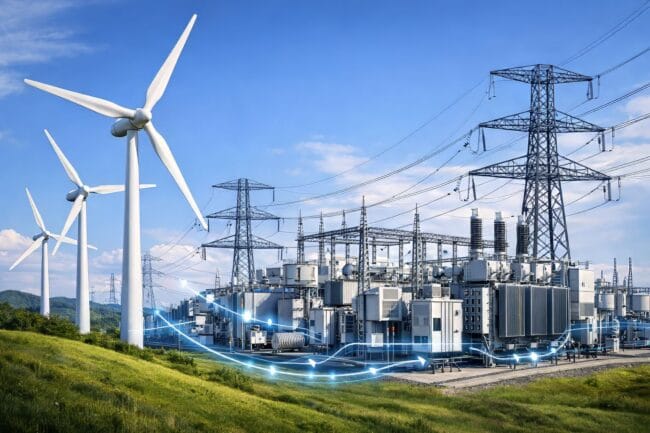
Understanding How Wind Energy Works requires attention to power electronics, which make turbine output usable and grid-compliant. Modern full-converter, variable-speed turbines manage both active and reactive power, provide fault ride-through, and smooth output variability to meet strict grid codes.
Grid codes increasingly mandate ancillary services, such as voltage control, reactive power support, low-voltage ride-through, and, in some cases, synthetic inertia. Ignoring these requirements during design can lead to costly retrofits, output curtailment, or rejection at the point of connection. Early engagement with the transmission system operator (TSO) is essential to prevent such issues.
Power quality factors, including harmonics, flicker, and imbalance, must be addressed during electrical design. This involves specifying transformer ratings, sizing filters, and implementing harmonic mitigation strategies. Failure to account for these elements can result in customer complaints and regulatory penalties.
Assessing Wind Resources & Turbine Placement
Understanding How Wind Energy Works starts with accurate resource assessment. Wind should be measured using meteorological masts or LiDAR for at least 12 months at representative heights. Measurements must be correlated with long-term datasets to reduce interannual uncertainty. Short campaigns increase revenue risk and make achieving bankability more difficult.
Micrositing, the precise placement of turbines within a farm, requires wake modeling, turbulence assessment, and terrain analysis. Wake losses are often underestimated. Using conservative wake models and optimizing turbine spacing based on site economics generally improves returns more than simply adding turbines.
For projects with multi-decade financial horizons, climate variability and long-term climate-change trends must also be considered. Even small changes in mean wind speed or turbulence patterns can materially affect project returns over a 20–25 year period.
Case Studies / Real-World Examples
Hornsea Project, UK (Offshore)
Hornsea Project is currently the world’s largest offshore wind farm. Located off the Yorkshire coast, it demonstrates how scale, advanced turbine technology, and strong project management can deliver massive clean energy output. With hundreds of turbines, it supplies electricity to over one million homes, proving that offshore wind can be bankable, reliable, and impactful. This project highlights how regulatory support and strategic planning in Europe enable large-scale deployment.
Alta Wind Energy Center, USA (Onshore)
The Alta Wind Energy Center in California is one of the largest onshore wind farms in the United States. Comprising over 600 turbines, it provides enough electricity for more than 200,000 homes. Success here is built on careful site assessment, local stakeholder engagement, and predictive maintenance strategies. Alta Wind illustrates how technical rigor combined with operational excellence creates profitable and sustainable energy projects.
Why it matters: These real-world examples show that the principles of turbine selection, O&M planning, and site assessment are not just theoretical. They directly translate into large-scale, bankable, and sustainable energy production.
Challenges & Limitations
How Wind Energy Works provides significant opportunities, yet there are practical challenges to consider. Wind does not blow consistently, so electricity output can vary daily and seasonally. These fluctuations can create stress on the grid and require solutions such as energy storage, backup power, or demand management to maintain a steady supply.
Another key challenge is turbine end-of-life management. Blades are made from composite materials that are tough to recycle. Although innovative recycling and repurposing techniques are emerging, they are not yet widely adopted. Without careful planning, decommissioning can become costly and environmentally problematic.
Recognizing these limitations is crucial. Awareness of wind variability, grid integration issues, and recycling constraints enables developers and investors to design projects that are reliable, financially sustainable, and environmentally responsible.
Future Trends & Innovation
How Wind Energy Works continues to advance as technology improves and energy demands grow. Floating offshore turbines are enabling development in deeper waters, opening opportunities that were previously inaccessible. Combining wind with solar or energy storage in hybrid parks maximizes output and supports grid stability. Predictive maintenance powered by AI helps anticipate equipment wear, reduce downtime, and enhance overall efficiency.
These developments matter. They show that wind energy is an evolving sector. Projects implemented today must adopt emerging technologies to remain competitive, reliable, and sustainable throughout their lifespan.
Optimizing Wind Farm Production
Understanding How Wind Energy Works requires careful consideration of wake effects, array layout, and production optimization. Wakes reduce downstream wind speed and increase turbulence, which can shorten component life. Layout optimization balances energy yield per turbine against wake-induced losses. Dense layouts improve land-use efficiency but often reduce productivity per turbine.
Wake steering and active control strategies can recover some energy by yawing upstream turbines to optimize farm-level output. These techniques require advanced control systems, careful testing, and clear contractual agreements on expected gains versus additional wear.
Maintenance scheduling across the fleet must account for wake interactions. Taking a cluster offline for service can impact overall production more than a single turbine downtime. Effective O&M planning minimizes farm-level disruptions and maintains consistent energy delivery.
Onshore vs Offshore and Floating Foundations
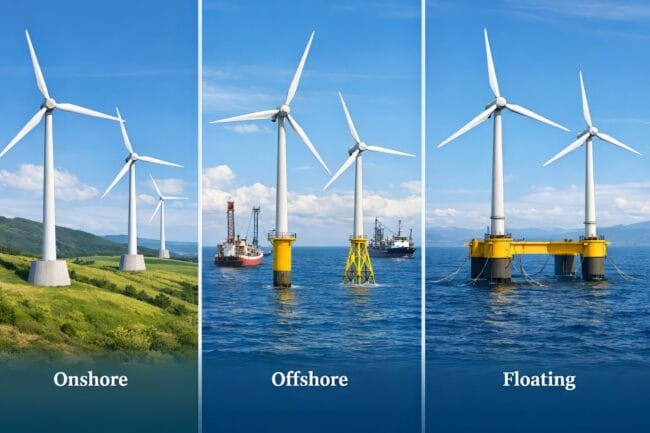
Understanding How Wind Energy Works involves comparing onshore, offshore, and floating foundation solutions. Offshore sites offer higher and more consistent winds, but they come with higher CAPEX, more complex logistics, and increased OPEX. Offshore foundations, including monopiles, jackets, and gravity bases, as well as installation vessels, are specialized assets. Their availability and seasonal constraints dictate project timelines.
Floating turbines enable development in deeper waters but introduce new risks related to mooring, dynamic cable management, and novel structural fatigue behavior. Floating platforms are suitable where seabed conditions or environmental restrictions prevent fixed foundations. However, they require new supply chains and adapted insurance structures.
For both onshore and offshore projects, access to local ports, heavy-lift vessels, and skilled crews is critical. Logistical gaps can add weeks or months to the construction schedule and materially increase costs during the build phase.
Environmental Impact & Local Engagement
Understanding How Wind Energy Works requires addressing environmental, permitting, and community engagement aspects. Environmental impact assessments (EIA) evaluate noise, impacts on birds and marine life, visual effects, and habitat disturbance. Delays in permitting often occur due to incomplete EIAs or insufficient stakeholder consultation, which can be costly. Early, transparent engagement reduces opposition and accelerates approvals.
Mitigation measures, such as timing restrictions, curtailment during key migration periods, blade painting, or radar-based shutdown systems, help minimize environmental impact but may reduce annual energy production. These trade-offs should be incorporated into the financial model, not addressed after contract signing.
Social license is critical. Host-community benefits, transparent revenue-sharing, and local hiring programs ease pressure during permitting and operation. Neglecting these elements can lead to legal challenges, protests, and reputational damage, potentially halting projects.
Procurement & Supply Chain
Understanding How Wind Energy Works requires careful procurement, contract management, and supply-chain oversight. Procurement is not simply about finding the lowest price; it is about managing risk. Always insist on clear performance guarantees, detailed warranty definitions, and transparent spare-parts logistics. Set availability targets with explicit remedies and liquidated damages for non-performance.
Thorough supply-chain due diligence is essential. Evaluate vendor financial stability, lead times for major components, and sourcing of geopolitically sensitive materials, such as rare earths or specialized steel grades. Contracts should include escalation clauses, clear acceptance tests, and a robust commissioning protocol.
For large projects, staggered delivery and staged commissioning reduce single-point schedule risks. Staging must be coordinated with electrical and grid arrangements to avoid unnecessary curtailment during partial operation.
Financial Structuring, Insurance, and Bankability
Understanding How Wind Energy Works includes evaluating financial structuring, insurance, and project bankability. Lenders focus on conservative resource estimates, experienced suppliers, solid O&M contracts, and clear grid access. Sensitivity analyses, such as ±10% for wind speed, ±5% for availability, and ±10% for CAPEX, are standard. Without these, expect lender pushback or higher financing costs.
Insurance protects against construction risks, theft, transport damage, and operational losses. For offshore or floating projects, premiums can be substantial and depend on vessel availability and weather windows. Insurers also assess supply-chain concentration and spare parts accessibility.
Commercial structures influence risk profiles. Merchant exposure, PPA durations, and capacity-market participation all affect project stability. Mitigate merchant risk with storage or strong PPAs where possible. Otherwise, model variable revenue carefully and stress-test worst-case scenarios.
Operations and Maintenance
Understanding How Wind Energy Works requires a strong operations and maintenance (O&M) strategy, which is often the largest ongoing cost driver. Shift from reactive maintenance to preventive and predictive approaches. Techniques such as vibration analysis, oil sampling, thermography, and drone inspections detect issues early and prevent major failures. Data-driven maintenance minimizes unplanned downtime and extends turbine lifespan.
A clear spare-parts strategy is essential. High-value components, including blades, gearboxes, and main bearings, have long lead times. Keep critical spares on-site or within a defined logistics chain, especially for remote or offshore sites. Balance inventory costs against potential lost revenue.
Contracted O&M can suit sites without local technical expertise. However, maintain oversight and enforce clear KPIs. When outsourcing, establish performance-based incentives and require transparent SCADA data and detailed maintenance reporting.
Data, Digitalization, and Remote Operations
Understanding How Wind Energy Works increasingly depends on data, digitalization, and remote operations. SCADA telemetry combined with machine-learning analytics transforms raw signals into actionable maintenance schedules. Prioritize data quality, consistent logging, and secure remote access. Poor-quality data is worse than no data, as it generates false alerts and poor decisions.
Remote troubleshooting and guided maintenance reduce travel time and operational exposure. Use augmented reality, detailed SOPs, and real-time vendor support to limit on-site interventions for complex repairs. This is especially valuable offshore, where mobilization costs are high.
Cybersecurity is a critical operational risk. Protect control systems and data pipelines through segmentation, regular patching, and incident response planning. A breach in operational technology can cause physical damage and prolonged outages. Insurance may not cover negligence, making proactive security essential.
Decommissioning, Recycling, and End-of-Life Planning
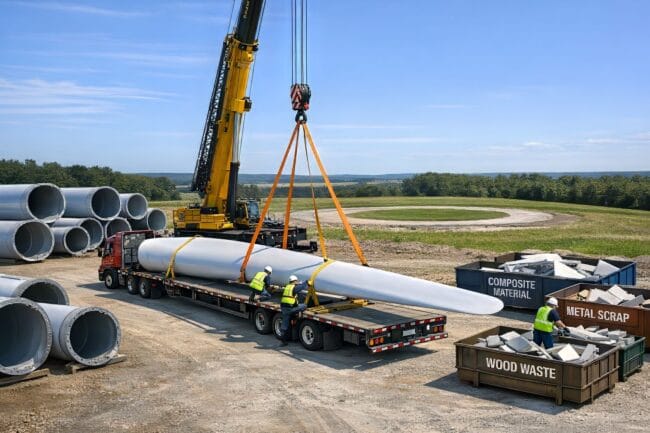
Understanding How Wind Energy Works includes planning for decommissioning and end-of-life management from the start. Blade materials, composite recycling, tower scrap, and foundation removal all add costs and regulatory obligations. Many jurisdictions now require decommissioning bonds or proof of recycling plans before permitting.
Innovations in blade recycling, foundation repurposing, and modular component recovery are emerging but are not yet universal. Include end-of-life costs or potential salvage value in the financial model. Prefer suppliers with clear take-back or recycling commitments.
Neglecting end-of-life planning can lead to stranded environmental liabilities and reputational damage. For global projects, ensure that local regulations and international best practices guide your exit strategy and financial provisioning.
Turning Knowledge into Action
Understanding How Wind Energy Works is only valuable if applied thoughtfully. Use the checklist and insights from this guide to make informed decisions on turbine selection, site design, operations and maintenance strategies, financial structuring, and environmental compliance.
Review your project plans against the KPIs outlined. Ensure contracts include performance guarantees, warranties, and supply-chain contingencies. Confirm that grid compliance, environmental mitigation, and end-of-life planning are fully addressed. Leverage digital monitoring and predictive maintenance to reduce operational costs and risks.
Projects succeed when preparation, engineering discipline, and careful risk management guide every decision. Do not leave success to chance. Apply these principles consistently to maximize energy yield, minimize cost, and protect both financial and environmental outcomes.
Take the Next Step
Ready to support wind energy? Share this guide, explore local initiatives, or consider renewable options for your home or business. Every small action contributes to a cleaner, more sustainable energy future. Apply what you have learned in this guide to make informed decisions and encourage others to embrace wind power.
Conclusion: Practical Rules for Reliable Outcomes
Understanding How Wind Energy Works shows that wind projects succeed when technical realism meets commercial discipline. Measure resources accurately, model conservatively, and structure contracts to align incentives. Invest in monitoring and predictive maintenance. Be cautious of low bids that omit spare parts, diagnostics, or firm scheduling guarantees.
The best projects treat turbines as industrial plants with 20-plus-year lifecycles. The worst treat them as marketing tools. Free fuel is a helpful slogan, but delivery, integration, and long-term performance require paid expertise. Focus on these skills, and your project will produce consistent, bankable power over its lifetime.
FAQ: How Wind Energy Works
Q: What is the most important factor in selecting a wind project site?
A: Accurate wind measurement and long-term resource assessment are essential. Data from met masts or LiDAR over at least 12 months, combined with historical datasets, ensures reliable energy yield estimates and bankable financial models. Accurate site assessment is essential. Without it, financing and long-term viability are at risk.
Q: How do turbine blades efficiently capture energy?
A: Blades are designed like aerodynamic wings to convert wind momentum into rotational torque. Blade length, twist, airfoil shape, and tip design affect energy capture. Proper pitch control and rotor speed adjustments maintain efficiency while reducing structural loads and wear. Blade design is critical. Inefficient blades reduce energy output and increase maintenance costs.
Q: How much energy can a single turbine produce?
A: Energy output depends on turbine size, blade length, and local wind conditions. Modern utility-scale turbines typically generate between 2 and 10 megawatts each, enough to power hundreds or thousands of homes annually. Accurate production estimates matter. Overestimating yields can harm financial planning and project credibility.
Q: What’s the difference between onshore and offshore wind farms?
A: Onshore projects are simpler and cheaper to develop but may have lower average wind speeds. Offshore projects offer steadier and stronger winds, increasing capacity factors, but they involve higher CAPEX, OPEX, and logistical complexity. Floating platforms allow deep-water development but require specialized mooring and cable systems. Understanding site type matters. It drives cost, logistics, and expected energy returns.
Q: Why is an O&M strategy critical for wind project success?
A: Operations and maintenance are the largest ongoing cost drivers. Preventive and predictive maintenance, spare-part management, and data-driven monitoring reduce downtime, extend turbine life, and ensure consistent energy production. O&M strategy matters. Poor planning can drastically reduce turbine lifespan and profits.
Q: How do digital systems improve wind farm performance?
A: SCADA telemetry combined with machine-learning analytics converts raw signals into actionable maintenance schedules. Remote troubleshooting, augmented reality, and real-time vendor support reduce on-site time and operational risk. Cybersecurity protection ensures safe, continuous operations. Digital systems matter. They prevent costly downtime and improve operational efficiency.
Q: What should be checked before signing major contracts?
A: Use a detailed KPI checklist: capacity factor, availability targets, turbine type, drivetrain, spare parts, grid compliance, geotechnical data, O&M plan, environmental mitigation, insurance coverage, and decommissioning provisions. Any missing elements should be clearly defined in the contract or covered through contingency planning. Contract clarity matters. Unclear terms transfer unacceptable risk to the project owner.
Editorial Disclaimer
The information in this article, How Wind Energy Works: A Beginner’s Guide, is provided for educational and informational purposes only. While we aim for accuracy and clarity, wind energy technology, project development, and market conditions are constantly changing. Readers should not treat this content as professional advice for investment, engineering design, or regulatory compliance.
Any decisions based on this article should be made with independent verification, consultation with qualified professionals, and adherence to local laws and regulations. FrontOrb does not accept liability for any outcomes arising from the use of the information provided. This guide is intended to explain technical principles, highlight practical considerations, and showcase trends, challenges, and innovations in wind energy, but it does not replace professional judgment.
References
- Wind Energy Basics and Innovations: Comprehensive technical overviews and research on next-generation wind technologies from the U.S. Department of Energy (DOE).
- Global Energy Transitions: A strategic analysis of the role of wind power in the global renewable energy system provided by the International Energy Agency (IEA).
- Wind Resource Assessment: A high-resolution tool for global wind resource mapping and project siting developed through international collaboration via the Global Wind Atlas.
- Market Trends and Policy Implementation: Strategic guidelines and reports on the deployment of wind energy infrastructure from the OECD and IEA.
- Global Wind Industry Analysis: In-depth reports on market dynamics, investment cycles, and the global outlook for the wind sector via the Global Wind Energy Council (GWEC).
- AI and Predictive Maintenance in Wind Energy: Academic research on the integration of artificial intelligence for operational efficiency and maintenance in the wind power sector via arXiv.
- International Renewable Energy Development: A peer-reviewed scientific analysis of the progress and challenges in global renewable energy adoption from ScienceDirect.
